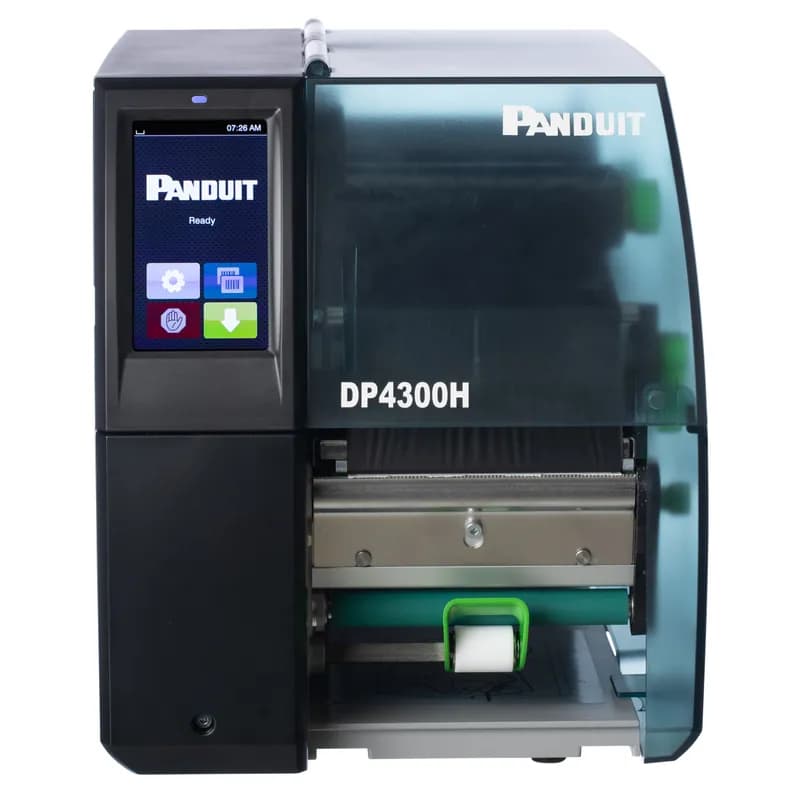
Contact for Pricing
Overview
- 300 dpi thermal transfer printing for crisp, durable labels
- Includes Easy-Mark™ Labeling Software for label design and printing
- Comes with 1 roll of RHEH4BL black hybrid ribbon for adhesion to plastic/metal
- USB connectivity and U.S. power cord included for North American use
- Prints raised panel labels, electrical component labels, arc flash labels, and safety signs
Specifications
Printing Rate | 11.8 in/s |
Printing Rate | 299.72 mm/s |
Resolution | 300 dpi |
Standard | RoHS Compliant |
Type | Desktop Printer |
Package Dimensions (L x W x H) | 23.25 IN x 14.75 IN x 16 IN |
Package Dimensions (L x W x H) | 59.055 cm x 37.465 cm x 40.64 cm |
Package Weight (Imperial) | 30.0000 L |
Package Weight (Metric) | 13.6080 kg |
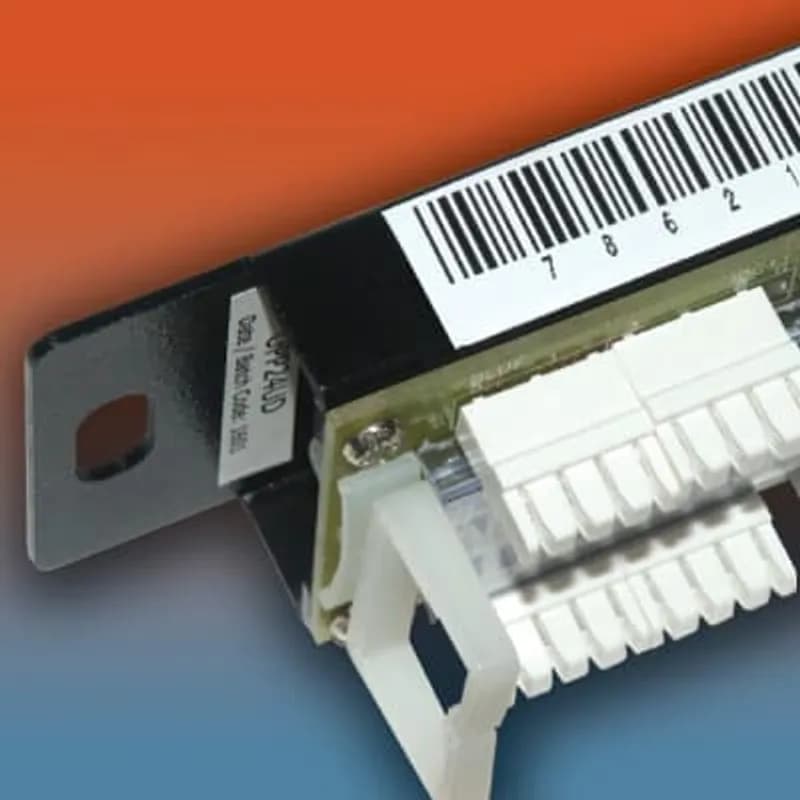

LS8E-ACA
The 100 24-Her LS8E and LS8EQ Hand-Held Thermal Transfer Printers is part of the complete line of identification solutions from Panduit. It is available individually or as part of the printer kit.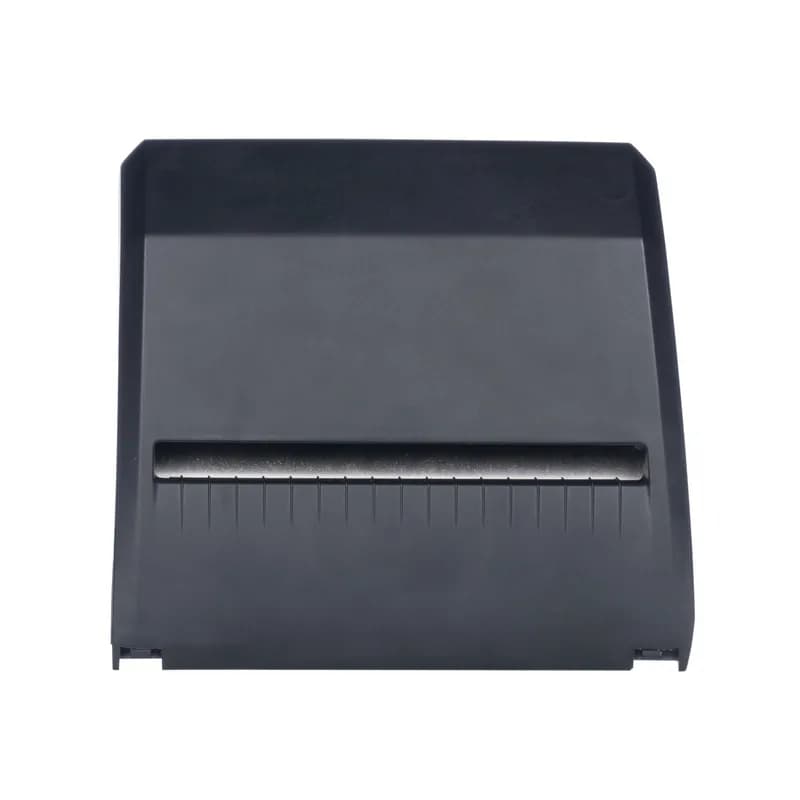
DP4300M-PCUT
Optional power/automatic Perforation Cutter for DP4300M Thermal Transfer Desktop Printers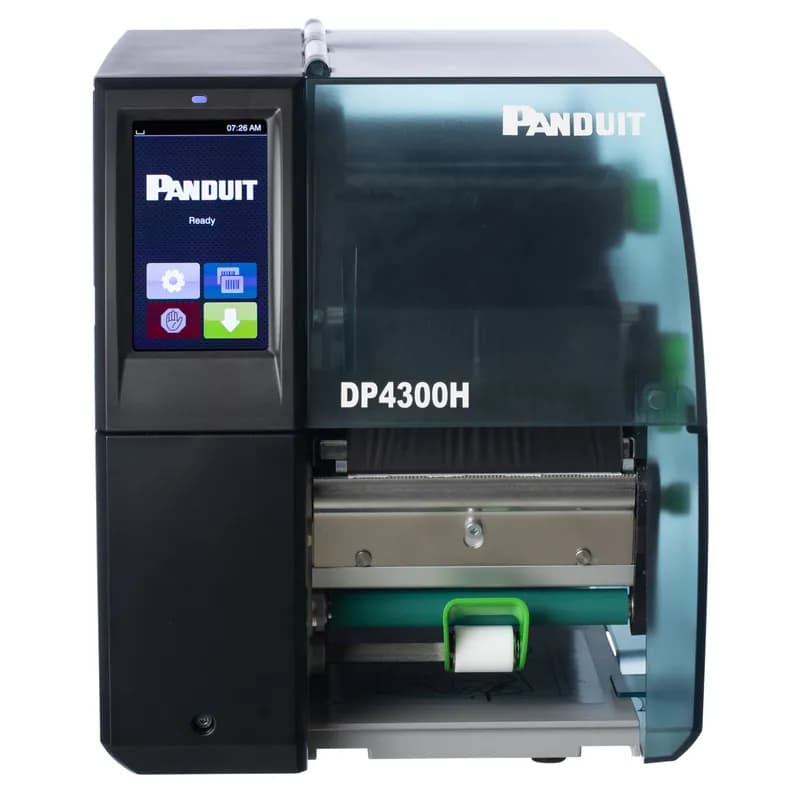
DP4300H/E
The DP4300H/E Thermal Transfer Desktop Printer produces high-quality print-on-demand labels for a wide range of applications. Easily print raised panel labels, electrical component labels, network component labels, arc flash labels, and safety signs for equipment and facility identification. Includes 300 dpi printer, Easy-Mark™ Labeling Software, 1 roll of RHEH4BL black hybrid ribbon, USB cable, quick start guide, UK, Germany, Switzerland, and China power cords; not for use in North America.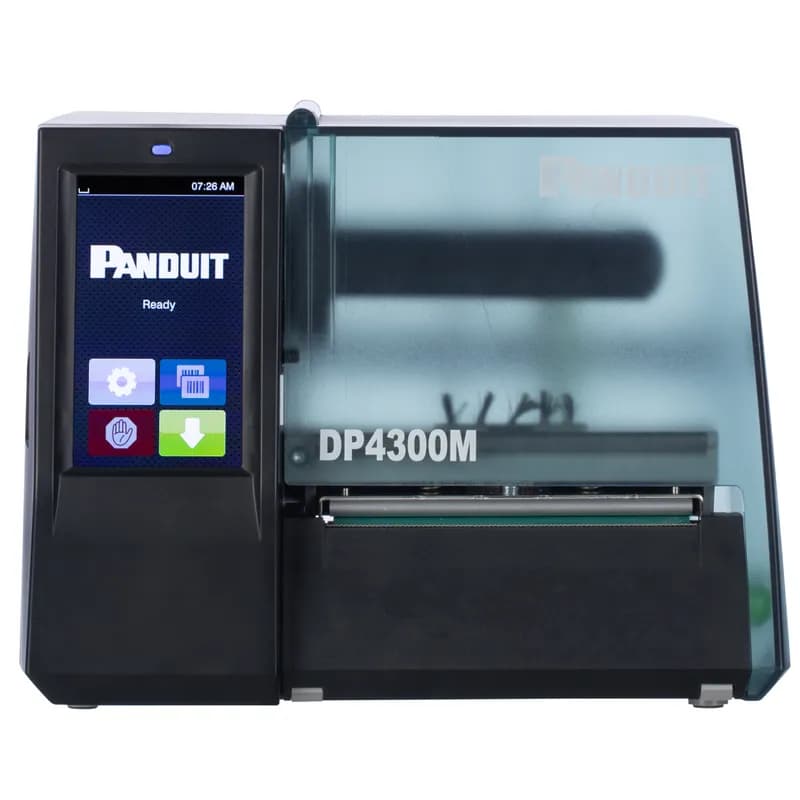
DP4300M
The DP4300M Thermal Transfer Desktop Printer has 300 dpi resolution and 5.9" per second maximum print speed. Print a variety of self-laminating labels, component labels, non-laminated labels, heat-shrink labels, marker plates, and continuous tapes up to 4" wide. It includes Easy-Mark™ Labeling Software, RMEH4BL black hybrid ribbon, a USB cable, a user manual, a quick start card, and US power cord. For use in North America.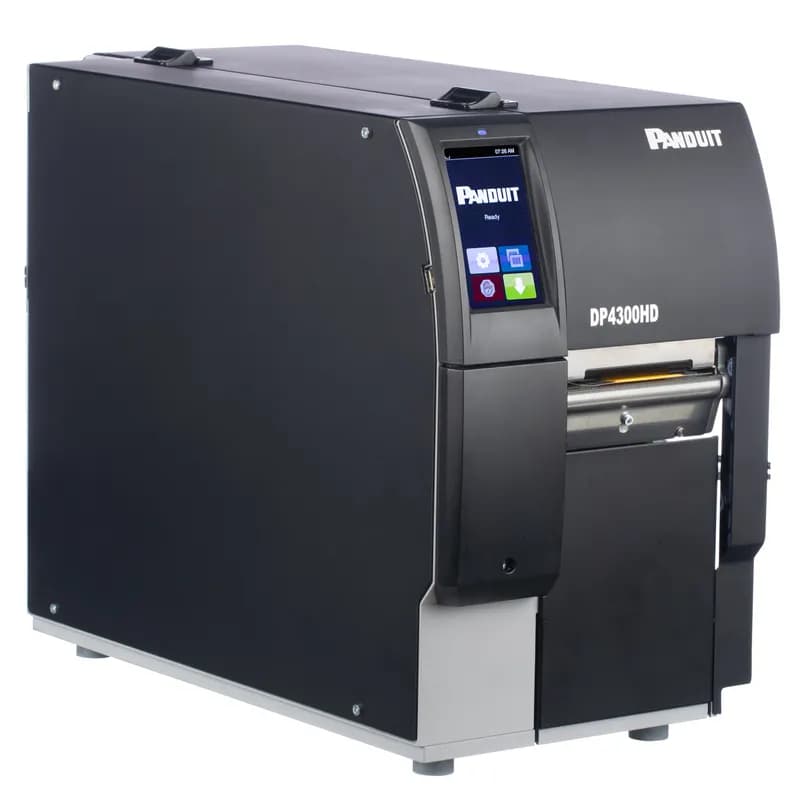
DP4300HD/E
The DP4300HD/E Two-Sided Thermal Transfer Desktop Printer produces high-quality print-on-demand labels for wire and cable marking applications using Panduit Two-Sided Heat Shrink Labels. This solution is ideal for labeling in OEM, MRO, and Construction. Includes 300 dpi printer w/ Touch Screen, Easy-Mark™ Labeling Software, 2 rolls of RHEH4BL Black Hybrid Ribbons, USB Cable, Quick Start Guide and Power Cords for UK, Germany, Switzerland, and China. Not for use in North America.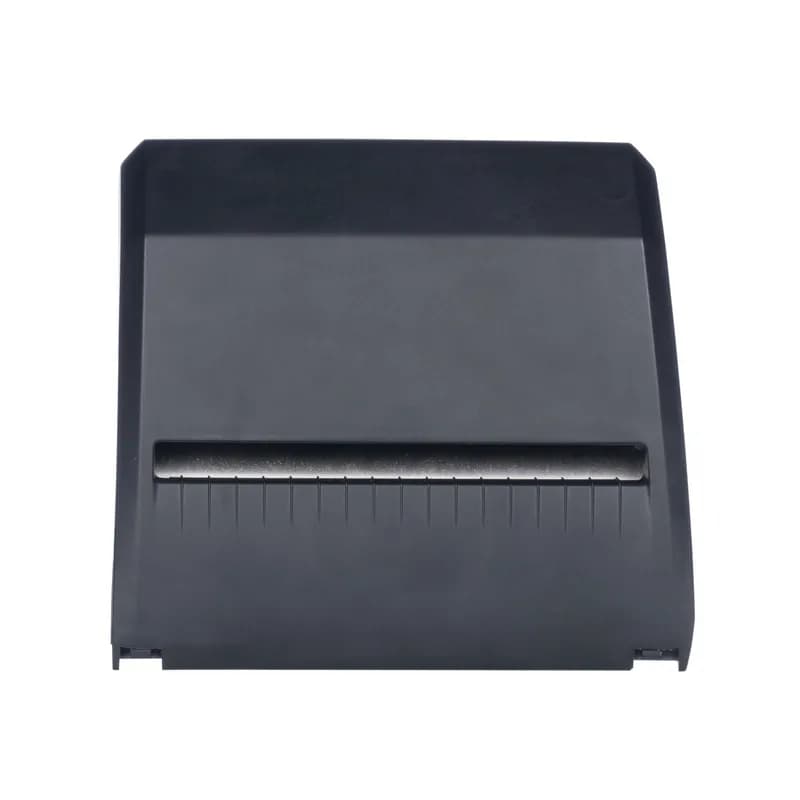
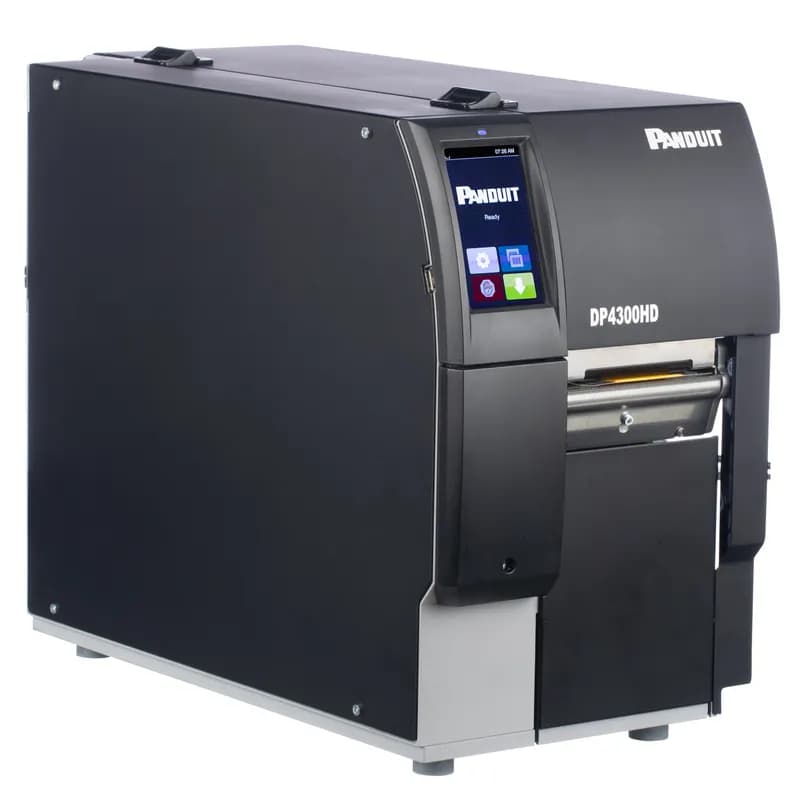
DP4300HD
The DP4300HD Two-Sided Thermal Transfer Desktop Printer produces high-quality print-on-demand labels for wire and cable marking applications using Panduit Two-Sided Heat Shrink Labels. This solution is ideal for labeling in OEM, MRO, and Construction. Includes 300 dpi printer w/ Touch Screen, Easy-Mark™ Labeling Software, 2 rolls of RHEH4BL Black Hybrid Ribbons, USB Cable, Quick Start Guide and US Power Cord. For use in North America.How to Install and Set Up the Panduit DP4300H/DP4600H Label Printer
This guide provides step-by-step instructions for the initial installation, connection, and material loading of the Panduit DP4300H and DP4600H label printers, ensuring proper setup for printing operations.
Estimated time: 45m
Tools needed:
Allen key, Panduit cleaning kit (PTR-CLN)
Supplies needed:
Label roll, Transfer ribbon (if using thermal transfer printing), Adhesive tape, Wi-Fi stick (optional, if installing)
- Unpack and Position the Printer
Lift the label printer from its packaging and inspect it for any transport damage. Place the printer on a stable, level surface in a dry location, protected from splash water. Remove any foam transportation safeguards near the printhead and verify all delivery contents.
- Install Wi-Fi Stick (Optional)
Remove the cover from the control panel using the Allen key. Connect the Wi-Fi stick to the designated USB interface within the control panel.
- Connect to Power Supply
Ensure the printer's power switch is off. Plug the power cable into the power connection jack on the printer, then plug the other end into a grounded electrical socket.
- Connect to Computer or Network (Optional)
Ensure all connected computers and cables are grounded to prevent malfunctions. Connect the label printer to a computer or network using a suitable cable (e.g., Ethernet or USB).
- Switch On the Printer
With all connections made, switch the printer on using the power switch. The printer will perform a system test and display "Ready" when complete.
- Load Media Roll
Open the printer cover. Turn the ring on the inside margin stop counterclockwise and remove the margin stop from the roll retainer. Load the label roll onto the roll retainer, ensuring the printing side faces upward. Re-mount the margin stop, push it firmly against the roll, and then turn the ring clockwise to secure the roll.
- Insert Media into Printhead
Turn the printhead locking lever counterclockwise to lift the printhead. Adjust the label guides with the knob to allow media to pass freely. Guide the label strip over the internal rewinder and through the label sensor, exiting between the printhead and print roller. Move the label guides against the material edges by turning the knob to secure the media.
- Set the Label Sensor
Loosen the screw on the label sensor. Position the label sensor using its tab so that the sensor unit can detect the label gap or sensing slot (a yellow LED illuminates the sensor position when the printer is on). Tighten the screw to secure the sensor. If using tear-off mode, turn the printhead locking lever clockwise to lock the printhead.
- Load Transfer Ribbon (Thermal Transfer Only)
Warning: Ensure the printhead has cooled down before cleaning. Clean the printhead surface using a component from the Panduit cleaning kit (PTR-CLN) and allow it to dry for 2-3 minutes. Turn the printhead locking lever counterclockwise to lift the printhead. Slide the ribbon roll onto the ribbon supply hub with the color coating facing downward. Position the roll for identical scale values on both ends. Secure the ribbon roll by turning the knob on the supply hub counterclockwise. Slide a spare ribbon core onto the ribbon take-up hub and secure it. Guide the ribbon through the print unit as shown in the manual's Figure 14. Secure the ribbon's starting end to the take-up core with adhesive tape, ensuring counterclockwise rotation. Turn the ribbon take-up hub counterclockwise to smooth the feed path. Finally, turn the printhead locking lever clockwise to lock the printhead.
- Synchronize Paper Feed
On the touchscreen display, select the synchronization symbol. Remove any blank labels that are peeled off or cut during this process.
Frequently Asked Questions about Panduit
What environmental ratings do Panduit products have?
Panduit products feature comprehensive environmental ratings across multiple standards, including UL 508A Type 1, 2, 3, 4, 4X, 12, and 13; CSA Type 1, 2, 3, 4, 4X, 12, and 13; and NEMA Type 1, 2, 3, 4, 4X, 12, and 13. They meet IEC 60529 IP66 rating, providing robust protection against dust, water, and corrosion in both indoor and outdoor environments, with operating temperatures ranging from -40°C to 130°C.
What certifications and standards do Panduit products comply with?
Panduit products are certified to multiple critical industry standards, including UL (Underwriters Laboratories) in the USA and Canada, CSA (Canadian Standard Association), EN IEC 61386, LVD 2006/G5/EC, and ARRA standards. Our products meet rigorous certifications for electrical safety, environmental compliance (WEEE and RoHS), and are designed to perform in extreme temperatures ranging from -55°C to 105°C, making them suitable for demanding industrial environments.
What industries and applications are Panduit products used for?
Panduit products are engineered for critical applications across multiple industries, including commercial construction, food and beverage, oil and gas, renewable energy, transportation, and safety-critical environments. Their solutions span electrical infrastructure, wire management, cable ties, power connectors, and safety systems designed to withstand extreme conditions like high vibration, temperature variations, UV exposure, and corrosive agents. Key industries include solar and wind energy, aerospace, heavy trucking, military, commercial transportation, and industrial manufacturing.
What are the main product lines offered by Panduit?
Panduit offers a comprehensive range of electrical infrastructure products including power connectors, cable ties, grounding connectors, identification products, safety solutions, terminals, cable cleats, wiring duct, and cable tie accessories. These products are engineered for industrial environments across multiple sectors like commercial construction, food and beverage, oil and gas, renewable energy, transportation, and safety applications.
What are the key features of Panduit products?
Panduit products are engineered for robust performance in heavy-duty industrial environments, featuring a comprehensive range of solutions including cable ties, power connectors, terminals, and identification products. Key features include proven quality performance, subject matter expertise, and customer-driven innovation across multiple industrial sectors such as commercial construction, food and beverage, oil and gas, renewable energy, transportation, and safety applications. The product line is designed to maximize productivity, reliability, and safety while meeting stringent industry standards.
What is Panduit's warranty policy?
Panduit provides a comprehensive Limited Product Warranty that can be fully reviewed on their official website at www.panduit.com/warranty. All Panduit products are subject to the terms, conditions, and limitations of this current warranty. Customers are advised to review the specific warranty details for their particular product, as Panduit requires buyers to determine product suitability for their intended use and assumes all associated risks.
What technical support does Panduit offer?
Panduit offers comprehensive technical support through their dedicated customer service team, accessible via phone at 1-800-777-3300. They provide expert assistance for their full range of industrial infrastructure products, including cable ties, power connectors, terminals, and identification solutions. Customers can also access additional technical resources and product information through their website at www.panduit.com.
What accessories are available for Panduit products?
Panduit offers a wide range of accessories across multiple product lines, including cable ties, cable tie accessories, cable tie tools, identification products, cable cleats, grounding connectors, and VeriSafe accessories like the VeriSafe Network Module and Insulation Piercing Connectors. For a comprehensive view of all available accessories, customers are recommended to visit www.panduit.com for the full product catalog.
How are Panduit products typically installed?
Panduit products are engineered for comprehensive installation across industrial environments, utilizing specialized tools and techniques for precise mounting. Installation methods vary by product line - from cable ties and power connectors to terminals and identification solutions - but all are designed for robust performance in heavy-duty settings. Technicians typically use Panduit's dedicated installation tools and follow manufacturer guidelines available at www.panduit.com to ensure proper fitting and maximum infrastructure reliability.