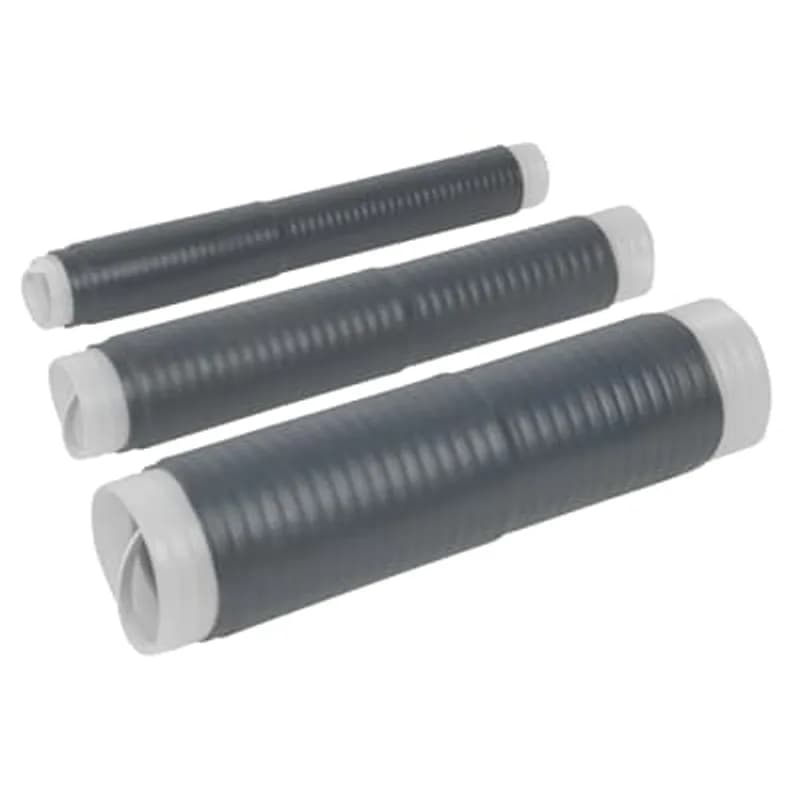
ABB Installation Products R2IT15M4N0440 Ranger2 Termination. Type - Indoor, 15kV, Cable Type - Tape Shield/Wire Shield/…
UPC: 075114131711
Contact for Pricing
Call +1 (262) 252-1600 (toll-free 877-268-3700) or email [email protected] for pricing and availability.
Overview
- Supports tape shield, wire shield, and unshielded cables (1.30"–2.10" insulation)
- Aluminum 2-hole spade connector for #2 AWG–1250 kcmil conductors
- Non-tracking silicone housing with field-removable center core
- Optional insulating sleeves for enhanced creepage and wildlife protection
- Supports stranded, compressed, compact, and solid conductor types
Specifications
Application | Cable Termination, Indoor Application, 15kV |
Cable Type | Copper Tape Shielded Wire |
Color | Gray |
Conductor Size | 1250 kcmil |
Connection Type | 2-Hole Spade connector |
Connection Type | Aluminum 2-Hole Spade #2-1250 kcmil |
Earthing | Products Includes Their Own Grounding System |
Material | Aluminum |
Mounting | Product Need to have Cable Holder (not included) |
Mounting Type | Indoor |
Number Of Terminals | (1) Single Phase |
Series | Ranger2 |
Size | 1.30 inch - 2.10 inch |
Size | 1.30" - 2.10" (Insulation Diameter Range) |
Special Features | Silicone Rubber Housing. Lightweight, Compact Design. Pull-Down Tabs for Easy Installation. Thick Wall Construction |
Standard | IEEE 48 |
Type | Cable Termination - Indoor - Ranger2 |
Voltage Rating | 15 kV |
Package Dimensions (L x W x H) | 0.01 IN x 0.01 IN x 0.01 IN |
Package Dimensions (L x W x H) | 0.0254 cm x 0.0254 cm x 0.0254 cm |
Package Weight (Imperial) | 1.0000 L |
Package Weight (Metric) | 0.4540 kg |
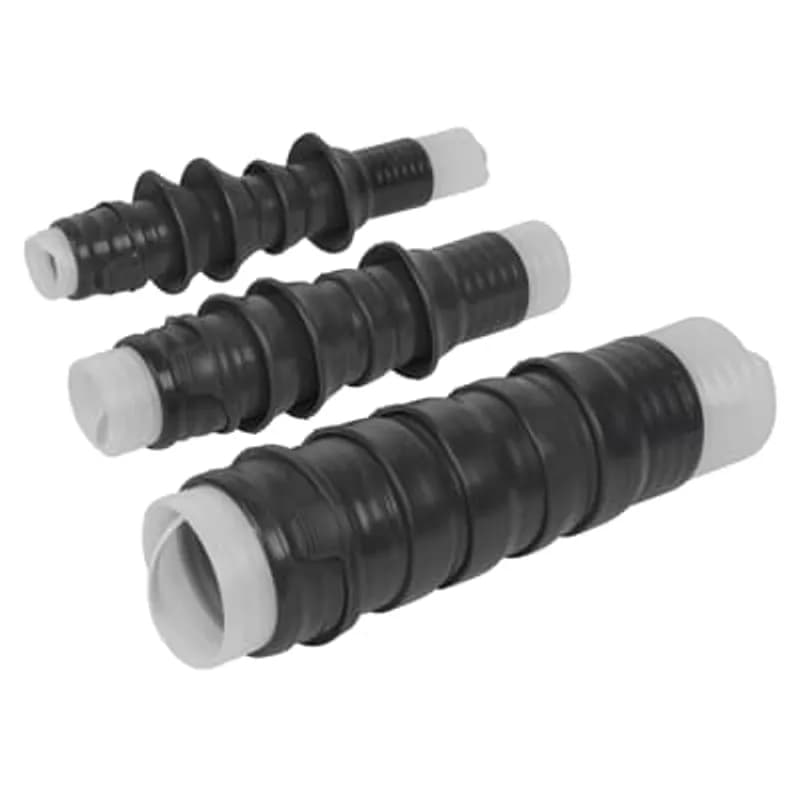
R2T15M4N0440
Ranger2 Termination. Type - Outdoor, 15kV, Cable Type - Tape Shield/Wire Shield/ Unshield, Insulation Range - 1.30 inch - 2.10 inch, Connector Type - Aluminum 2-Hole Spade #2-1250 kcmil, Conductor Code - 440 -Stranded or Compressed 1250 Compact or Solid N/A.R2IT15M4-N2440
Indoor Ranger2 Cable Termination. 15kV, Cable Type - Tape Shield/Wire Shield/UniShield. Insulation Range - 1.30 inch - 2.10 inch. Copper 2-Hole Spade #2-1250 kcmil, Conductor 1250 Stranded/CompressedR2IT15M4-N2380
Ranger2 Termination for 15KV indoor application, cable insulation diameter 1.30 - 2.10 inches for Cable Type - Tape Shield, Wire Shield, and Unshielded Cable, Copper 2-Hole Spade #2-1250kcmil, Stranded or Compressed 750 /Compact or Solid 900.R2IT15M4-N0410
Ranger2 Termination for 15KV indoor application, cable insulation diameter 1.30 - 2.10 inches for Cable Type - Tape Shield, Wire Shield, and Unshielded Cable, Aluminum 2-Hole Spade #2-1250kcmil, Stranded or Compressed 1000.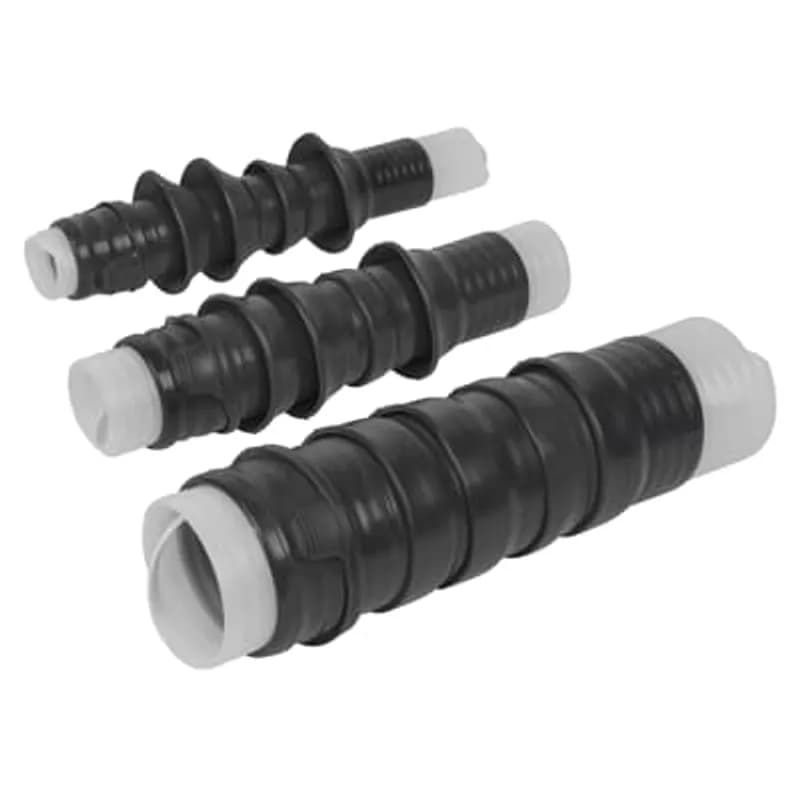
R2T15J1-N0220-B1
Ranger2 Termination. Type - Outdoor, 15kV, Cable Type - Concentric Neutral/Jacketed Concentric Neutral, Insulation Range - .64 inch - 1.12 inch, Connector Type - Aluminum 2-Hole Spade #2-1250 kcmil, Conductor Code - 220 -Stranded or Compressed #2 Compact or Solid #1. Cable Mounting Bracket - B1 - Stainless Steel - Size .80 inch - 1.25 inch.R2IT15M4-N0380
Ranger2 Termination. Type - Indoor, 15kV, Cable Type - Tape Shield/Wire Shield/ Unshield, Insulation Range - 1.30 inch - 2.10 inch, Connector Type - Aluminum 2-Hole Spade #2-1250 kcmil, Conductor Code - 380 -Stranded or Compressed 750 Compact or Solid 900.R2IT15M2N0270
Ranger2 Termination for 15KV indoor application, cable insulation diameter .84 - 1.38 inches for Cable Type - Tape Shield, Wire Shield, and Unshielded Cable, Aluminum 2-Hole Spade #2-1250kcmil, Stranded or Compressed 4/0 / Compact or Solid 250.R2IT15M2-H0250
Ranger2 Termination for 15KV indoor application, cable insulation diameter .84 - 1.38 inches for Tape Shield, Wire Shield, and Unshielded Cable, includes Aluminum 1-Hole Spade connector for 500 kcmilFrequently Asked Questions
What is the DC Withstand voltage for R2IT15?
The DC Withstand voltage for the R2IT15 is 75 kV for 15 minutes dry.
What is the Lightning Impulse Withstand Voltage?
The Lightning Impulse (BIL Dry 110 Withstand) for the R2IT15 is 110 kV Crest.
What is the Coronal Extinction Voltage for R2IT15?
The Coronal Extinction Voltage (Partial Discharge) for the R2IT15 is 13 kV (≤ 3pC).
What is the IEEE classification for the R2IT15 termination?
The R2IT15 cable termination has an IEEE Classification of Indoor = Class 2.
What is the maximum altitude for R2IT15 installation?
The R2IT15 cable termination can be installed at a maximum altitude of 3300 feet (1005 m).
What is the voltage rating of the R2IT15 termination?
The R2IT15 cable termination has a voltage rating of 15 kV. Its maximum design voltage to ground is 9.5 kV.
Where can I find installation instructions for R2IT15?
Installation instructions are IS-1134 for R2IT15J, IS-1135 for R2IT15M, and IS-1136 for R2IT15L.
What is the power system frequency range for R2IT15?
The R2IT15 cable termination is designed for power system frequencies ranging from 48 to 62 Hz.
What is the operating temperature range for the R2IT15?
The R2IT15 cable termination operates within an ambient temperature range of -22 to +149 °F (-30 to +65 °C).
What cable sizes are compatible with R2IT15 terminations?
The R2IT15 terminations cover cable insulation diameters from 0.64 in (16 mm) to 2.10 in (53 mm), accommodating #2 AWG through 1250 kcmil cables.
How to Install the 15kV Ranger 2 Shrink Fit Silicone Rubber Termination (R2IT15M)
This guide provides detailed instructions for installing the 15kV Ranger 2 Shrink Fit Silicone Rubber Termination (R2IT15M) for indoor applications. It covers preparation, grounding, lug installation, cleaning, and final termination steps for various cable shield types.
Estimated time: 2h
Tools needed:
Crimping tool, Wire strippers, Measuring tape or ruler, Solvent applicator (pads/cloth), Abrasive material (aluminum oxide, grit 120 or finer)
Supplies needed:
15kV Ranger 2 Shrink Fit Silicone Rubber Termination kit, Vinyl electrical tape, Terminal lug or connector, Cable (of appropriate type and size), Cleaning solvent, Oxide inhibitor (if not included with lug)
- Prepare Cable and Ensure Safety
Before starting, ensure all apparatus is de-energized. This product must be installed by competent personnel trained in high-voltage safety practices. Inspect all kit contents for completeness and damage, and verify compatibility with your cable and mating parts. Read the entire instructions. Train the cable into its final position and cut it to the required length. Refer to the Termination Selection Chart on Page 1 of the original document to confirm cable size fits the insulation range. Prepare the cable jacket, shield, and insulation according to the specific dimensions and procedures for your cable type (Tape Shield, Wire Shield, or UniShield®) as detailed in the full instructions. Allow for additional exposed conductor distance if using aluminum lugs. For tape shield cables, secure the tape shield edge with the supplied copper foil tape to prevent unrolling.
- Secure the Ground Braid
Wrap one band of vinyl tape around the cable jacket 1/4 inch (6mm) from the jacket end; this serves as a marker. Position the preformed ground braid with its short tail over the cable shield wires (or tape shield) and the solder block centered over the vinyl tape marker. Secure the ground braid to the cable jacket using vinyl tape. Apply a second vinyl tape band directly over the original marker and ground braid solder block, maintaining the 1/4 inch (6mm) dimension. Wrap the ground braid around the cable shield one complete wrap, trim any excess to prevent overlap, and secure it in place with the constant force spring. Wrap the spring in the same direction as the ground braid and cinch it tightly after the final winding. Secure the spring with two wraps of vinyl tape. If your cable has cloth or paper semi-conductive insulation shield, overwrap it with one half-lapped layer of highly stretched semi-conductive rubber tape.
- Crimp the Terminal Lug
First, check that the termination body assembly will fit over your selected lug. If it does not, clean the cable insulation and slide the termination body onto the cable before installing the lug (do not remove the core at this time). Position the connector or lug and crimp it according to the manufacturer’s directions. Do not crimp the last 3/8 inch to 1/2 inch (10mm to 13mm) of the connector. After crimping, remove any excess oxide inhibitor and all sharp crimp flashings or edges.
- Clean Insulation and Lug
Wipe the cable insulation thoroughly with solvent-saturated pads. Exercise caution to prevent the solvent from touching the semi-conductive insulation shield. If abrasive material is necessary, use it only on the insulation and not on the semi-conductive insulation shield. Use only aluminum oxide abrasive, grit 120 or finer, and be careful not to reduce the cable insulation diameter below the kit's specified allowance.
- Position and Shrink the Termination
Apply a liberal coating of the supplied silicone grease (lubricant) to the edge of the semi-conductive insulation shield (or semi-conductive jacket for UniShield® cables) to fill the step at the semi-con cut-off. Slide the termination body onto the cable. Align the termination's edge (or skirt) with the forward edge of the vinyl tape marker you previously installed. Carefully begin to remove the core by pulling it counter-clockwise. Recheck the termination's position as you continue to remove the core. Do not push or pull on the termination assembly while removing the core. Finally, connect the ground braid to the system ground.
Frequently Asked Questions about ABB - Installation Products
How are Thomas and Betts products typically installed?
Thomas and Betts products are installed using a variety of methods tailored to specific applications, including the use of flexible cords and cable fittings, non-metallic cable glands, and armored cable fittings. Proper selection of fittings is crucial to match the cable type and installation environment, ensuring durability and preventing physical damage. Tools such as the Blackburn® Comfort Crimp® and HEX-FLEX® systems enhance installation efficiency and reliability, reducing labor time and ensuring secure connections.
What accessories are available for Thomas and Betts products?
Thomas and Betts offers a comprehensive range of accessories for their products, including various cord and cable fittings, non-metallic cable glands, service entrance cable fittings, and armored cable fittings. Their accessories are designed to enhance installation efficiency and ensure compatibility with different cable types and environmental conditions, providing reliable connections for a wide array of applications.
What environmental ratings do Thomas and Betts products have?
Thomas and Betts products feature robust environmental ratings, including NEMA Type 1, 2, 3, 4, 4X, 12, and 13 certifications, as well as IEC 60529 IP66 protection. These ratings ensure that their products are designed to withstand harsh industrial environments, with capabilities to resist dust, water, and corrosion, and operate effectively in a wide temperature range.
What communication protocols do Thomas and Betts products support?
Thomas and Betts products support a wide range of industrial communication protocols, including Ethernet, DeviceNet, PROFIBUS, Modbus, CANopen, and others. This extensive compatibility ensures seamless integration and reliable communication across various industrial automation systems, catering to diverse application needs.
What are the key features of Thomas and Betts products?
Thomas and Betts products are known for their innovative designs, high performance, and compliance with industry standards such as the National Electrical Code and Underwriters' Laboratories. They offer a comprehensive range of rugged and reliable electrical fittings, including liquidtight and dust-tight connections, which enhance installation efficiency and reduce overall project costs. Their products are engineered for durability in harsh environments, ensuring long-term reliability and lower installed costs.
What are the main product lines offered by Thomas and Betts?
Thomas and Betts offers a comprehensive range of product lines including electrical connectors, cable management systems, grounding and bonding solutions, and industrial automation components. Their products are designed for durability and reliability in demanding industrial environments, ensuring optimal performance and safety across various applications.
What technical support does Thomas and Betts offer?
Thomas and Betts offers comprehensive technical support, including access to field application engineers for onsite training and installation assistance. Their technical support staff is available to address inquiries related to product specifications and installation practices, ensuring optimal performance and safety of electrical systems. Additionally, they provide a variety of training programs to enhance the knowledge and skills of users in the field.
What industries and applications are Thomas and Betts products used for?
Thomas and Betts products are utilized across various industries including electrical construction, industrial automation, telecommunications, and utilities. Their extensive range of cord and cable fittings, electrical boxes, and metal framing systems are designed for applications that require durability and reliability in harsh environments, ensuring optimal performance in both permanent and temporary installations.
What certifications and standards do Thomas and Betts products comply with?
Thomas and Betts products comply with critical international certifications including UL (Underwriters Laboratories), CSA (Canadian Standards Association), and CE (European Community). Our products are designed to meet rigorous industrial standards such as NEMA enclosure ratings and IEC 60529 IP ratings, ensuring safety and reliability across various industrial applications.
What are the main product lines offered by Ocal?
Ocal offers a comprehensive range of corrosion-resistant conduit systems, including PVC-coated conduit and fittings, conduit bodies, hazardous location fittings, and strut accessories. Their products are designed to provide superior corrosion protection, featuring a hot-dipped galvanizing process and UL listed Type 4X PVC-coated conduit bodies, ensuring durability in the most demanding environments.