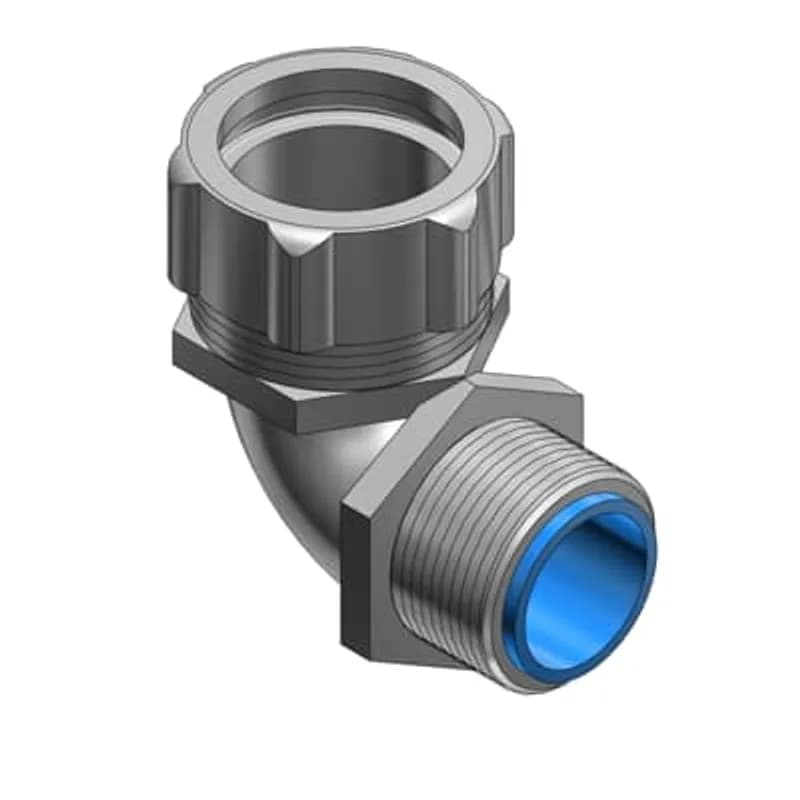
UPC: 786210073552
Contact for Pricing
Minimum Qty: 5
Multiplier: 5
*Contact for lower quantities*
Overview
- Durable steel construction for industrial applications
- 1 Inch size for 1-inch liquidtight flexible metal conduit
- 90-degree angle for efficient conduit routing
- Insulated design for enhanced wiring protection
- PG threaded connection for secure sealing and chromate finish for corrosion resistance
Specifications
Application | Nylon Insulated 90D Angle Fittings |
Material | Nylon Insulated |
Size | 1 Inch |
Special Features | CSA Certified Dusttight and Watertight. UL Listed Liquidtight |
Standard | CSA, UL E23018 |
Type | Liquidtight Flexible Metal Conduit Fittings |
Package Dimensions (L x W x H) | 6 IN x 4.5 IN x 3 IN |
Package Dimensions (L x W x H) | 15.24 cm x 11.43 cm x 7.62 cm |
Package Weight (Imperial) | 0.5000 L |
Package Weight (Metric) | 0.2270 kg |
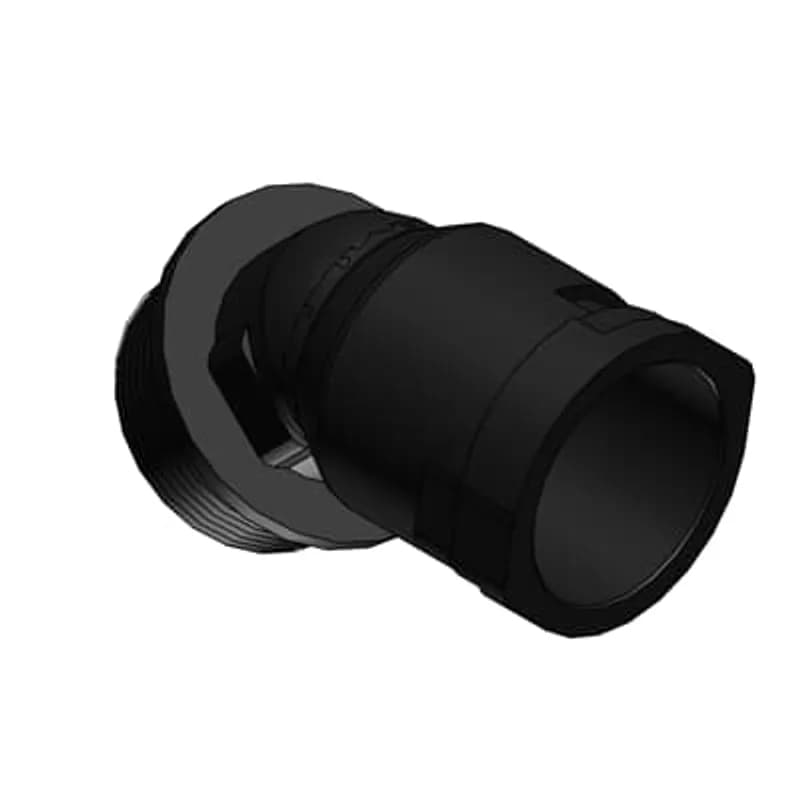
ALAD-M506
Smart Line 45 Degree Black One-Piece Elbow with Integral Cone Seal, Material-Polyamide 6, Conduit Size NW36, Thread Size - M50x1.5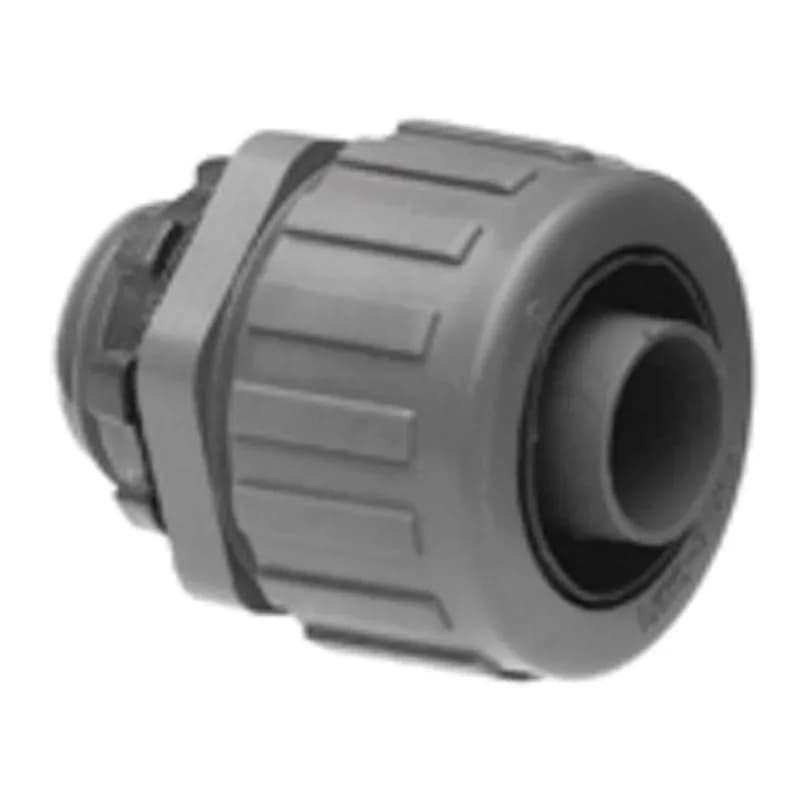
035-72775-14
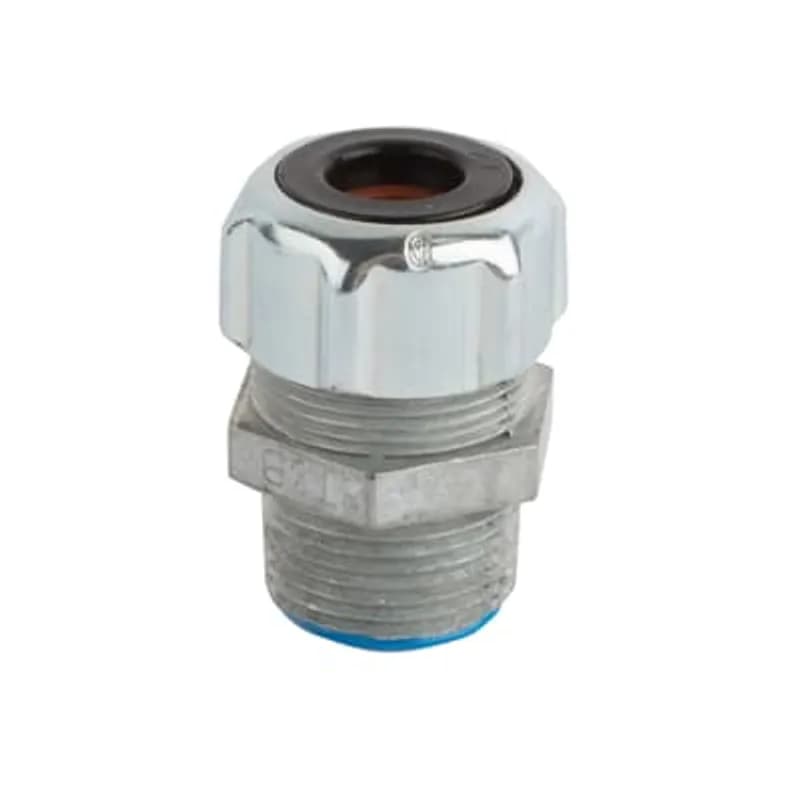
1 Inch Straight Die Cast Zinc Liquidtight Strain Relief Cord Connector, Cord Range 0.375 to 0.500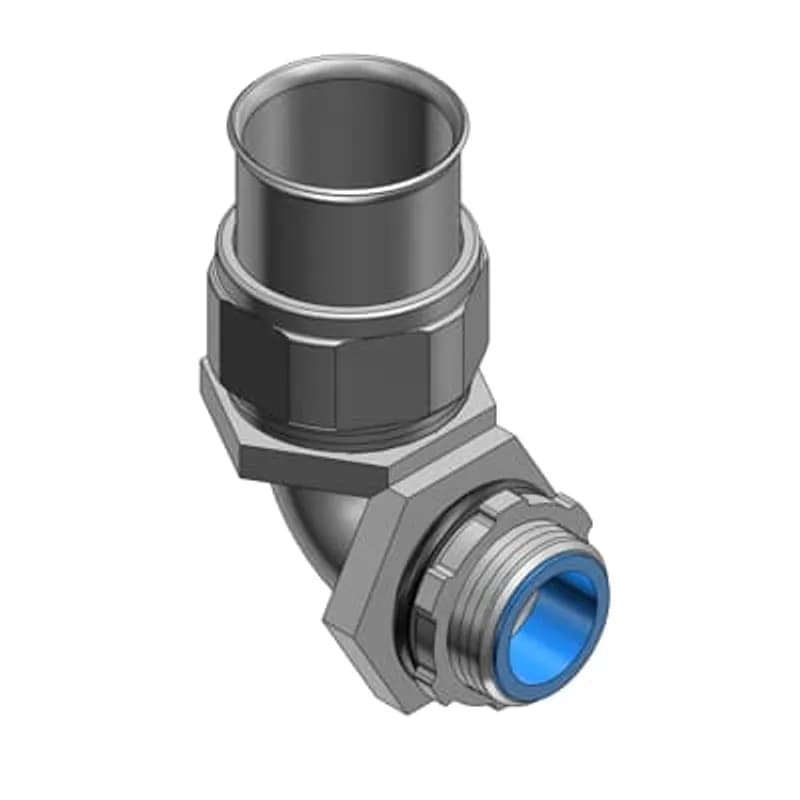
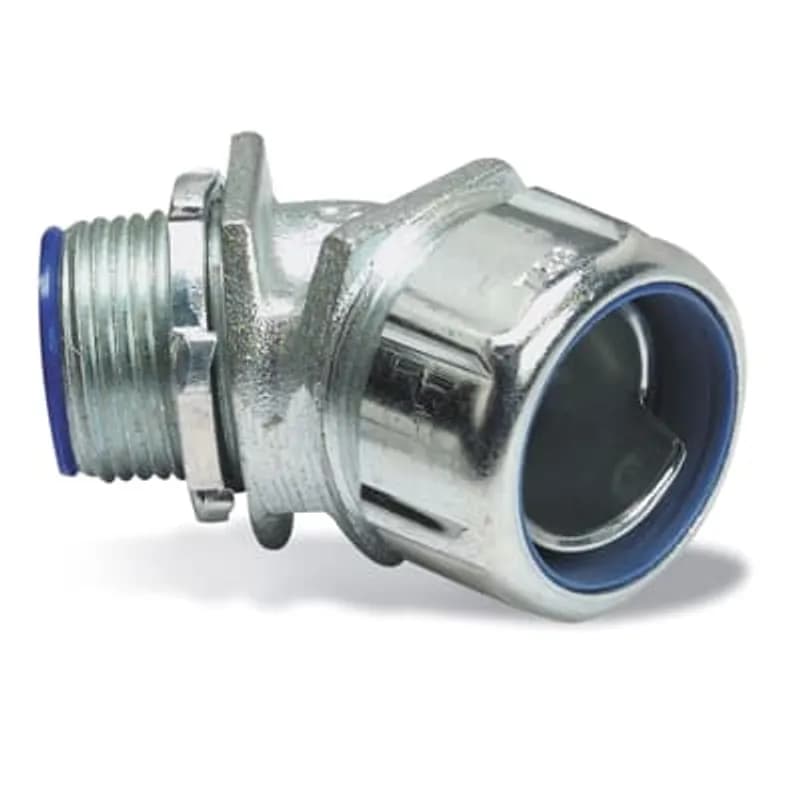
3741
1/2 Inch Steel Type A to 90 Degree Liquidtight Connector With Insulated Throat and Sealing Ring With Steel Retainer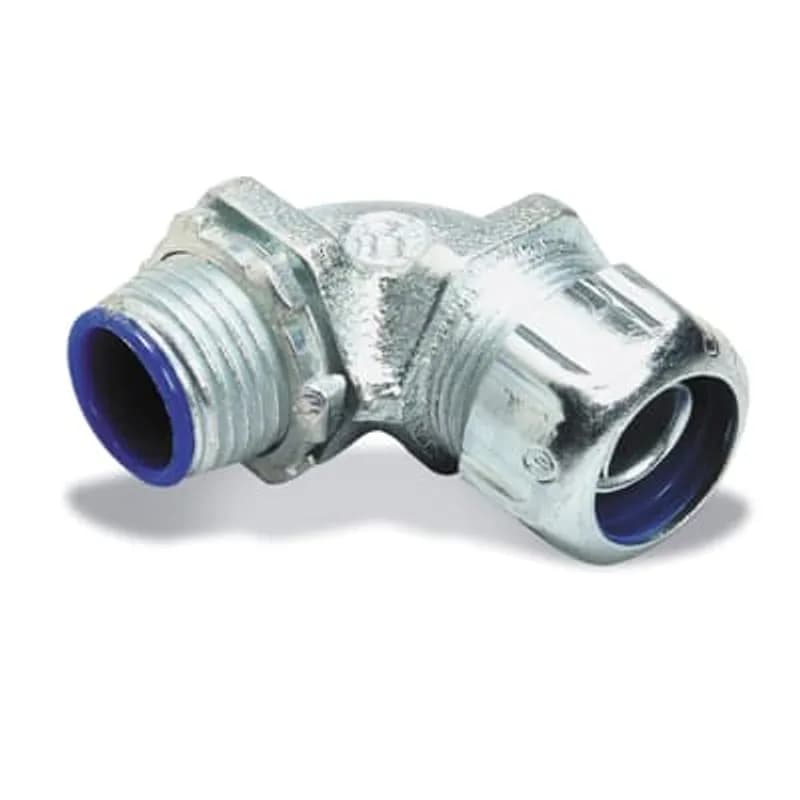
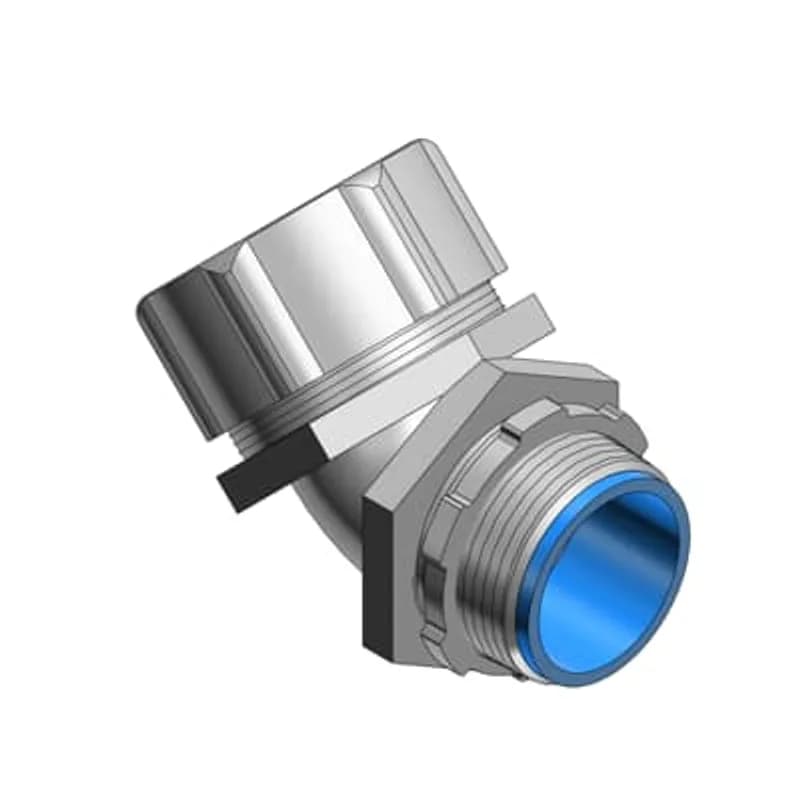
5365
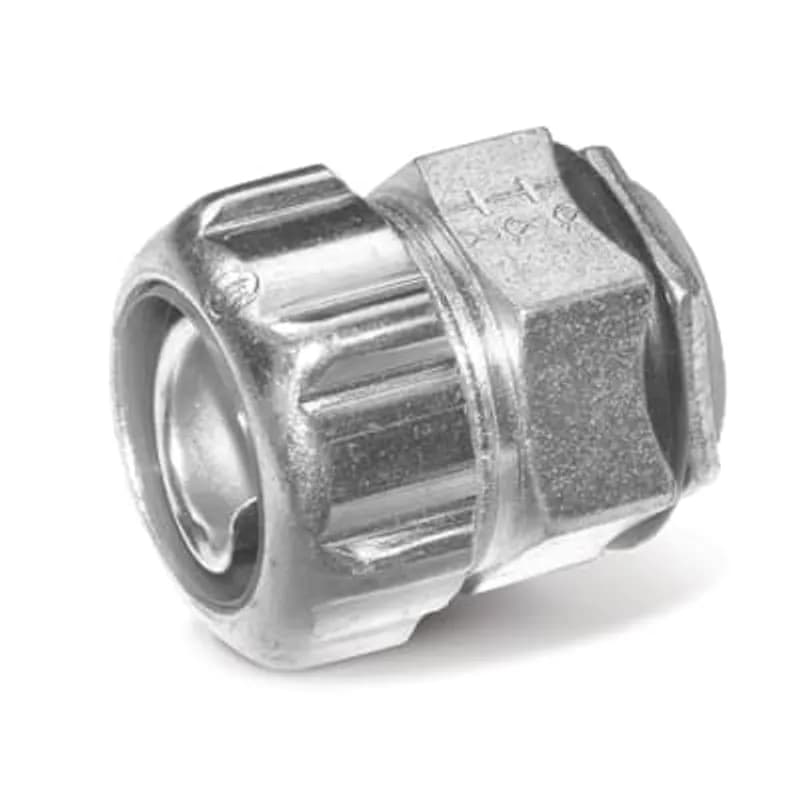
1-1/4 Inch Straight Malleable Iron Chase Liquidtight Insulated Connector With Electro-Zinc PlatingFrequently Asked Questions
What are the available trade sizes for these fittings?
The fittings are available in trade sizes from 3/8 inches to 6 inches (12mm to 153mm).
What materials are used for the fittings?
Trade sizes 3/8 inches to 1-1/4 inches are steel, and 1-1/2 inches to 6 inches are malleable iron, both with Zinc Chromate finish.
What is the tensile strength of the fittings?
The fittings meet IEC/EN 61386-1, -23 standard requirements for tensile strength, rated as Code 3 Medium; 500 N/2 min.
What is the impact resistance of the fittings?
The fittings meet IEC/EN 61386-1, -23 standard requirements for impact resistance, rated as Code 3 Medium; 6 Joules.
What standards do these fittings conform to?
The fittings conform to UL 514B, CSA C22.2 No. 18.3, IEC/EN 61386-1, -23, RoHS, NEMA FB-1, and Federal Specification A-A 50552.
Are the seal rings and insulators halogen free?
Yes, the seal rings, insulators, and seal gaskets are halogen free.
What ingress protection ratings do these fittings have?
The fittings provide UL Type 3, 3R, 4, 12, 13, CSA Type 3, 3R, 4, 12, 13, NEMA Type 3, 3R, 4, 12, 13, and IEC IP66, IP67 ratings.
Are these fittings suitable for hazardous locations?
Yes, they are suitable for use in Class 1 Division 2, Class 2 Division 1 & 2 Hazardous Locations per NEC® Section 500.
What is the operating temperature range for the fittings?
The general working temperature range is -20 to +105°C (-4 to +221°F) for UL/CSA, and -25 to +105°C (-13 to +221°F) for IEC/CE.
What is the maximum voltage for electrical circuits?
The fittings are suitable for use in electrical circuits up to 1,000 V.
How to Install T&B Liquidtight Connectors for Flexible Metallic Conduit
This guide provides step-by-step instructions for the proper installation of T&B liquidtight flexible metallic conduit connectors, ensuring a secure and liquidtight seal in accordance with electrical codes.
Estimated time: 30m
Tools needed:
Hacksaw (32 teeth/inch) or Power band saw (24-32 teeth/inch) or Metal jig, Smooth jaw wrench, Torque wrench, Hand protection, Eye protection
Supplies needed:
T&B liquidtight connector, Liquidtight flexible metallic conduit, T&B 140 series locknut (if needed), 5260 series sealing gasket (if needed), PVC cement (if needed)
- Prepare for Installation Safely
WARNING: Disconnect all power before beginning installation to prevent risk of shock. Ensure installation is performed by a qualified electrician in accordance with all national and local electrical codes. Wear appropriate hand and eye protection throughout the process.
- Cut Flexible Conduit
Cut the flexible conduit with a clean, square end. Utilize a metal jig, a sharp hacksaw (32 teeth per inch), or a power band saw (24-32 teeth per inch, not exceeding 400 feet per minute for high production). Do not use an abrasive wheel for cutting.
- Assemble the Connector Components
For 5000, 7000, 9000 series, and PVC coated 3300 series connectors, first slide the gland nut onto the conduit. Next, slide on the nylon sealing ring. Finally, thread in the Safe Edge™ Cone. For PVC coated connectors, use a smooth jaw wrench for tightening to prevent gouging; if metal is exposed, apply PVC cement.
- Install Connector into Box Knockout
Insert the connector body into the knockout opening of the box. For knockout applications, use T&B® 140 series locknuts and 5260 series sealing gaskets (purchased separately). For 7000 and 9000 series, ensure you have ordered the locknut separately. For Chase® connector assemblies, the Chase® Nipple goes inside the knockout, and lock-up is achieved by tightening the Chase® Nipple to the body or turning the body onto the Chase® Nipple.
- Secure the Locknut and Gland Nut
Secure the locknut to the box wall. Tighten the gland nut to the connector body according to the specified torque values: 3/8" (200 lb-in), 1/2" (300 lb-in), 3/4" (500 lb-in), 1" (700 lb-in), 1 1/4" (1000 lb-in), 1 1/2" (1200 lb-in), 2" (1600 lb-in), 2 1/2" (1600 lb-in), 3" (1600 lb-in), 3 1/2" (1600 lb-in), 4" (1600 lb-in). Ensure a liquidtight seal.
Frequently Asked Questions about ABB - Installation Products
How are Thomas and Betts products typically installed?
Thomas and Betts products are installed using a variety of methods tailored to specific applications, including the use of flexible cords and cable fittings, non-metallic cable glands, and armored cable fittings. Proper selection of fittings is crucial to match the cable type and installation environment, ensuring durability and preventing physical damage. Tools such as the Blackburn® Comfort Crimp® and HEX-FLEX® systems enhance installation efficiency and reliability, reducing labor time and ensuring secure connections.
What accessories are available for Thomas and Betts products?
Thomas and Betts offers a comprehensive range of accessories for their products, including various cord and cable fittings, non-metallic cable glands, service entrance cable fittings, and armored cable fittings. Their accessories are designed to enhance installation efficiency and ensure compatibility with different cable types and environmental conditions, providing reliable connections for a wide array of applications.
What environmental ratings do Thomas and Betts products have?
Thomas and Betts products feature robust environmental ratings, including NEMA Type 1, 2, 3, 4, 4X, 12, and 13 certifications, as well as IEC 60529 IP66 protection. These ratings ensure that their products are designed to withstand harsh industrial environments, with capabilities to resist dust, water, and corrosion, and operate effectively in a wide temperature range.
What communication protocols do Thomas and Betts products support?
Thomas and Betts products support a wide range of industrial communication protocols, including Ethernet, DeviceNet, PROFIBUS, Modbus, CANopen, and others. This extensive compatibility ensures seamless integration and reliable communication across various industrial automation systems, catering to diverse application needs.
What are the key features of Thomas and Betts products?
Thomas and Betts products are known for their innovative designs, high performance, and compliance with industry standards such as the National Electrical Code and Underwriters' Laboratories. They offer a comprehensive range of rugged and reliable electrical fittings, including liquidtight and dust-tight connections, which enhance installation efficiency and reduce overall project costs. Their products are engineered for durability in harsh environments, ensuring long-term reliability and lower installed costs.
What are the main product lines offered by Thomas and Betts?
Thomas and Betts offers a comprehensive range of product lines including electrical connectors, cable management systems, grounding and bonding solutions, and industrial automation components. Their products are designed for durability and reliability in demanding industrial environments, ensuring optimal performance and safety across various applications.
What technical support does Thomas and Betts offer?
Thomas and Betts offers comprehensive technical support, including access to field application engineers for onsite training and installation assistance. Their technical support staff is available to address inquiries related to product specifications and installation practices, ensuring optimal performance and safety of electrical systems. Additionally, they provide a variety of training programs to enhance the knowledge and skills of users in the field.
What industries and applications are Thomas and Betts products used for?
Thomas and Betts products are utilized across various industries including electrical construction, industrial automation, telecommunications, and utilities. Their extensive range of cord and cable fittings, electrical boxes, and metal framing systems are designed for applications that require durability and reliability in harsh environments, ensuring optimal performance in both permanent and temporary installations.
What certifications and standards do Thomas and Betts products comply with?
Thomas and Betts products comply with critical international certifications including UL (Underwriters Laboratories), CSA (Canadian Standards Association), and CE (European Community). Our products are designed to meet rigorous industrial standards such as NEMA enclosure ratings and IEC 60529 IP ratings, ensuring safety and reliability across various industrial applications.
What are the main product lines offered by Ocal?
Ocal offers a comprehensive range of corrosion-resistant conduit systems, including PVC-coated conduit and fittings, conduit bodies, hazardous location fittings, and strut accessories. Their products are designed to provide superior corrosion protection, featuring a hot-dipped galvanizing process and UL listed Type 4X PVC-coated conduit bodies, ensuring durability in the most demanding environments.