
Contact for Pricing
Overview
- Gold-plated finish for superior conductivity and corrosion resistance
- Rated for 250 VAC for versatile power and signal applications
- Accommodates discrete wire sizes from 24 to 20 AWG (0.2 - 0.6 mm²)
- Secure crimp termination ensures reliable electrical connections
- Compatible with TE Connectivity's AMPMODU IV/V connector series
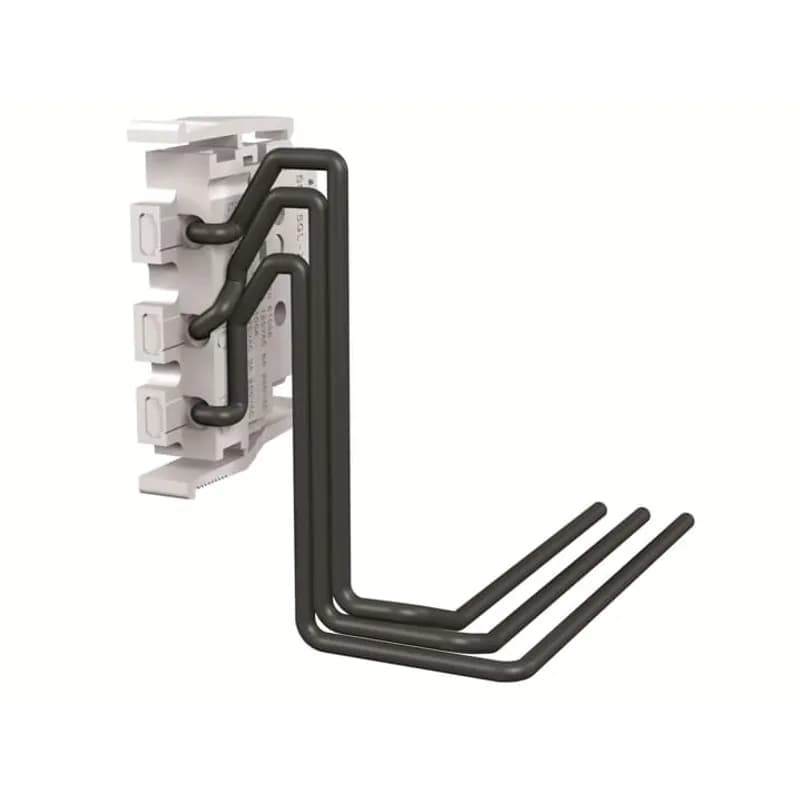
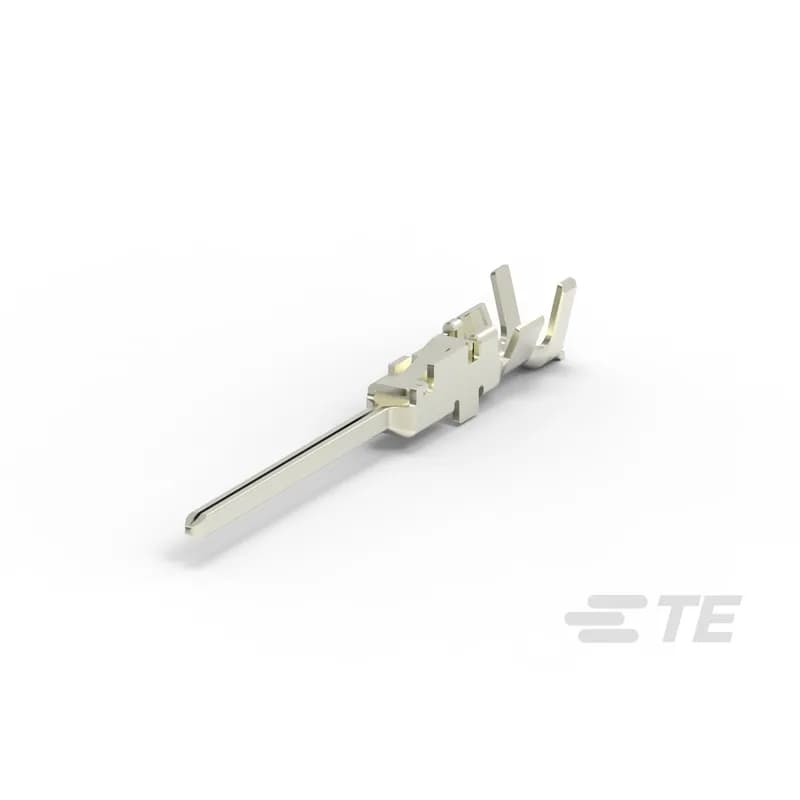
2316669-2
Tab Contact, Gold, 250 VAC / 600 VAC, 250 VDC / 600 VDC, Spring Contact Retention, Discrete Wire, 28 – 22 AWG, .08 – .38 mm² Wire, Crimp, HDC HDHow to Assemble AMPMODU MOD IV Receptacle Connectors
This guide provides instructions for preparing wires, crimping AMPMODU MOD IV, IV1/2, or V receptacle contacts, and inserting them into compatible AMPMODU MOD IV housings to create a complete connector assembly.
Estimated time: 30m
Tools needed:
Wire strippers, Hand crimping tool (e.g., TE 91516-1, 90202-3, 91517-1, 91541-1, 1901829-1), Applicator (if using automated equipment)
Supplies needed:
AMPMODU MOD IV, IV1/2, or V Receptacle Contacts, AMPMODU MOD IV Housings, Wire (32-20 AWG)
- Prepare the Wire
Select the appropriate wire size (32-20 AWG) and strip the insulation to the length specified in Figure 2 of the application specification (114-25003). Refer to the table for your specific wire gauge and contact type. CAUTION: Do not nick, scrape, or cut the wire conductor during the stripping operation.
- Crimp the Receptacle Contact
Locate the receptacle contact in the appropriate hand crimping tool or applicator, following the instructions provided with your specific tooling. Terminate the prepared wire to the contact, ensuring the wire conductor is fully crimped within the wire barrel and the insulation is gripped firmly by the insulation barrel without being cut or broken. CAUTION: Wire insulation shall NOT be cut or broken during the crimping operation, nor shall the insulation be crimped into the contact wire barrel.
- Inspect the Crimped Contact
Visually inspect the crimped contact to ensure it meets all specified requirements. Verify the crimp height and length are within tolerances, front and rear bellmouths are evident, the cutoff tab is visible, and there are no excessive burrs or wire barrel flash. Confirm the insulation barrel grips the insulation firmly without damage, and both wire conductor and insulation are visible in the transition area. Ensure there is no twist, roll, deformation, or excessive bending (refer to Figures 3, 5, and 6 for details).
- Insert Crimped Contact into Housing
Carefully insert the crimped contact into the desired cavity of the AMPMODU MOD IV housing. Push the contact until the locking lance fully engages the housing, securing the contact in place. Verify that the contact is fully seated and that the housing is not cracked or damaged during insertion (refer to Figure 10 for visual aid).
Frequently Asked Questions about TE Connectivity
What technical support does TE Connectivity offer?
TE Connectivity offers comprehensive technical support through multiple channels, including a dedicated technical hotline at 1-800-777-3300. The company provides advanced technical support with 3 dedicated support centers, a global technical hotline network, and delivers over 8,000 hours of technical training annually to ensure certified expertise across 25+ languages.
What environmental ratings do TE Connectivity products have?
TE Connectivity products feature robust environmental ratings across multiple standards, including NEMA Type 1, 2, 3, 3R, 4, 4X, 12, and 13 certifications, as well as IEC 60529 IP66 protection. Our enclosures are designed to withstand challenging industrial environments, with operating temperatures ranging from -40°C to 130°C, and include enhanced UV inhibitors for outdoor applications.
What certifications and standards do TE Connectivity products comply with?
TE Connectivity products meet rigorous international certifications and standards across industrial automation applications, including UL (United States), CSA (Canada), CE (European Community), and international safety standards. Our product lines are designed to comply with critical industrial certifications such as NEMA (Types 4, 4X, 6, 6P), IP ratings (IP65, IP66, IP67, IP69K), and industrial communication protocols including PROFINET, EtherNet/IP, and DeviceNet. We ensure comprehensive compliance through active participation in key industrial standards committees and maintaining ISO 9001 quality system certification.
What industries and applications are TE Connectivity products used for?
TE Connectivity products are engineered for critical industrial applications across multiple sectors, including industrial device manufacturing, automotive, robotics, food and beverage, material handling, alternative energy, and commercial vehicle industries. Their solutions span connectivity, power distribution, network communications, and sensor technologies that support complex industrial automation requirements, with a focus on robust connectivity solutions for challenging manufacturing environments.
What are the main product lines offered by TE Connectivity?
TE Connectivity offers a comprehensive range of industrial connectivity solutions including Cable Ties, Cable Cleats, Power Connectors, Grounding Connectors, Terminals, Safety Solutions, Identification Products, and Wiring Duct. Their product lines are designed for robust industrial applications, featuring various connection technologies like wave soldering, spring-cage connections, and mis-insertion protection across multiple electrical and connectivity categories.
What accessories are available for TE Connectivity products?
TE Connectivity offers a comprehensive range of communication and bus accessories for industrial automation systems, including communication terminal boards (CTB810, CTB811), bus extenders (horizontal and vertical models like cHBX01L/R, HBX01L/R, VBX01T/B), and bus terminators (TER800, TER810). These accessories are designed to enhance connectivity, power distribution, and communication capabilities for HN800 and CW800 controller systems, with options for left/right side mounting, power connections, and network termination.
How are TE Connectivity products typically installed?
TE Connectivity products are typically installed through professional commissioning services that include site audits, precise wiring verification, and both remote and on-site installation support. Our expert service engineers conduct comprehensive installation processes involving system verification, programming, communication testing, and personnel training to ensure optimal performance and reliability of the equipment.