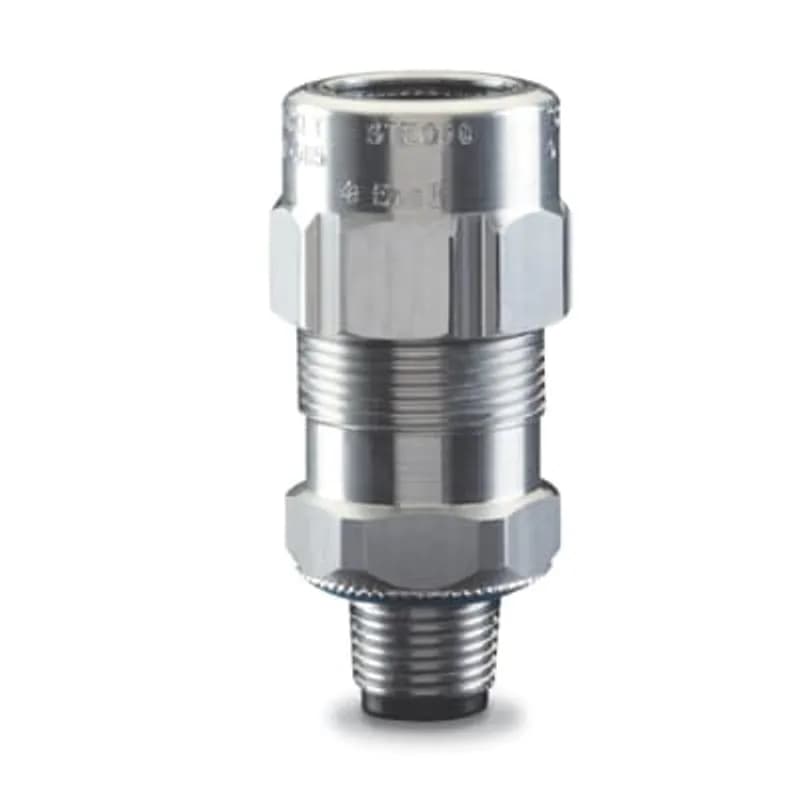
ABB - Installation Products STE150S Star Teck Extreme steel jacketed cable fitting. Hub size of 1-1/2 inch. Range over…
UPC: 786210930398
Contact for Pricing
Call (262) 252-1600 or email [email protected] for pricing and availability.
Overview
- Hub size: 1-1/2 inch
- Range over jacket: 1.440 - 1.965 inch
- Range-taking design replaces three conventional fittings
- Removable armour stop for flexible installation
- Durable steel construction for industrial environments
Specifications
Color | Silver |
Material | Steel |
Size | 1-1/2 Inches |
Standard | UL E38947, CSA 23086, CSA 4484 |
Type | Teck Cable Fittings |
Package Dimensions (L x W x H) | 0.01 IN x 0.01 IN x 0.01 IN |
Package Dimensions (L x W x H) | 0.0254 cm x 0.0254 cm x 0.0254 cm |
Package Weight (Imperial) | 0.3400 L |
Package Weight (Metric) | 0.1540 kg |

SPL63/200/M
Liquid Tight Oil Resistant Covered Steel Flexible Conduit, Nominal Conduit Size 63mm, 2 Inch US Conduit Size, Outside Diameter 59.7mm, Inside Diameter 51.6mm, Static Bend Radius 345mm, Reel Length 200 Meters, PVC Covered Galvanised Steel, Black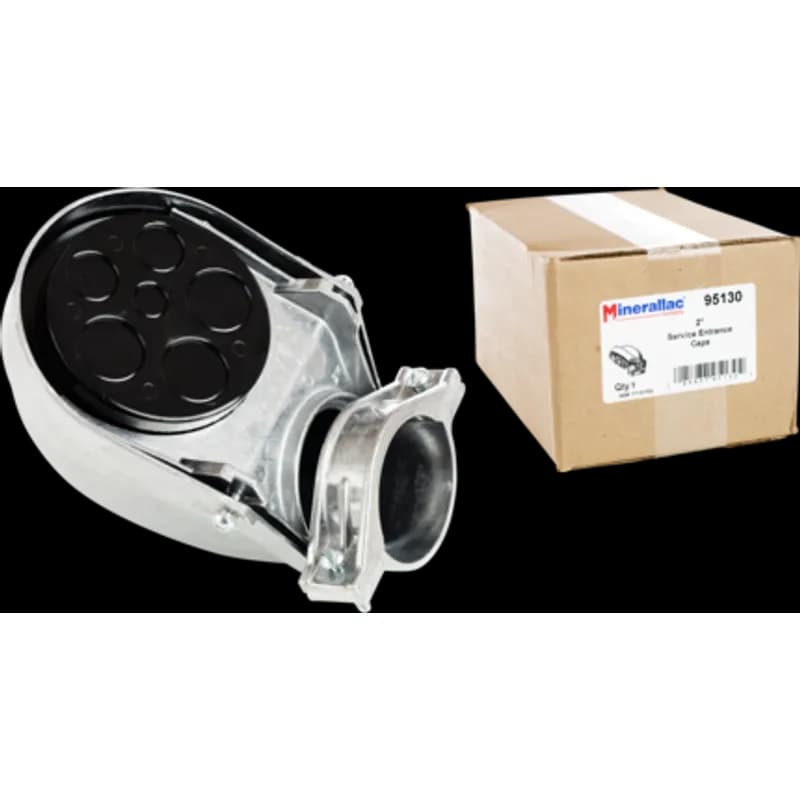
95138
Clamp-on service entrance cap for 4-inch EMT and rigid/IMC conduit. It is made of aluminum with a silver color and no additional finish. The enclosure is listed as Weatherhead.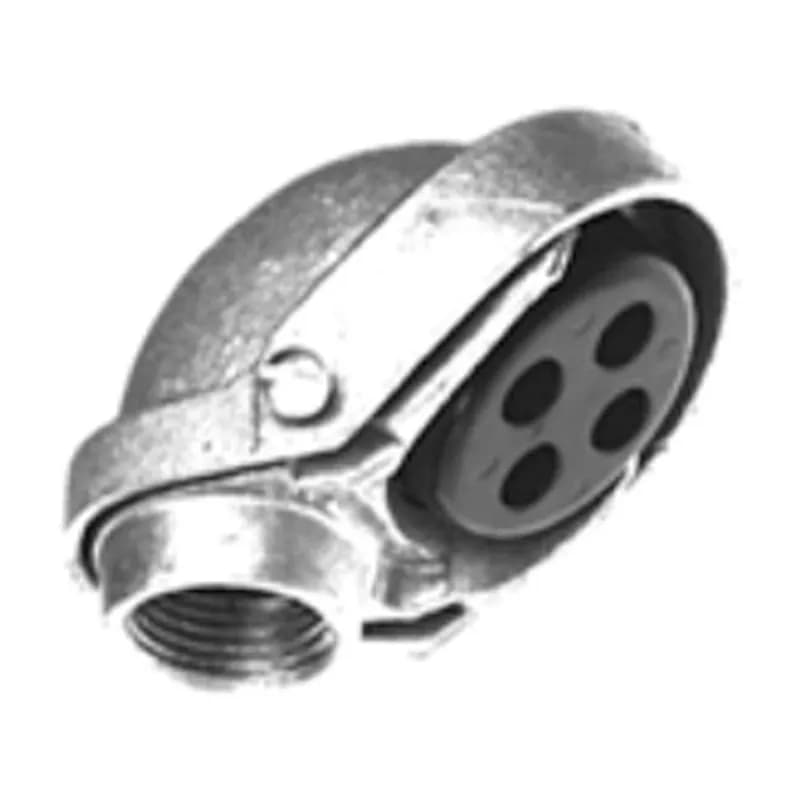

STE200
Star Teck Extreme aluminum jacketed cable fitting. Hub size of 2 inches. Range over jacket from 1.825 - 2.375 inches.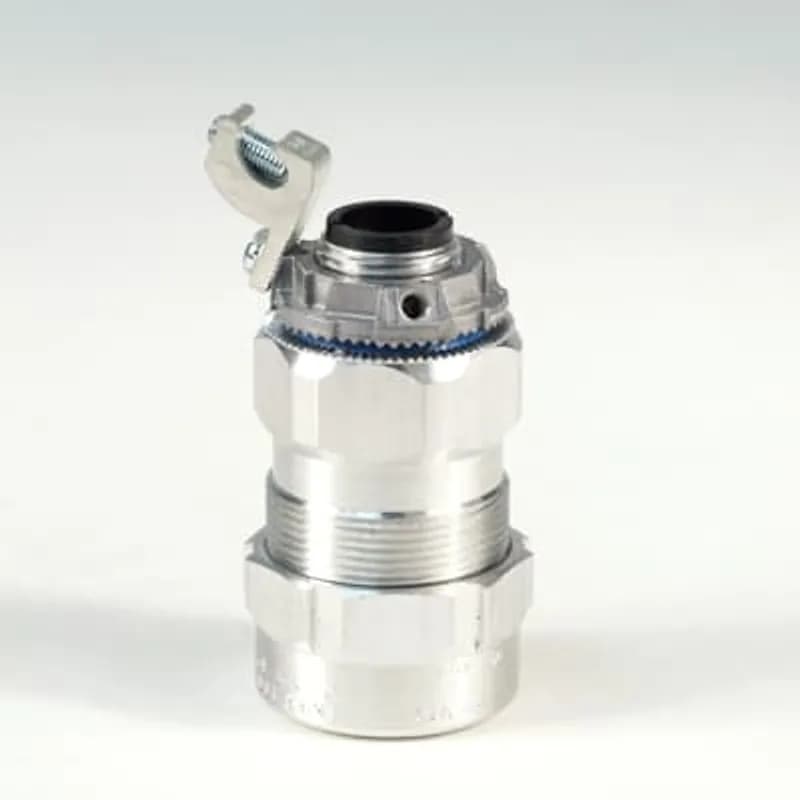
STE200GRL
Star Teck Extreme aluminum jacketed cable fitting. Hub size of 2 inches. with Bond Star grounding locknut. Range over jacket from 1.825 - 2.375 inches.STE200S
Star Teck Extreme steel jacketed cable fitting. Hub size of 2 inches. Range over jacket from 1.825 - 2.375 inches.STE250
Star Teck Extreme aluminum jacketed cable fitting. Hub size of 2-1/2 inches. Range over jacket from 2.265 - 2.840 inches.Frequently Asked Questions
What is the operating temperature range for STE150S?
The STE150S operates in a working temperature range of -40 to +90°C (-40 to +194°F).
What is the cable armor range for the STE150 fitting?
For the STE150, the range over the armor is 1.280 inches minimum to 1.805 inches maximum.
Can the armor stop be removed from the STE150S?
Yes, the STE series features a removable armor-stop, which allows for greater cable ranges.
What are the installation requirements for the product?
The product must be installed in accordance with applicable national and local electrical codes.
Does the STE150S conform to RoHS directives?
Yes, the STE series conforms to RoHS Directive 2011/65/EU, incorporating the 2015/863 amendment to Annex II.
Is the STE150S suitable for wet and dry locations?
Yes, the STE series fittings are suitable for both wet and dry locations, conforming to UL514B/50 and CSA C22.2-18.3/-94.
What is the cable jacket range for the STE150 fitting?
For the STE150, the range over the jacket is 1.440 inches minimum to 1.965 inches maximum.
What is the NPT thread size for the STE150 part number?
The STE150 part number has a 1-1/2 NPT thread size.
Does the STE150S provide grounding continuity for cable armor?
Yes, the STE series fitting provides grounding continuity of the cable armor.
What is the ingress protection rating of the STE150S?
The STE150S has an ingress protection rating of Type 4 / 4X.
How to Install Star Teck™ Extreme STE Cable Fittings
This guide provides step-by-step instructions for properly installing Star Teck™ Extreme STE cable fittings, ensuring a secure and sealed connection for armored cables in accordance with electrical codes.
Estimated time: 15m
Tools needed:
Hacksaw, Wire strippers, Screwdriver
Supplies needed:
Star Teck™ Extreme STE cable fitting, Armored cable
- Prepare for Installation and Select Fitting
WARNING: Disconnect all power before beginning installation to prevent risk of electric shock. Ensure the product is installed by a qualified electrician in accordance with national and local electrical codes. Select the appropriate Star Teck™ Extreme STE fitting that matches the enclosure and the cable you are using.
- Prepare the Cable Armor
Determine the required working length of conductors inside the enclosure. Carefully remove a portion of the cable's outer jacket to expose the armor. Use a hacksaw to cut the armor, then trim the outer jacket to achieve the exposed armor strip length specified in the product table (Figure 1). Ensure the strip length is equal to the glandnut length (Figure 2). CAUTION: Do not nick or cut the conductor insulation during this process.
- Insert Cable into the Fitting
Feed the prepared cable through the gland funnel entry of the fitting. Push the cable until its armor firmly contacts the armor stop (Figure 3). Verify that the cable armor is correctly positioned to ensure proper grounding. If the inner conductor bundle does not pass through, proceed to Step 4 to remove the armor stop.
- (Conditional) Remove the Armor Stop
If the inner conductor bundle cannot pass through the fitting, unscrew and discard the armor stop (Figure 6). After removing the armor stop, repeat Step 3 to insert the cable into the fitting.
- Tighten the Gland Nut
Tighten the gland nut firmly until an appropriate seal is achieved, or to the maximum torque specified in the product table (Figure 4). Ensure the bushing and collar ring seal evenly around the cable's outer jacket and are flush with the glandnut face (Figure 5). Keep the cable centered during tightening for an optimal seal.
Frequently Asked Questions about ABB - Installation Products
How are Thomas and Betts products typically installed?
Thomas and Betts products are installed using a variety of methods tailored to specific applications, including the use of flexible cords and cable fittings, non-metallic cable glands, and armored cable fittings. Proper selection of fittings is crucial to match the cable type and installation environment, ensuring durability and preventing physical damage. Tools such as the Blackburn® Comfort Crimp® and HEX-FLEX® systems enhance installation efficiency and reliability, reducing labor time and ensuring secure connections.
What accessories are available for Thomas and Betts products?
Thomas and Betts offers a comprehensive range of accessories for their products, including various cord and cable fittings, non-metallic cable glands, service entrance cable fittings, and armored cable fittings. Their accessories are designed to enhance installation efficiency and ensure compatibility with different cable types and environmental conditions, providing reliable connections for a wide array of applications.
What environmental ratings do Thomas and Betts products have?
Thomas and Betts products feature robust environmental ratings, including NEMA Type 1, 2, 3, 4, 4X, 12, and 13 certifications, as well as IEC 60529 IP66 protection. These ratings ensure that their products are designed to withstand harsh industrial environments, with capabilities to resist dust, water, and corrosion, and operate effectively in a wide temperature range.
What communication protocols do Thomas and Betts products support?
Thomas and Betts products support a wide range of industrial communication protocols, including Ethernet, DeviceNet, PROFIBUS, Modbus, CANopen, and others. This extensive compatibility ensures seamless integration and reliable communication across various industrial automation systems, catering to diverse application needs.
What are the key features of Thomas and Betts products?
Thomas and Betts products are known for their innovative designs, high performance, and compliance with industry standards such as the National Electrical Code and Underwriters' Laboratories. They offer a comprehensive range of rugged and reliable electrical fittings, including liquidtight and dust-tight connections, which enhance installation efficiency and reduce overall project costs. Their products are engineered for durability in harsh environments, ensuring long-term reliability and lower installed costs.
What are the main product lines offered by Thomas and Betts?
Thomas and Betts offers a comprehensive range of product lines including electrical connectors, cable management systems, grounding and bonding solutions, and industrial automation components. Their products are designed for durability and reliability in demanding industrial environments, ensuring optimal performance and safety across various applications.
What technical support does Thomas and Betts offer?
Thomas and Betts offers comprehensive technical support, including access to field application engineers for onsite training and installation assistance. Their technical support staff is available to address inquiries related to product specifications and installation practices, ensuring optimal performance and safety of electrical systems. Additionally, they provide a variety of training programs to enhance the knowledge and skills of users in the field.
What industries and applications are Thomas and Betts products used for?
Thomas and Betts products are utilized across various industries including electrical construction, industrial automation, telecommunications, and utilities. Their extensive range of cord and cable fittings, electrical boxes, and metal framing systems are designed for applications that require durability and reliability in harsh environments, ensuring optimal performance in both permanent and temporary installations.
What certifications and standards do Thomas and Betts products comply with?
Thomas and Betts products comply with critical international certifications including UL (Underwriters Laboratories), CSA (Canadian Standards Association), and CE (European Community). Our products are designed to meet rigorous industrial standards such as NEMA enclosure ratings and IEC 60529 IP ratings, ensuring safety and reliability across various industrial applications.
What are the main product lines offered by Ocal?
Ocal offers a comprehensive range of corrosion-resistant conduit systems, including PVC-coated conduit and fittings, conduit bodies, hazardous location fittings, and strut accessories. Their products are designed to provide superior corrosion protection, featuring a hot-dipped galvanizing process and UL listed Type 4X PVC-coated conduit bodies, ensuring durability in the most demanding environments.