UPC: 783786661404
Contact for Pricing
Overview
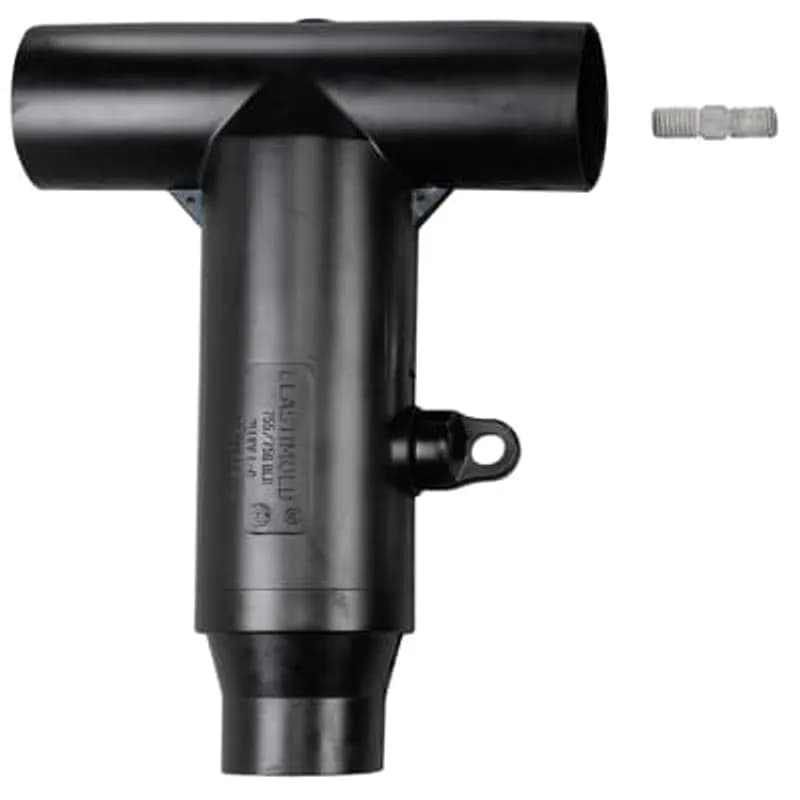
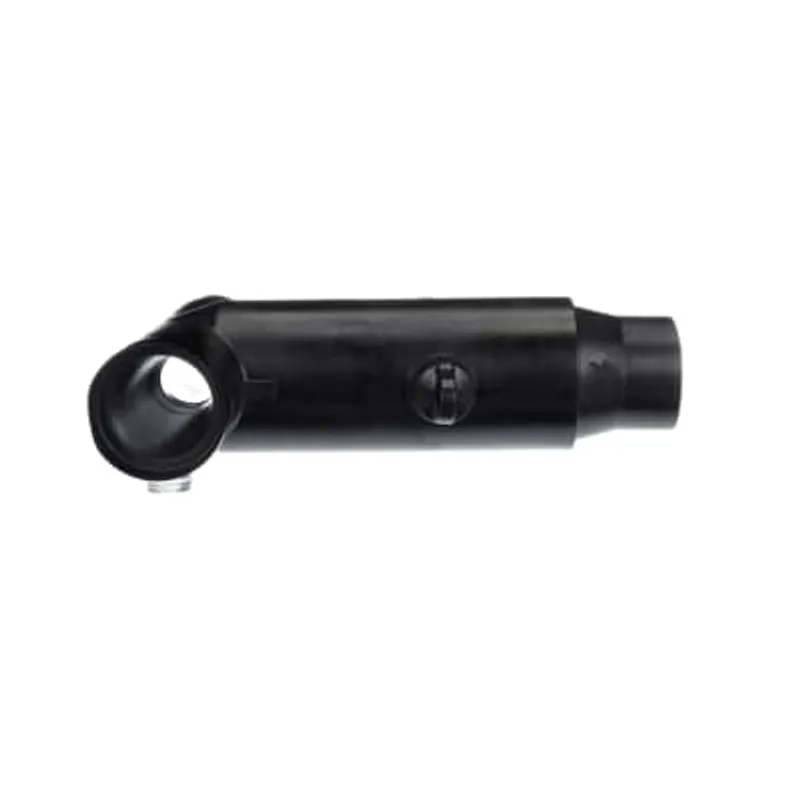
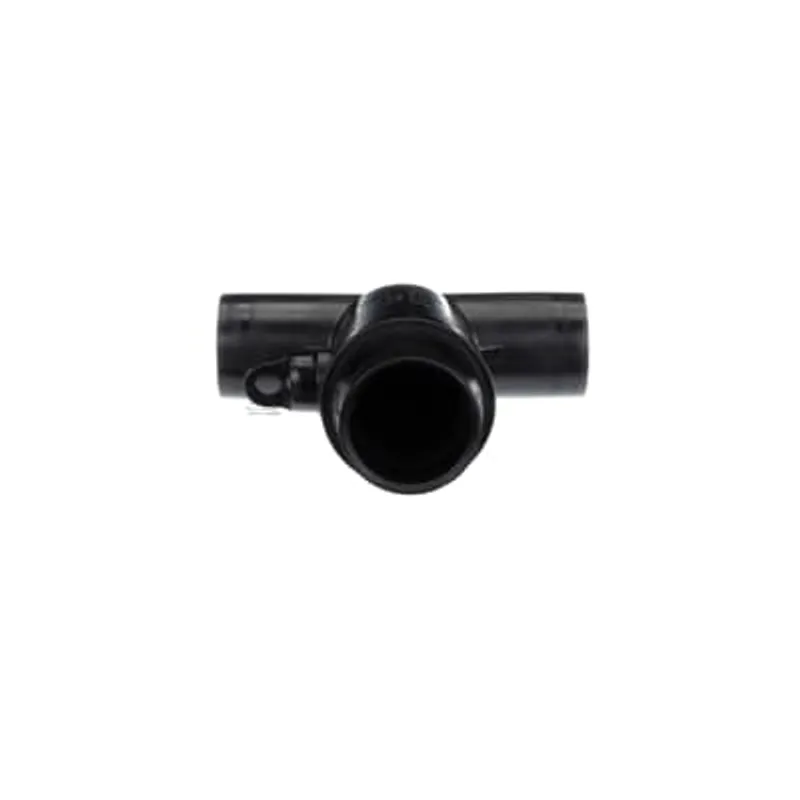
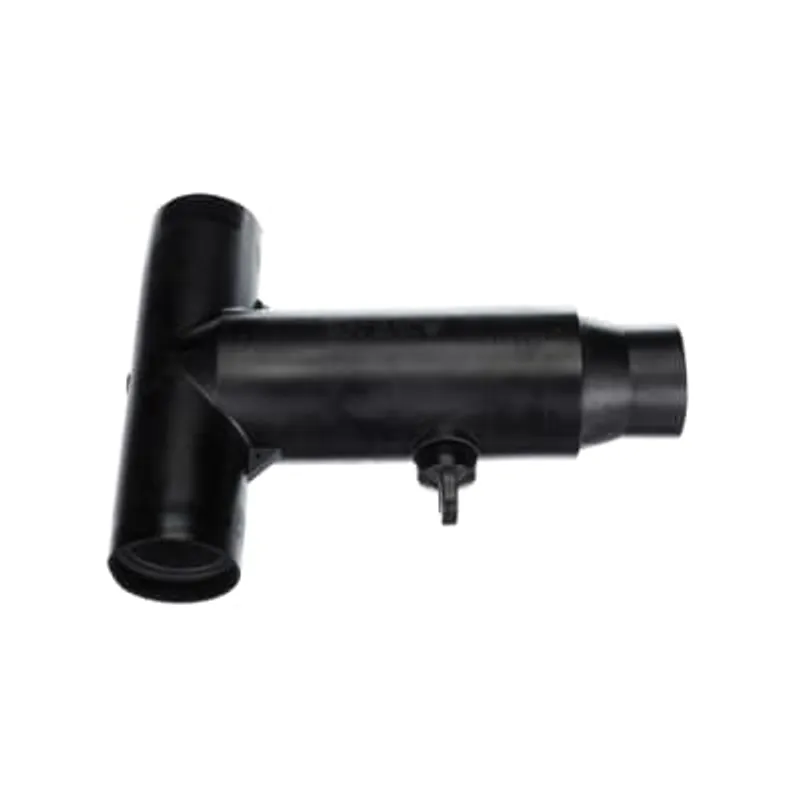
- 35kV rated deadbreak elbow connector
- Test point housing for voltage verification
- Includes stud for secure mating
- Part of ABB 600 Series for medium-voltage systems
- ANSI C119.4 compliant for deadbreak applications
Specifications
Application | 35kV, 600 Amps |
Material | EPDM-Rubber |
Size | Length to Center of Bushing 13.93 inch, Width 10.16 inch |
Temperature Rating, Maximum | 194 F |
Temperature Rating, Maximum | 90 C |
Temperature Rating, Minimum | 194 F |
Temperature Rating, Minimum | 90 C |
Type | Deadbreak Elbow with Test Point Housing Only |
Package Dimensions (L x W x H) | 0.01 IN x 0.01 IN x 0.01 IN |
Package Dimensions (L x W x H) | 0.0254 cm x 0.0254 cm x 0.0254 cm |
Package Weight (Imperial) | 5.1500 L |
Package Weight (Metric) | 2.3360 kg |







Frequently Asked Questions
What items are included in the 756BLR kit?
Each kit contains one 756BLR elbow connector housing, three tubes of lubricant (82-08), one stud (750SA), and one installation instruction (IS-0465).
Does the 756BLR have a test point?
Yes, the 756BLR includes a noncorrosive capacitive test point.
What other Elastimold products are compatible with 756BLR?
The 756BLR can be mated with Elastimold products such as 750CP, 750BIP, 750ETP, 750SOP, 750S1, 750J2, 750J3, or 750J4.
Is the 756BLR housing submersible?
Yes, the 756BLR features a fully shielded and fully submersible molded rubber housing.
What is the momentary current rating for 756BLR?
The 756BLR has a momentary current rating of 25kA Symmetrical for 10 Cycles.
What is the maximum operating voltage for 756BLR?
The maximum phase-to-ground operating voltage for the 756BLR is 21.1kV, and the maximum phase-to-phase voltage is 36.6kV.
What is the impulse withstand rating of the 756BLR?
The 756BLR has a 150kV BIL Impulse Withstand rating, based on a 1.2 x 50 microsecond wave.
What materials are used in the 756BLR construction?
The 756BLR features 100% peroxide-cured construction, including insulation and conductive EPDM materials.
What ANSI/IEEE standard does the 756BLR meet?
The 756BLR meets ANSI/IEEE Standard 386, Latest Revision.
What is the continuous current rating of the 756BLR?
The 756BLR has a continuous current rating of 600 Amps.
How to Install the LINK-C Deadbreak Cam Link Operable Connector System
This guide provides step-by-step instructions for the safe installation and setup of the LINK-C 600 amp Deadbreak Cam Link Operable Connector System, including mounting, wiring, and grounding procedures for high voltage applications.
Estimated time: 2h
Tools needed:
600ATM Operating Tool, Hot stick, Torque wrench, Welding equipment (if using welded studs), Wire strippers, Approved test apparatus
Supplies needed:
600 amp elbow (with separate instructions), Stand-off plug (SOP), Hex nuts (3/8-16), Lockwashers, Studs (3/8-16 x 2") (if welding), ELASTIMOLD supplied lubricant, 600 amp bushing extender, Retainer contact, Epoxy standoff plug, Alignment bracket (with supplied hardware), LINK (Deadbreak Cam Link Operable Connector), #14 AWG or #12 AWG solid copper wire, Appropriate grounding connector, Mating 200 amp product (with separate instructions), HV insulated cap(s) or connector(s) (if replacing shipping covers)
- De-energize Apparatus and Inspect Components
DANGER: Ensure all apparatus is de-energized before beginning installation or removal of any parts. Verify the system is de-energized using approved test apparatus. Do not touch or move energized products. Inspect all components for damage, correct ratings, and compatibility with mating parts. If the product was supplied with protective shipping covers, remove them and replace with appropriate HV insulated caps or connectors before submerging or energizing the circuit.
- Install 600 Amp Elbow onto Cable
Install the 600 amp elbow onto the cable according to its specific installation instructions. Ensure the elbow is positioned to align correctly with the stand-off plug.
- Install Mounted Stand-Off Plug (if applicable)
Weld three 3/8-16 x 2” studs to the equipment faceplate according to customer standard practice and specified dimensions. Install three hex nuts onto the studs to support the stand-off plug, ensuring it aligns with the bushing. Place the stand-off plug over the studs, resting on the nuts or optional spacers. Secure the stand-off plug by installing a lockwasher and hex nut on each stud, then tighten to 12 foot-lbs torque. Verify that the top surfaces of the bushing and stand-off plug are in-line, adjusting nuts as needed.
- Install Bushing Extender and Elbow
Clean and thoroughly lubricate the apparatus bushing and both interfaces of the 600 amp bushing extender with ELASTIMOLD supplied lubricant. Install the bushing extender onto the apparatus bushing. Insert the 600ATM tool into the retainer contact, engage the internal hex broach, and thread the retainer contact into the apparatus bushing, torquing to 50-60 ft-lbs. Next, clean and lubricate the epoxy standoff plug and both interfaces of the 600 amp elbow. Install the elbow onto the epoxy standoff plug. Insert the 600ATM tool into the retainer contact, engage the internal hex broach, and thread the retainer contact into the epoxy standoff plug through the compression lug hole, torquing to 50-60 ft-lbs.
- Install Alignment Bracket
Remove the bushing extender clamp and elbow clamp from the alignment bracket. Position the alignment bracket on the bushing extender 2.5 inches (63.5mm) from the grounding eye. Assemble the bushing extender clamp to the alignment bracket with the supplied hardware, torquing by alternating sides until the clamp tabs are flush and tight. Position the elbow in the alignment bracket so its cuff is evenly lined with the bushing extender cuff. Assemble the elbow clamp to the alignment bracket with supplied hardware, torquing by alternating sides until the clamp tabs are flush and tight. Ensure the elbow clamp notch faces the cable entrance of the elbow.
- Install the LINK Connector
Clean and thoroughly lubricate both 600 ampere interfaces of the LINK with ELASTIMOLD supplied lubricant. Align the LINK to be perpendicular to the switch faceplate when inserted into the bushing extender and elbow. Insert the LINK into the bushing extender and elbow, ensuring both lever arms are inside the alignment bracket legs. Engage the pivot pin into the slots of the alignment bracket legs. While pushing inward, use a hot stick to move the lever arms downward, engaging the roller pin and moving the LINK inward until the lever arms are perpendicular to the alignment bracket leg.
- Ground the System
Ground the elbow by feeding a #14 AWG or #12 AWG solid copper wire through its grounding eye, twisting it tight, and connecting it to ground. Clean and lubricate the 200 amp interface on the LINK. Ground and then install the desired mating product onto the 200 amp interface according to its specific installation instructions. Ground the cable: if using concentric neutral cable, twist the neutral wires together and connect to ground with an appropriate connector; if using 20MA or 21MA grounding devices, connect their ground lead to ground with a suitable connector. For three-phase installations, tie all grounds from all three phases to a common ground point.
Frequently Asked Questions about ABB - Installation Products
How are Thomas and Betts products typically installed?
Thomas and Betts products are installed using a variety of methods tailored to specific applications, including the use of flexible cords and cable fittings, non-metallic cable glands, and armored cable fittings. Proper selection of fittings is crucial to match the cable type and installation environment, ensuring durability and preventing physical damage. Tools such as the Blackburn® Comfort Crimp® and HEX-FLEX® systems enhance installation efficiency and reliability, reducing labor time and ensuring secure connections.
What accessories are available for Thomas and Betts products?
Thomas and Betts offers a comprehensive range of accessories for their products, including various cord and cable fittings, non-metallic cable glands, service entrance cable fittings, and armored cable fittings. Their accessories are designed to enhance installation efficiency and ensure compatibility with different cable types and environmental conditions, providing reliable connections for a wide array of applications.
What environmental ratings do Thomas and Betts products have?
Thomas and Betts products feature robust environmental ratings, including NEMA Type 1, 2, 3, 4, 4X, 12, and 13 certifications, as well as IEC 60529 IP66 protection. These ratings ensure that their products are designed to withstand harsh industrial environments, with capabilities to resist dust, water, and corrosion, and operate effectively in a wide temperature range.
What communication protocols do Thomas and Betts products support?
Thomas and Betts products support a wide range of industrial communication protocols, including Ethernet, DeviceNet, PROFIBUS, Modbus, CANopen, and others. This extensive compatibility ensures seamless integration and reliable communication across various industrial automation systems, catering to diverse application needs.
What are the key features of Thomas and Betts products?
Thomas and Betts products are known for their innovative designs, high performance, and compliance with industry standards such as the National Electrical Code and Underwriters' Laboratories. They offer a comprehensive range of rugged and reliable electrical fittings, including liquidtight and dust-tight connections, which enhance installation efficiency and reduce overall project costs. Their products are engineered for durability in harsh environments, ensuring long-term reliability and lower installed costs.
What are the main product lines offered by Thomas and Betts?
Thomas and Betts offers a comprehensive range of product lines including electrical connectors, cable management systems, grounding and bonding solutions, and industrial automation components. Their products are designed for durability and reliability in demanding industrial environments, ensuring optimal performance and safety across various applications.
What technical support does Thomas and Betts offer?
Thomas and Betts offers comprehensive technical support, including access to field application engineers for onsite training and installation assistance. Their technical support staff is available to address inquiries related to product specifications and installation practices, ensuring optimal performance and safety of electrical systems. Additionally, they provide a variety of training programs to enhance the knowledge and skills of users in the field.
What industries and applications are Thomas and Betts products used for?
Thomas and Betts products are utilized across various industries including electrical construction, industrial automation, telecommunications, and utilities. Their extensive range of cord and cable fittings, electrical boxes, and metal framing systems are designed for applications that require durability and reliability in harsh environments, ensuring optimal performance in both permanent and temporary installations.
What certifications and standards do Thomas and Betts products comply with?
Thomas and Betts products comply with critical international certifications including UL (Underwriters Laboratories), CSA (Canadian Standards Association), and CE (European Community). Our products are designed to meet rigorous industrial standards such as NEMA enclosure ratings and IEC 60529 IP ratings, ensuring safety and reliability across various industrial applications.
What are the main product lines offered by Ocal?
Ocal offers a comprehensive range of corrosion-resistant conduit systems, including PVC-coated conduit and fittings, conduit bodies, hazardous location fittings, and strut accessories. Their products are designed to provide superior corrosion protection, featuring a hot-dipped galvanizing process and UL listed Type 4X PVC-coated conduit bodies, ensuring durability in the most demanding environments.