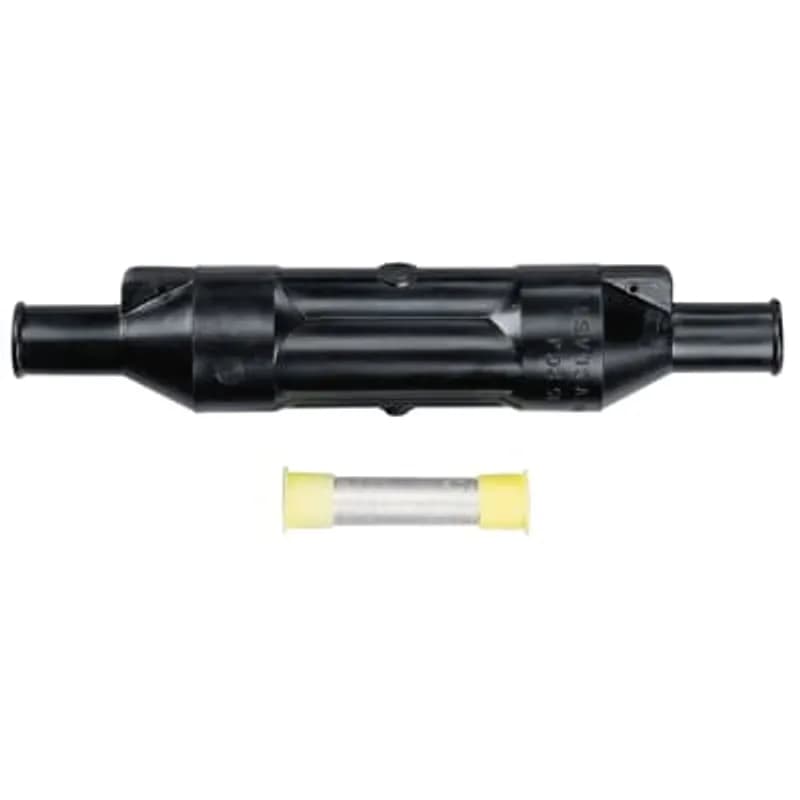
Contact for Pricing
Overview
- Single-piece housing simplifies installation and reduces assembly errors
- Rated for 25kV applications in power distribution and transmission systems
- Accommodates cable insulation diameters from 0.850" to 1.050"
- Supports conductor sizes from #6 AWG to 1/0 AWG (stranded) and #5 AWG to 4/0 AWG (compressed)
- Includes lubricant tube and installation instructions for field-ready assembly
Specifications
Application | For Direct Burial, Vault, Submersible and Other Severe Service Applications |
Color | Black |
Connection | Compression |
Insulation | Yes |
Material | EPDM Rubber |
Number Of Conductors | 2 |
Series | Style 1 |
Size | 14-3/8 inch long |
Size | 0.850-1.050 inch insulation diameter |
Special Features | Power Cable Joints utilize permanently crimped connectors. PCJ housings are fully insulated, shielded and sealed for direct-burial, vault, submersible and other servere service applications. Units have been designed and tested per IEEE Standard 404 to ensure system matched performance and ratings equal to the cable to which the splice will be installed. Power Cable Joints are available in two styles. Style 1 uses a single-piece housing that is sized to accommodate a specific range of cable - ideally suited to straight splicing of the same or similar cable. Style 2 designs incorporate a universal housing with separate cable adapters to allow transition splices of different types and sizes of cable |
Standard | IEEE Standard 404 |
Type | Power Cable Joint |
Voltage Rating | 25 kV |
Package Dimensions (L x W x H) | 0.01 IN x 0.01 IN x 0.01 IN |
Package Dimensions (L x W x H) | 0.0254 cm x 0.0254 cm x 0.0254 cm |
Package Weight (Imperial) | 1.7500 L |
Package Weight (Metric) | 0.7940 kg |
25PCJ1N2380
25kV Power Cable Joint Style 1 with Single Piece Housing, Cable Insulation Diameter 1.515 inch to 1.780 inch. Copper Conductor. Conductor Size AWG Stranded 750.
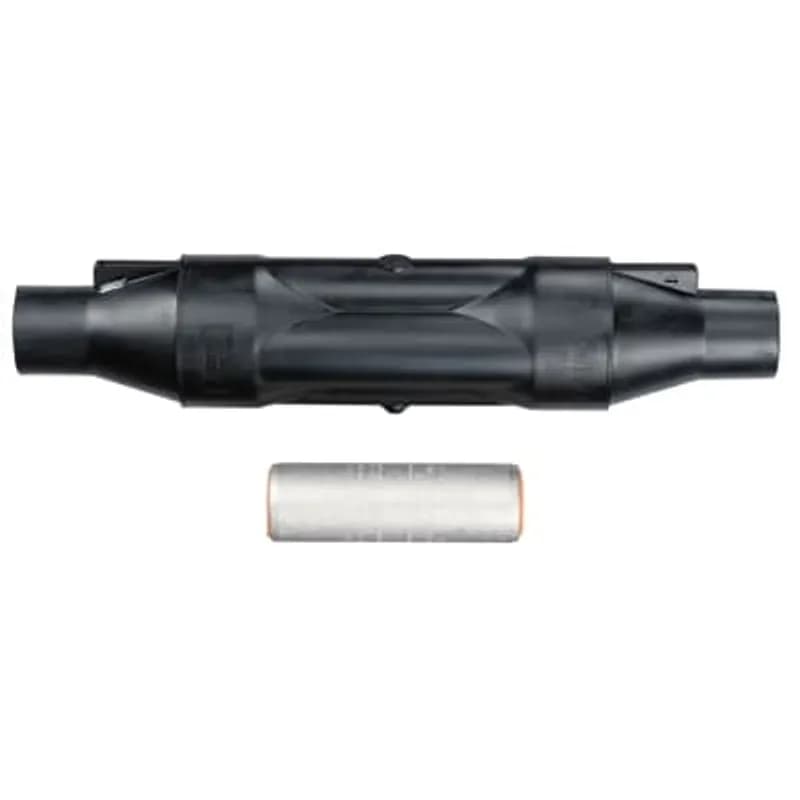
35PCJ1N2360
35kV Power Cable Joint Style 1 with Single Piece Housing, Cable Insulation Diameter 1.515 inch to 1.780 inch. Copper Conductor. Conductor Size AWG Solid 750.25PCJ1H1220
25kV Power Cable Joint Style 1 with Single Piece Housing, Cable Insulation Diameter 0.850 inch to 1.050 inch. Aluminum Conductor. Conductor Size AWG Stranded #2/Solid #1.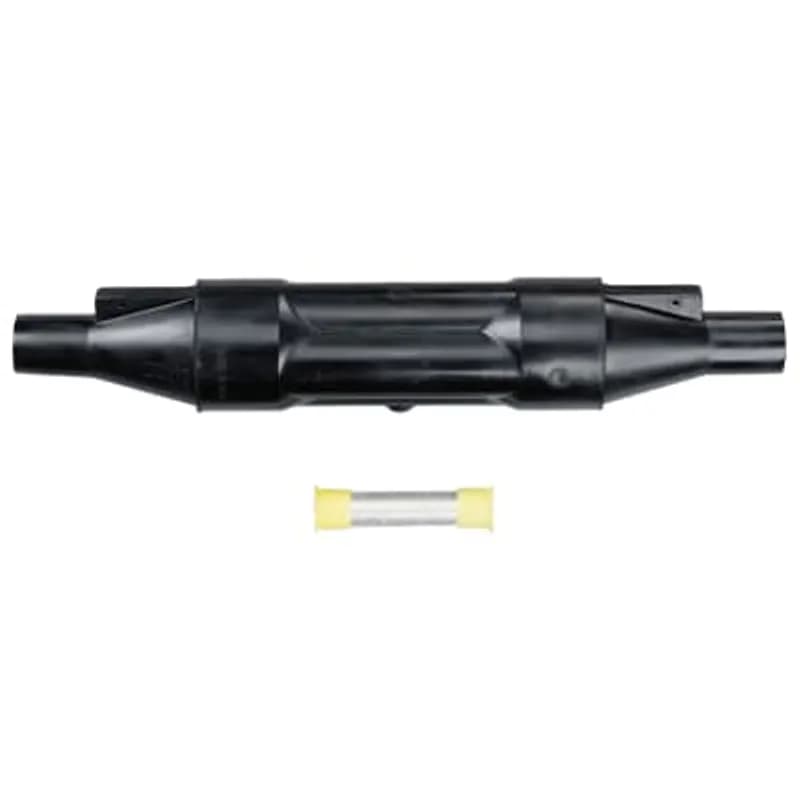
15PCJ1H1260
15kV Power Cable Joint Style 1 with Single Piece Housing, Cable Insulation Diameter 0.850 inch to 1.050 inch. Aluminum Conductor. Conductor Size AWG Stranded 3/0 or Solid 4/0.25PCJ1G1240-1220
25kV Power Cable Joint Style 1 with Single Piece Housing, Cable Insulation Diameter 0.760 inch to 0.950 inch. Aluminum Conductor. Conductor Size AWG Stranded 1/0 /Solid 2/0. Aluminum Conductor. Conductor Size AWG Stranded #2/Solid #1.25PCJ1H1250-1230
25kV Power Cable Joint Style 1 with Single Piece Housing, Cable Insulation Diameter 0.850 inch to 1.050 inch. Aluminum Conductor. Conductor Size AWG Stranded 2/0 /Solid 3/0. Aluminum Conductor. Conductor Size AWG Stranded #1/Solid 1/0.25PCJ1K1300
25kV Power Cable Joint Style 1 with Single Piece Housing, Cable Insulation Diameter 1.090 inch to 1.310 inch. Aluminum Conductor. Conductor Size AWG Stranded 350.Frequently Asked Questions
What is the compatible cable insulation diameter range?
This ABB 25kV Power Cable Joint Style 1 is compatible with cable insulation diameters ranging from 0.850 inches to 1.050 inches.
What is the voltage rating of this cable joint?
The ABB 25kV Power Cable Joint Style 1 is rated for 25kV applications.
Who is the manufacturer of this cable joint?
This 25kV Power Cable Joint Style 1 is manufactured by ABB - Installation Products.
What type of housing does this cable joint feature?
This ABB 25kV Power Cable Joint Style 1 features a single-piece housing.
How to Install the 15/25/35PCJ1 Cable Joint
This guide provides detailed instructions for installing the 15/25/35PCJ1 series permanent, fully shielded, and submersible cable joint for aluminum or copper conductors.
Estimated time: 2h
Tools needed:
Wire strippers, Wire-brush, Crimping tool, T&B WT3D tool (recommended for 35kV only)
Supplies needed:
Joint Housing, Splice (Conductor Contact), Lubricant (DO NOT SUBSTITUTE), Connector (User Supplied), DELTECt Cable ties TYD5135 (for 35kV ONLY), #14 AWG copper wire or equivalent (if shield wires are smaller)
- De-energize Apparatus and Inspect Components
DANGER: All apparatus must be de-energized during installation or removal of parts. Do not touch or move energized products. Inspect all package contents for completeness and damage. Verify all components for proper fit with the cable and/or mating products. Read the entire installation instructions before starting.
- Prepare Cables for Jointing
Overlap both cables and cut them to 12 inches (305mm) from the center line of the joint to ensure sufficient length of shield wires for rejoining. Where applicable, remove the cable jacket of Cable 1 to 37 inches (940mm) and Cable 2 to 21 inches (530mm). Fold back the shield wires. Cut both cables at the center line of the joint.
- Prepare Cable 1 and Store Housing
Taper the edge of Cable 1 at least 1/2 inch to no greater than 1-1/2 inches (13mm to 38mm). Clean and lubricate the insulation shield. Lubricate the inside bore of the joint housing on both ends. Slide the housing onto Cable 1 up to the shield wires.
- Prepare Cables for Splice Installation
Carefully remove the cable insulation and then the insulation shield from both cables. Exercise extreme caution to avoid cutting or nicking the cable insulation or conductor during this process.
- Install the Splice
If conductors are aluminum, wire-brush them and immediately insert them into the splice. Check the dimension against the provided table; if it exceeds the Max Check Before dimension, redo the assembly. Crimp the splice following the manufacturer's recommendations. Wipe off all excess inhibitor. Check the distance between cable insulations; if it exceeds the Max Check After dimension, redo the assembly. Remove any sharp protrusions or burrs generated during crimping and ensure all metal chips/filings are removed from the splice and joint assembly area before sliding the joint.
- Clean and Lubricate Cables
Clean the cables where indicated. Lubricate in the direction of the arrows to provide a build-up or ramp of lubricant at the edge of the insulation shield.
- Complete Joint Assembly
Slide the housing into its final position. Ensure proper positioning by observing and equalizing the deformation of the joint ends caused by the underlying cable insulation shield.
- Install Cable Ties and Remove Pin (35kV Only)
For 35kV ONLY: Install two DELTECt Cable ties on each end of the cable entrance. Install the outer ties approximately 1/4 inch from the edge of the splice, then install the second ties approximately 1/4 inch from the first with an offset of the locking heads. Use the T&B WT3D tool (not included) to tighten and trim the ties. Remove the yellow pin from the joint grounding eye and discard it.
- Connect Grounding Wires
Retrain the shield wires and secure them to the ends of the joint as shown in the diagram. Insert one of the shield wires from Cable 1 (if #14 AWG or larger) through the joint grounding eye, and repeat for Cable 2. If shield wires are smaller than #14 AWG, use separate #14 AWG copper wire or equivalent. Connect the joint grounding wires and remaining shield wires using an appropriate connector.
- Reconstruct Cable Jacket
Reconstruct the cable jacket (where applicable) over both cables and the joint housing to complete the installation.
Frequently Asked Questions about ABB - Installation Products
How are Thomas and Betts products typically installed?
Thomas and Betts products are installed using a variety of methods tailored to specific applications, including the use of flexible cords and cable fittings, non-metallic cable glands, and armored cable fittings. Proper selection of fittings is crucial to match the cable type and installation environment, ensuring durability and preventing physical damage. Tools such as the Blackburn® Comfort Crimp® and HEX-FLEX® systems enhance installation efficiency and reliability, reducing labor time and ensuring secure connections.
What accessories are available for Thomas and Betts products?
Thomas and Betts offers a comprehensive range of accessories for their products, including various cord and cable fittings, non-metallic cable glands, service entrance cable fittings, and armored cable fittings. Their accessories are designed to enhance installation efficiency and ensure compatibility with different cable types and environmental conditions, providing reliable connections for a wide array of applications.
What environmental ratings do Thomas and Betts products have?
Thomas and Betts products feature robust environmental ratings, including NEMA Type 1, 2, 3, 4, 4X, 12, and 13 certifications, as well as IEC 60529 IP66 protection. These ratings ensure that their products are designed to withstand harsh industrial environments, with capabilities to resist dust, water, and corrosion, and operate effectively in a wide temperature range.
What communication protocols do Thomas and Betts products support?
Thomas and Betts products support a wide range of industrial communication protocols, including Ethernet, DeviceNet, PROFIBUS, Modbus, CANopen, and others. This extensive compatibility ensures seamless integration and reliable communication across various industrial automation systems, catering to diverse application needs.
What are the key features of Thomas and Betts products?
Thomas and Betts products are known for their innovative designs, high performance, and compliance with industry standards such as the National Electrical Code and Underwriters' Laboratories. They offer a comprehensive range of rugged and reliable electrical fittings, including liquidtight and dust-tight connections, which enhance installation efficiency and reduce overall project costs. Their products are engineered for durability in harsh environments, ensuring long-term reliability and lower installed costs.
What are the main product lines offered by Thomas and Betts?
Thomas and Betts offers a comprehensive range of product lines including electrical connectors, cable management systems, grounding and bonding solutions, and industrial automation components. Their products are designed for durability and reliability in demanding industrial environments, ensuring optimal performance and safety across various applications.
What technical support does Thomas and Betts offer?
Thomas and Betts offers comprehensive technical support, including access to field application engineers for onsite training and installation assistance. Their technical support staff is available to address inquiries related to product specifications and installation practices, ensuring optimal performance and safety of electrical systems. Additionally, they provide a variety of training programs to enhance the knowledge and skills of users in the field.
What industries and applications are Thomas and Betts products used for?
Thomas and Betts products are utilized across various industries including electrical construction, industrial automation, telecommunications, and utilities. Their extensive range of cord and cable fittings, electrical boxes, and metal framing systems are designed for applications that require durability and reliability in harsh environments, ensuring optimal performance in both permanent and temporary installations.
What certifications and standards do Thomas and Betts products comply with?
Thomas and Betts products comply with critical international certifications including UL (Underwriters Laboratories), CSA (Canadian Standards Association), and CE (European Community). Our products are designed to meet rigorous industrial standards such as NEMA enclosure ratings and IEC 60529 IP ratings, ensuring safety and reliability across various industrial applications.
What are the main product lines offered by Ocal?
Ocal offers a comprehensive range of corrosion-resistant conduit systems, including PVC-coated conduit and fittings, conduit bodies, hazardous location fittings, and strut accessories. Their products are designed to provide superior corrosion protection, featuring a hot-dipped galvanizing process and UL listed Type 4X PVC-coated conduit bodies, ensuring durability in the most demanding environments.