Contact for Pricing
Overview
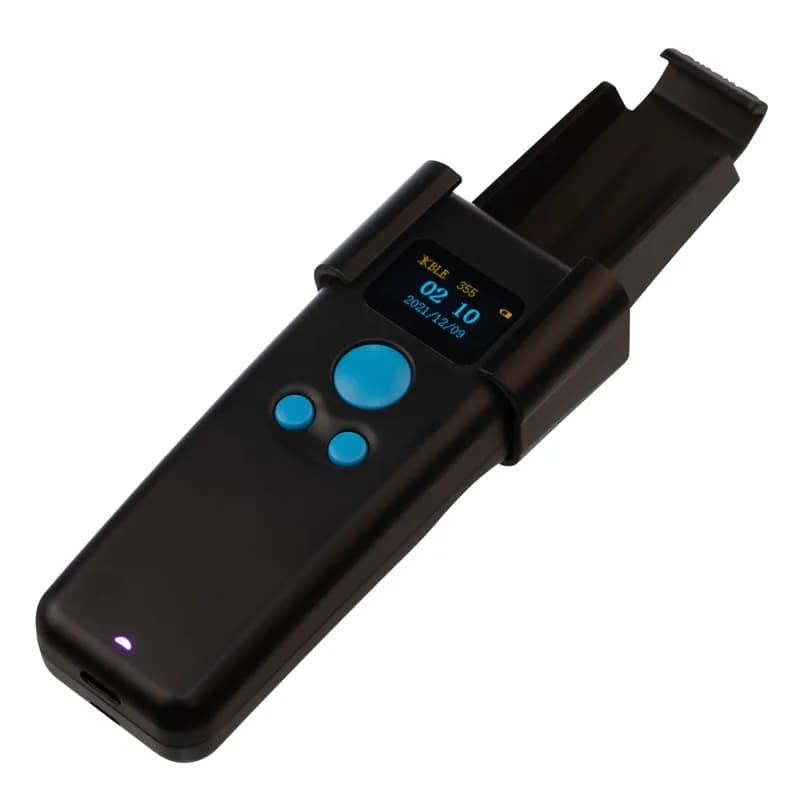
- Handheld Bluetooth-enabled barcode scanner
- Compatible with all RapidID enabled copper and fiber patch cords
- Enables accurate network mapping and documentation
- Wireless operation for increased technician mobility
- Ergonomic design for comfortable extended use
Specifications
Connection Type | Bluetooth |
Series | RapidID Network Mapping System |
Package Dimensions (L x W x H) | 8.625 IN x 5.7 IN x 2.375 IN |
Package Weight (Imperial) | 0.4 lbs |
Frequently Asked Questions
What are the required components for the RapidID system?
The RapidID system requires RapidID-enabled connectivity products, the RapidID Barcode Scanner (RPDSCN), and the RapidID software application.
What types of connectivity products are RapidID-enabled?
RapidID-enabled products include copper patch cords, Opti-Core fiber patch cords, and fiber trunk assemblies, all pre-labeled with unique RapidID barcodes. Retrofit labels are also available for existing infrastructure.
Where can I download the RapidID software?
The RapidID software is available for mobile and tablet applications via Apple iOS and Android play stores. For Windows-PC, it can be downloaded from panduit.com.
What is included in the RPDSCN scanner packaging?
The RPDSCN scanner packaging includes the barcode scanner, a cable clip, a wrist strap, and a 3-foot USB-C to USB-A charging cable.
Does the RPDSCN scanner have an auto shut-off feature?
Yes, the RPDSCN scanner has an auto shut-off feature to save battery life, with a default timeout of 2 minutes. This timeout can be adjusted using barcode settings.
What communication modes does the RPDSCN scanner support?
The RPDSCN scanner supports Bluetooth_HID, Bluetooth_SPP, Bluetooth_BLE (default), Wireless 2.4G, WireUSB_HID, and WireUSB_COM communication modes.
What is the purpose of the RapidID software's Verify function?
The Verify function compares current patch cord locations with previously saved results, highlighting correct connections in green and incorrect ones in red for troubleshooting or audits.
How does the RapidID software's Match function work?
The Match function allows users to find the other end of a patch cable by scanning one RapidID barcode into a reference field and then scanning other cables until the correct match is identified.
Does the RapidID software support third-party barcode scanners?
Yes, as of version 1.2.0, the RapidID software supports third-party barcode scanners via Serial COM interfaces, including Bluetooth Serial Port Profile (SPP) and Wired USB COM.
Can RapidID software provide product information from a barcode?
Yes, by scanning or typing a RapidID label into the barcode text box, the software can retrieve product information like part number, color, length, and flame rating. An internet connection is required.
How to Install the Panduit RapidID Barcode Scanner (RPDSCN)
This guide provides step-by-step instructions for installing and configuring the Panduit RapidID Barcode Scanner (RPDSCN) for effective cable management.
Estimated time: 45m
Tools needed:
Screwdriver, Wire strippers, Multimeter
Supplies needed:
Mounting screws, Terminal connectors
- Mount the scanner
Secure the Panduit RapidID Barcode Scanner (RPDSCN) to a suitable location using mounting screws. Ensure it is firmly attached and accessible.
- Connect the scanner to power
Use the appropriate power supply to connect the scanner to an electrical outlet. Verify that the scanner powers on by checking the indicator light.
- Configure Bluetooth settings
On your Apple or Android tablet, enable Bluetooth in the device settings. Open the RapidID software, navigate to 'Settings', and select 'Barcode Scanner (BLE)'. Click 'Scan Now' to find and connect to the scanner.
- Verify Bluetooth connection
Confirm that the scanner's display matches the number shown in the RapidID software. Ensure that 'BleManagerState' shows 'PoweredOn' to indicate a successful connection.
- Test scanning functionality
Begin using the scanner in Capture mode by entering a module name and scanning the corresponding cable barcode. Ensure that the RapidID software displays matching connections.
Frequently Asked Questions about Panduit
What environmental ratings do Panduit products have?
Panduit products feature comprehensive environmental ratings across multiple standards, including UL 508A Type 1, 2, 3, 4, 4X, 12, and 13; CSA Type 1, 2, 3, 4, 4X, 12, and 13; and NEMA Type 1, 2, 3, 4, 4X, 12, and 13. They meet IEC 60529 IP66 rating, providing robust protection against dust, water, and corrosion in both indoor and outdoor environments, with operating temperatures ranging from -40°C to 130°C.
What certifications and standards do Panduit products comply with?
Panduit products are certified to multiple critical industry standards, including UL (Underwriters Laboratories) in the USA and Canada, CSA (Canadian Standard Association), EN IEC 61386, LVD 2006/G5/EC, and ARRA standards. Our products meet rigorous certifications for electrical safety, environmental compliance (WEEE and RoHS), and are designed to perform in extreme temperatures ranging from -55°C to 105°C, making them suitable for demanding industrial environments.
What industries and applications are Panduit products used for?
Panduit products are engineered for critical applications across multiple industries, including commercial construction, food and beverage, oil and gas, renewable energy, transportation, and safety-critical environments. Their solutions span electrical infrastructure, wire management, cable ties, power connectors, and safety systems designed to withstand extreme conditions like high vibration, temperature variations, UV exposure, and corrosive agents. Key industries include solar and wind energy, aerospace, heavy trucking, military, commercial transportation, and industrial manufacturing.
What are the main product lines offered by Panduit?
Panduit offers a comprehensive range of electrical infrastructure products including power connectors, cable ties, grounding connectors, identification products, safety solutions, terminals, cable cleats, wiring duct, and cable tie accessories. These products are engineered for industrial environments across multiple sectors like commercial construction, food and beverage, oil and gas, renewable energy, transportation, and safety applications.
What are the key features of Panduit products?
Panduit products are engineered for robust performance in heavy-duty industrial environments, featuring a comprehensive range of solutions including cable ties, power connectors, terminals, and identification products. Key features include proven quality performance, subject matter expertise, and customer-driven innovation across multiple industrial sectors such as commercial construction, food and beverage, oil and gas, renewable energy, transportation, and safety applications. The product line is designed to maximize productivity, reliability, and safety while meeting stringent industry standards.
What is Panduit's warranty policy?
Panduit provides a comprehensive Limited Product Warranty that can be fully reviewed on their official website at www.panduit.com/warranty. All Panduit products are subject to the terms, conditions, and limitations of this current warranty. Customers are advised to review the specific warranty details for their particular product, as Panduit requires buyers to determine product suitability for their intended use and assumes all associated risks.
What technical support does Panduit offer?
Panduit offers comprehensive technical support through their dedicated customer service team, accessible via phone at 1-800-777-3300. They provide expert assistance for their full range of industrial infrastructure products, including cable ties, power connectors, terminals, and identification solutions. Customers can also access additional technical resources and product information through their website at www.panduit.com.
What accessories are available for Panduit products?
Panduit offers a wide range of accessories across multiple product lines, including cable ties, cable tie accessories, cable tie tools, identification products, cable cleats, grounding connectors, and VeriSafe accessories like the VeriSafe Network Module and Insulation Piercing Connectors. For a comprehensive view of all available accessories, customers are recommended to visit www.panduit.com for the full product catalog.
How are Panduit products typically installed?
Panduit products are engineered for comprehensive installation across industrial environments, utilizing specialized tools and techniques for precise mounting. Installation methods vary by product line - from cable ties and power connectors to terminals and identification solutions - but all are designed for robust performance in heavy-duty settings. Technicians typically use Panduit's dedicated installation tools and follow manufacturer guidelines available at www.panduit.com to ensure proper fitting and maximum infrastructure reliability.