Contact for Pricing
Overview
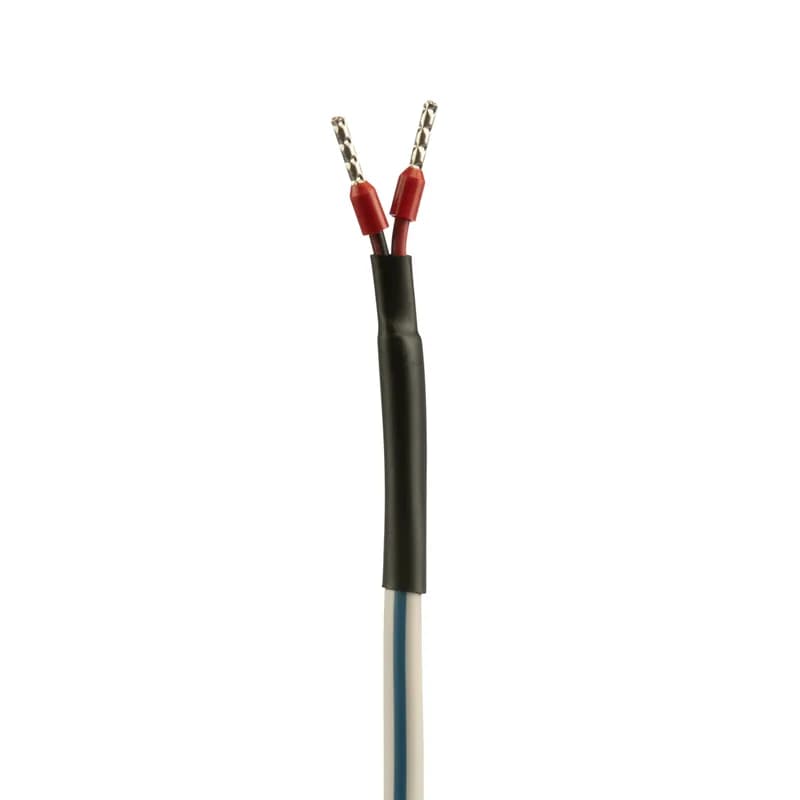
- UL listed and compliant with UL 1400-2 for Class 4 cabling
- Cut to specific predetermined lengths with pre-terminated ferrules
- 18 AWG stranded copper conductors
- Polyvinyl chloride (PVC) insulation
- Flame retardant (CMP) PVC jacket
Specifications
Color | White |
Connection Type | ferrules |
Jacket Material | Polyvinyl Chloride (PVC) |
Material | PVC |
Outside Diameter | 0.197 in |
Outside Diameter | 5.0038 mm |
Performance Level* | Class 4 |
Poles | 2P |
Size | 18 AWG |
Standard | UL-1400-2 (Class 4), NEC Article 725, UL 13 type CL3P NEC Article 726, UL 1400-2 Type CL4P, NEC Article 800, UL 444 CMP |
Temperature Rating, Maximum | 167 F |
Temperature Rating, Maximum | 75 C |
Temperature Rating, Minimum | 167 F |
Temperature Rating, Minimum | 75 C |
Type | FMPS Power Patch Cord |
Package Dimensions (L x W x H) | 8.2 IN x 4.95 IN x 0.8 IN |
Package Dimensions (L x W x H) | 20.828 cm x 12.573 cm x 2.032 cm |
Package Weight (Imperial) | 0.0350 L |
Package Weight (Metric) | 0.0159 kg |
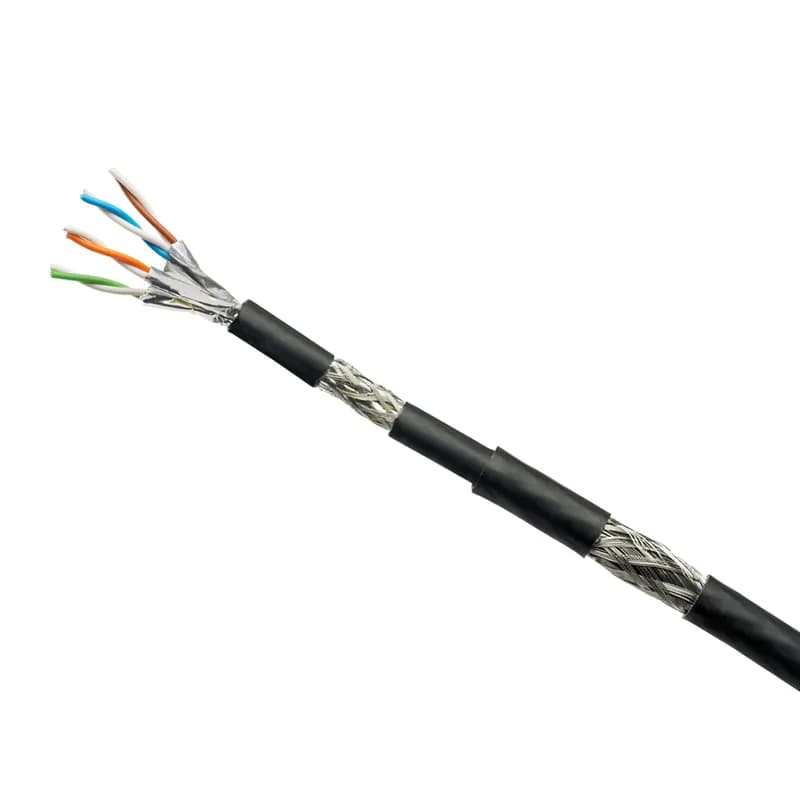
PSMDA7004BL-LED
IndustrialNet Copper Cable, Industrial Ethernet, Harsh Environment, Marine Grade, Category 7, 4-pair, 22 AWG stranded, S/FTP, LSZH, Oil and fuel resistant, UV and MUD resistant, SHF2 compliant, HDPE jacket protected by stainless steel armor and secondary jacket, Black, DNV/GL and ABS certified, 1640ft/500m reel
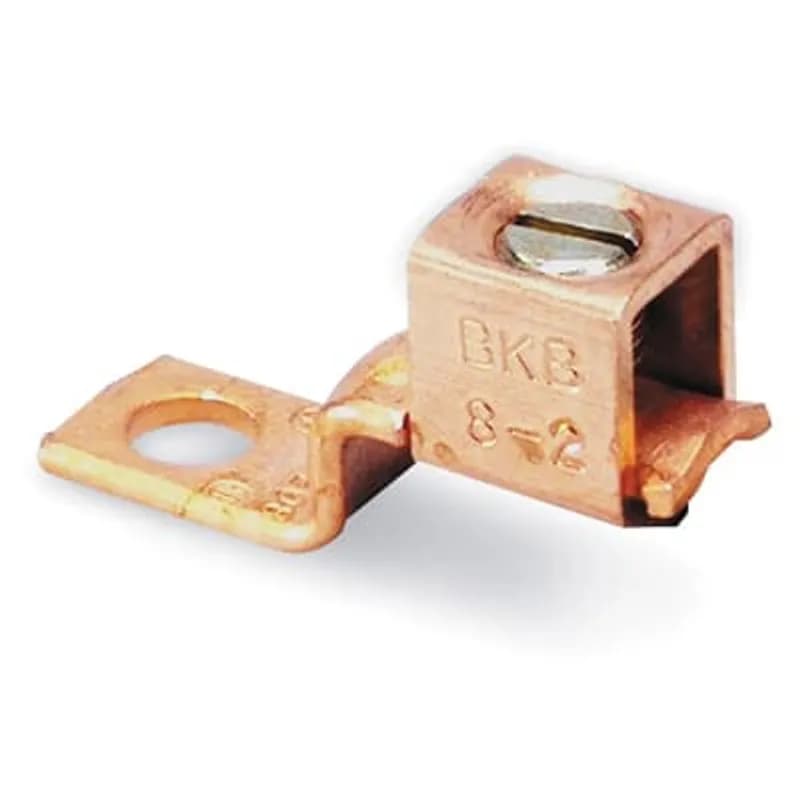
BTC0614
Type BTC - Copper Single-Conductor, One-Hole Mount (Offset-Tang), Conductor Range 6 Str-14 AWG, Length 1-9/64, Width 3/8 Inch, Height 11/16 Inch, 13/64 Bolt Inch Hole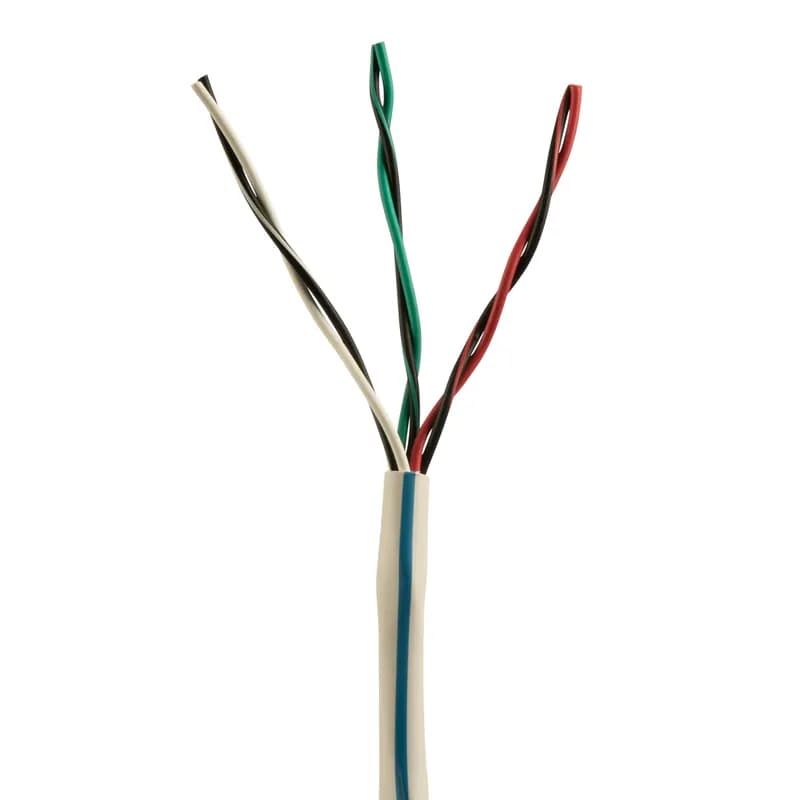
PXUP316AWH-CQ
Class 4 Copper Cable shall be UL listed and compliant with UL 1400-2 for Class 4 cabling. It shall be a component of an end-to-end Class 4 Fault Managed Power System (FMPS) that efficiently and safely carries significant power at higher voltages over long distances. The conductors shall be 16/19 AWG stranded copper insulated with polyvinyl chloride. The copper conductors shall be twisted in pairs and covered by a flame retardant (CMP) PVC jacket.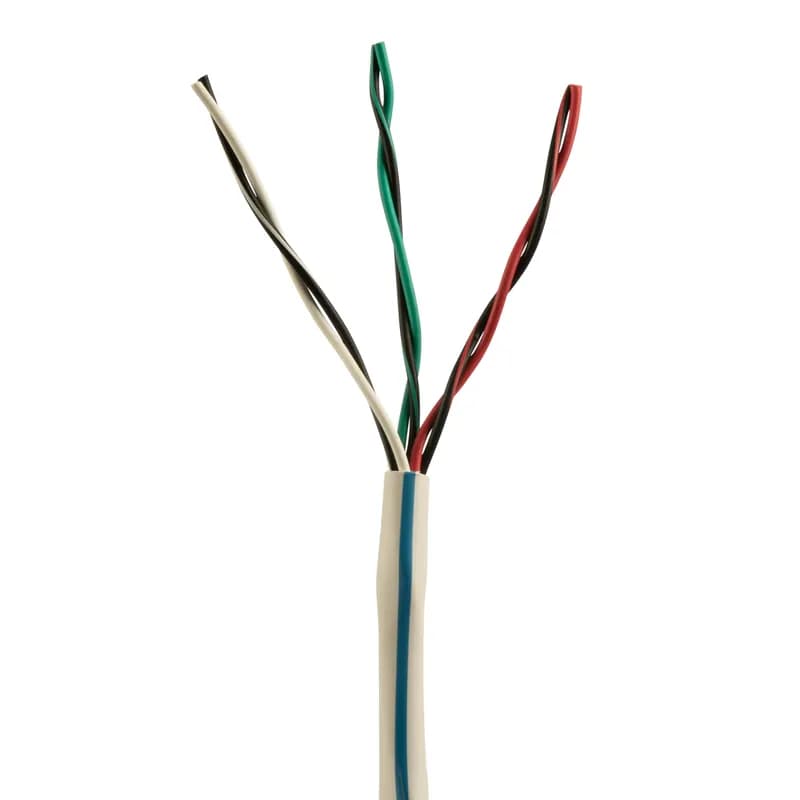
PXUP318ABL-CQ
Class 4 Copper Cable shall be UL listed and compliant with UL 1400-2 for Class 4 cabling. It shall be a component of an end-to-end Class 4 Fault Managed Power System (FMPS) that efficiently and safely carries significant power at higher voltages over long distances. The conductors shall be 18/19 AWG stranded copper insulated with polyvinyl chloride. The copper conductors shall be twisted in pairs and covered by a flame retardant (CMP) PVC jacket.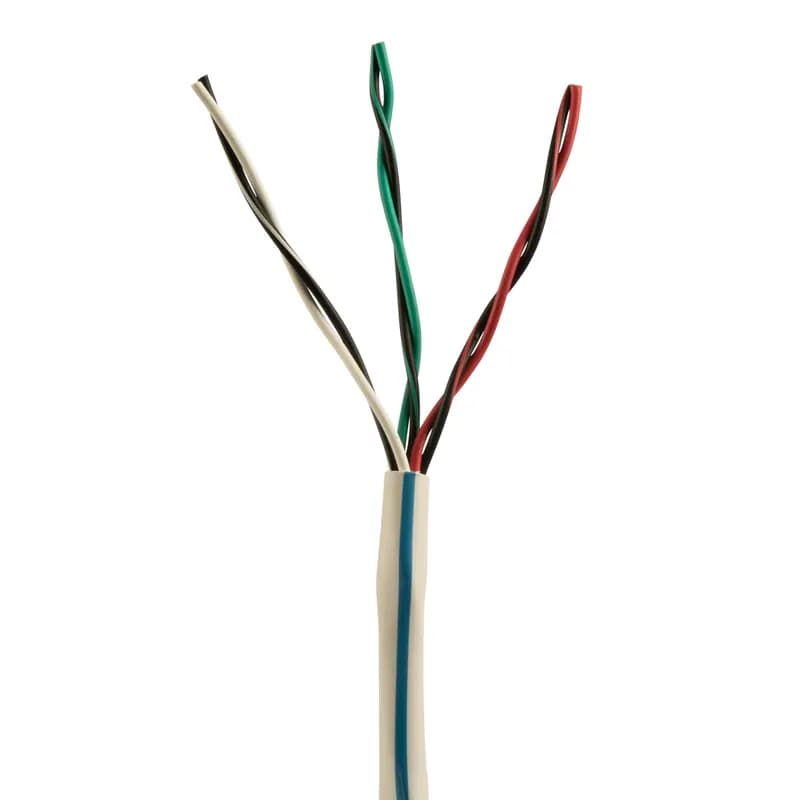
PXUP316ABL-CQ
Class 4 Copper Cable shall be UL listed and compliant with UL 1400-2 for Class 4 cabling. It shall be a component of an end-to-end Class 4 Fault Managed Power System (FMPS) that efficiently and safely carries significant power at higher voltages over long distances. The conductors shall be 16/19 AWG stranded copper insulated with polyvinyl chloride. The copper conductors shall be twisted in pairs and covered by a flame retardant (CMP) PVC jacket.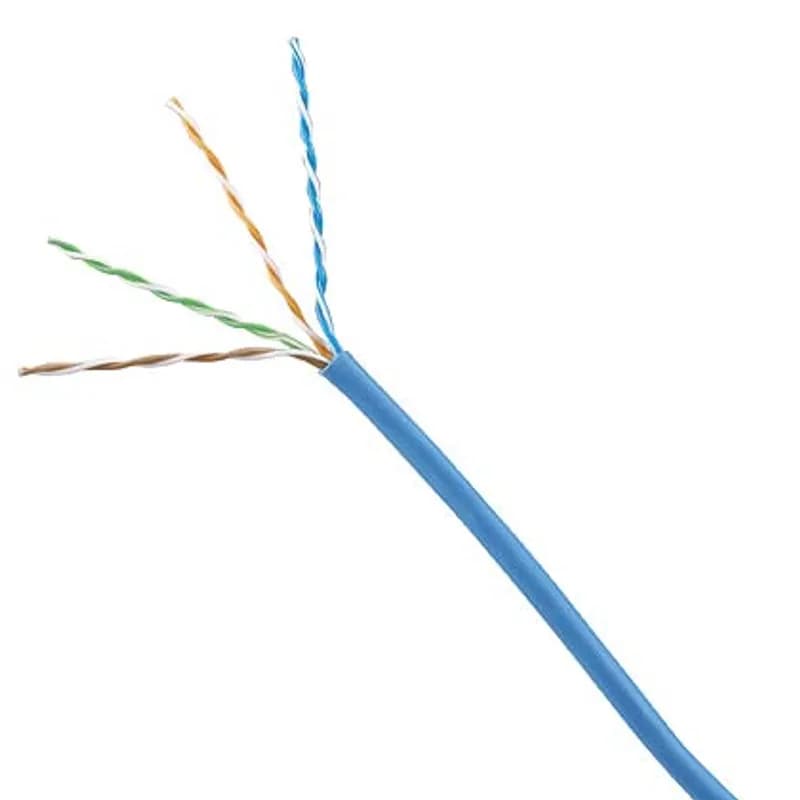
PUR6C04VL-WZ
Category 6 cable shall meet ANSI/TIA-568.2-E Category 6 component standard. The conductors shall be 24 AWG construction with HDPE insulation. The copper conductors shall be twisted in pairs and covered by a low smoke, flame-retardant PVC (CMR) jacket.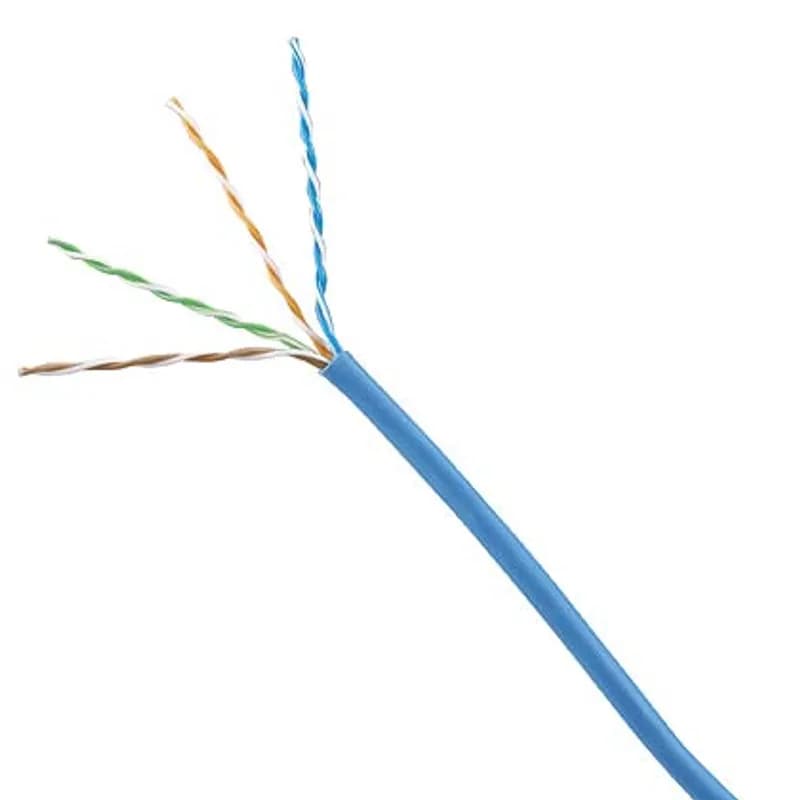
PUR6C04WH-WZ
Category 6 cable shall meet ANSI/TIA-568.2-E Category 6 component standard. The conductors shall be 24 AWG construction with HDPE insulation. The copper conductors shall be twisted in pairs and covered by a low smoke, flame-retardant PVC (CMR) jacket.Frequently Asked Questions
Is the power patch cord UL listed?
Yes, the Class 4 Power Patch Cord is UL listed and compliant with UL 1400-2 for Class 4 cabling.
Does the power patch cord come pre-terminated?
Yes, each power patch cord comes with pre-terminated ferrules on each end.
What system is this power patch cord a component of?
It is a component of an end-to-end Class 4 Fault Managed Power System (FMPS).
What type of jacket does the power patch cord have?
The power patch cord has a flame retardant (CMP) PVC jacket.
What standards does the power patch cord comply with?
It complies with remote powering according to UL 1400-2 Class 4, NEC Article 725, UL 13 type CL3P, NEC Article 726, UL 1400-2 type CL4P, NEC Article 800, and UL 444 CMP.
What is the flame rating of the patch cord?
The power patch cord has a Plenum (CMP) flame rating.
What is the operating temperature range?
The operating temperature range for the power patch cord is -4ºF to 167ºF (-20ºC to 75ºC).
What Panduit FMPS components are compatible?
Compatible components include the PXTC1ARA Transmitter Chassis, PXU1AJANNNXX Power Supply Unit, PXTM1AF Transmitter Module, PXR1AJF Receiver, and PXM1ARGRBL Power Connector Module.
What are the primary applications for this patch cord?
It is used for indoor Class 4 power distribution, Fault Managed Power Systems, and remote powering optimized for the Panduit Class 4 listed FMPS.
What is the voltage rating of the patch cord?
The voltage rating according to UL 1400-2 is 450 Vrms.
How to Install the Panduit FMPS Head End System
This guide provides step-by-step instructions for the physical installation and initial setup of the Panduit Fault Managed Power System (FMPS) head end components, including the Transmitter Chassis, Power Supply Modules, and Transmitter Modules. Always follow safety and lockout/tagout procedures when working on or near electrical systems and equipment, and ensure installation is performed by a skilled person.
Estimated time: 1h 30m
Tools needed:
Screwdrivers (#2 Phillips, #3 Phillips, Slotted), Wire stripper, Wrenches and/or pliers, Wire cutters, Compression crimp tools, Multimeter, Suitable labeling means (e.g., Panduit MP300 label maker)
Supplies needed:
Field wiring, Copper patch wire, Cable management materials (e.g., cable ties, cable managers), Panduit Ferrules (16AWG or 18AWG, as appropriate), Strain relief bar or shelf (for 4-post rack flush mount, if applicable), Cabinet mounting screws (if not using rack)
- Perform Pre-Installation Site Evaluation
Before beginning installation, ensure the site-specific Project Package is available, verifying all specified part numbers and quantities are on-site. Check for adequate Rack Unit (RU) space for the Panduit FMPS Transmitter Chassis and confirm racks are properly bonded to grounding busbars or Earth-ground conductors. Verify the correct Class 4 Cable type and size has been pulled between the head end and Receiver locations. Ensure the Transmitter Chassis or rack PDU is within 50 feet of properly sized AC mains connections or breaker panels.
- Ground the Transmitter Chassis
Verify that the rack has appropriate grounding to earth ground. Use the provided grounding screw (Panduit P/N RGTBSG-C) to properly ground the Transmitter Chassis to the rack. Proper grounding is critical for FMPS operation and safety.
- Mount the Transmitter Chassis in the Rack
Determine the mounting position (flush or extended front). For a 2-post rack, install side brackets at position B (recommended) or C, pushing them all the way back. Mount the chassis using the three provided rack mounting screws (Panduit P/N S1224-C) and the grounding screw. For a 4-post rack or cabinet flush mount, install side brackets in position A, and use a strain relief bar (e.g., Panduit P/N SRB19D7BL) or shelf (e.g., Panduit P/N SRM19FM2) to support the back of the chassis. Mount the chassis using the provided rack and grounding screws.
- Install Power Supply Module(s)
Insert each Power Supply Module into an empty slot in the back of the Panduit FMPS Transmitter Chassis. Slide it forward until it clicks, then gently pull the handle to verify the latches are engaged. If installing additional modules, remove the Power Supply blanking panel first. Ensure no blockages are in front of the dual fans to allow for proper airflow. To remove, unlatch and pull the module after removing its power cord, then re-install the blanking panel.
- Connect Input Power to Power Supply Module(s)
Ensure PDU outputs or power cords will not be supplying power. Connect the C-19 connector of the provided power cord into the Power Supply Module. Connect the C-20 plug into a PDU outlet or an appropriate IEC 60320-19 plug for direct AC breaker panel connection. Verify PDU outlets have correctly sized circuit breakers (e.g., single phase 208 VAC, 10 Amp minimum for one supply, 20 Amps minimum for two on the same phase).
- Install Transmitter Module(s)
Slide each Transmitter Module into an available slot in the Panduit FMPS Transmitter Chassis. Ensure it is fully seated and secured. Connect the field wiring to the provided screwed-in Euro-style connector on the Transmitter Module, following the head-end power source wiring guidelines.
- Connect to the Network Management Card (NMC) via Ethernet
Connect an Ethernet cable from your computer to the Network Management Card (NMC) port on the Panduit FMPS Transmitter Chassis. Configure your computer's Ethernet adapter to a static IP address within the same subnet as the NMC's default IP (e.g., 192.168.0.254). Open a web browser and navigate to the NMC's default IP address (e.g., 192.168.0.254).
- Log into the NMC for the First Time
Upon accessing the NMC web interface, you will be prompted to log in. Use the default username and password provided in the documentation (or on the device label). Follow any on-screen instructions to change the default password and complete the initial setup of the Network Management Card.
Frequently Asked Questions about Panduit
What environmental ratings do Panduit products have?
Panduit products feature comprehensive environmental ratings across multiple standards, including UL 508A Type 1, 2, 3, 4, 4X, 12, and 13; CSA Type 1, 2, 3, 4, 4X, 12, and 13; and NEMA Type 1, 2, 3, 4, 4X, 12, and 13. They meet IEC 60529 IP66 rating, providing robust protection against dust, water, and corrosion in both indoor and outdoor environments, with operating temperatures ranging from -40°C to 130°C.
What certifications and standards do Panduit products comply with?
Panduit products are certified to multiple critical industry standards, including UL (Underwriters Laboratories) in the USA and Canada, CSA (Canadian Standard Association), EN IEC 61386, LVD 2006/G5/EC, and ARRA standards. Our products meet rigorous certifications for electrical safety, environmental compliance (WEEE and RoHS), and are designed to perform in extreme temperatures ranging from -55°C to 105°C, making them suitable for demanding industrial environments.
What industries and applications are Panduit products used for?
Panduit products are engineered for critical applications across multiple industries, including commercial construction, food and beverage, oil and gas, renewable energy, transportation, and safety-critical environments. Their solutions span electrical infrastructure, wire management, cable ties, power connectors, and safety systems designed to withstand extreme conditions like high vibration, temperature variations, UV exposure, and corrosive agents. Key industries include solar and wind energy, aerospace, heavy trucking, military, commercial transportation, and industrial manufacturing.
What are the main product lines offered by Panduit?
Panduit offers a comprehensive range of electrical infrastructure products including power connectors, cable ties, grounding connectors, identification products, safety solutions, terminals, cable cleats, wiring duct, and cable tie accessories. These products are engineered for industrial environments across multiple sectors like commercial construction, food and beverage, oil and gas, renewable energy, transportation, and safety applications.
What are the key features of Panduit products?
Panduit products are engineered for robust performance in heavy-duty industrial environments, featuring a comprehensive range of solutions including cable ties, power connectors, terminals, and identification products. Key features include proven quality performance, subject matter expertise, and customer-driven innovation across multiple industrial sectors such as commercial construction, food and beverage, oil and gas, renewable energy, transportation, and safety applications. The product line is designed to maximize productivity, reliability, and safety while meeting stringent industry standards.
What is Panduit's warranty policy?
Panduit provides a comprehensive Limited Product Warranty that can be fully reviewed on their official website at www.panduit.com/warranty. All Panduit products are subject to the terms, conditions, and limitations of this current warranty. Customers are advised to review the specific warranty details for their particular product, as Panduit requires buyers to determine product suitability for their intended use and assumes all associated risks.
What technical support does Panduit offer?
Panduit offers comprehensive technical support through their dedicated customer service team, accessible via phone at 1-800-777-3300. They provide expert assistance for their full range of industrial infrastructure products, including cable ties, power connectors, terminals, and identification solutions. Customers can also access additional technical resources and product information through their website at www.panduit.com.
What accessories are available for Panduit products?
Panduit offers a wide range of accessories across multiple product lines, including cable ties, cable tie accessories, cable tie tools, identification products, cable cleats, grounding connectors, and VeriSafe accessories like the VeriSafe Network Module and Insulation Piercing Connectors. For a comprehensive view of all available accessories, customers are recommended to visit www.panduit.com for the full product catalog.
How are Panduit products typically installed?
Panduit products are engineered for comprehensive installation across industrial environments, utilizing specialized tools and techniques for precise mounting. Installation methods vary by product line - from cable ties and power connectors to terminals and identification solutions - but all are designed for robust performance in heavy-duty settings. Technicians typically use Panduit's dedicated installation tools and follow manufacturer guidelines available at www.panduit.com to ensure proper fitting and maximum infrastructure reliability.