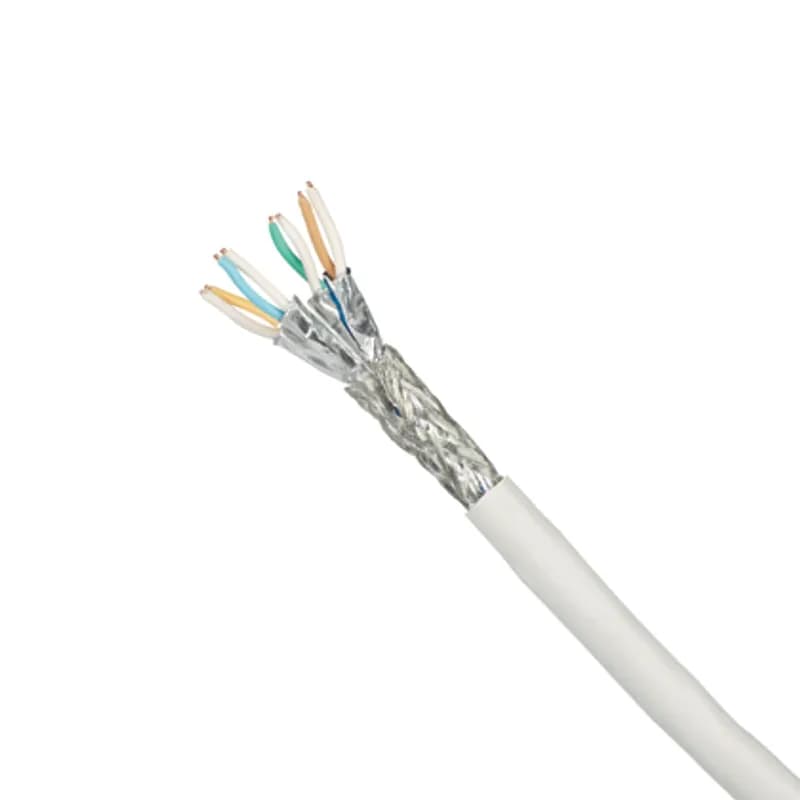
Panduit PSL7004WH-CED The TX7000 Cat 7 S/FTP LSZH copper cable is constructed of 23 AWG copper conductors with…
UPC: 074983372584
Contact for Pricing
Minimum Qty: 36
Multiplier: 12
*Contact for lower quantities*
Call +1 (262) 252-1600 (toll-free 877-268-3700) or email [email protected] for pricing and availability.
Overview
- Category 7 S/FTP (Shielded/Foiled Twisted Pair) construction for superior signal integrity.
- 23 AWG stranded copper conductors with foamed skin polyethylene insulation.
- Low Smoke Zero Halogen (LSZH) and oil/fuel-resistant jacket for harsh environments.
- Individually foiled pairs and overall braided shield to mitigate crosstalk and EMI.
- Supplied on a 1640FT (500M) reel with descending length markings.
Specifications
Color | White |
Conductor Material | Copper |
Construction | S/FTP |
Material | Copper, HDPE |
Number of Conductors | 4 |
Outside Diameter | NA In. |
Series | TX7000 |
Size | 23 AWG |
Temperature Rating | NA F |
Type | Copper Cable |
Type | Bulk Copper Cable |
Voltage Rating | NA V |
Voltage Rating | NA V V |
Package Dimensions (L x W x H) | 16 IN x 16 IN x 17 IN |
Package Weight (Imperial) | 78.17 lbs |
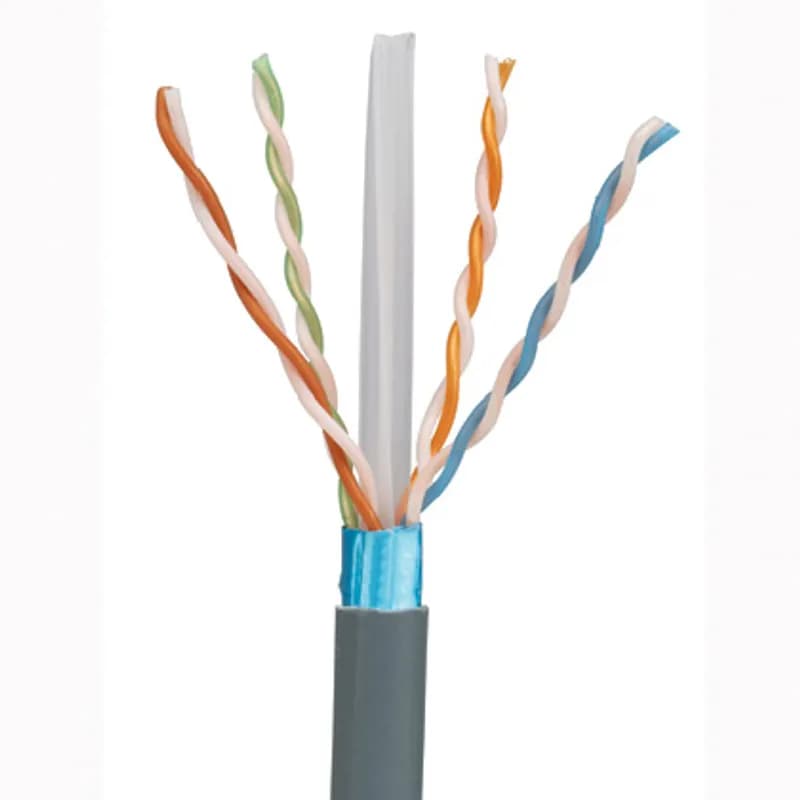
PFC6X04WH-CEG
The TX6A Cat 6A F/UTP CM copper cable is constructed of 23 AWG copper conductors with HDPE insulation. The copper conductors are twisted in pairs, separated by a cross divider and covered by an overall metallic shield and a PVC flame retardant, White jacket. Packaged 1000ft/305m on a reel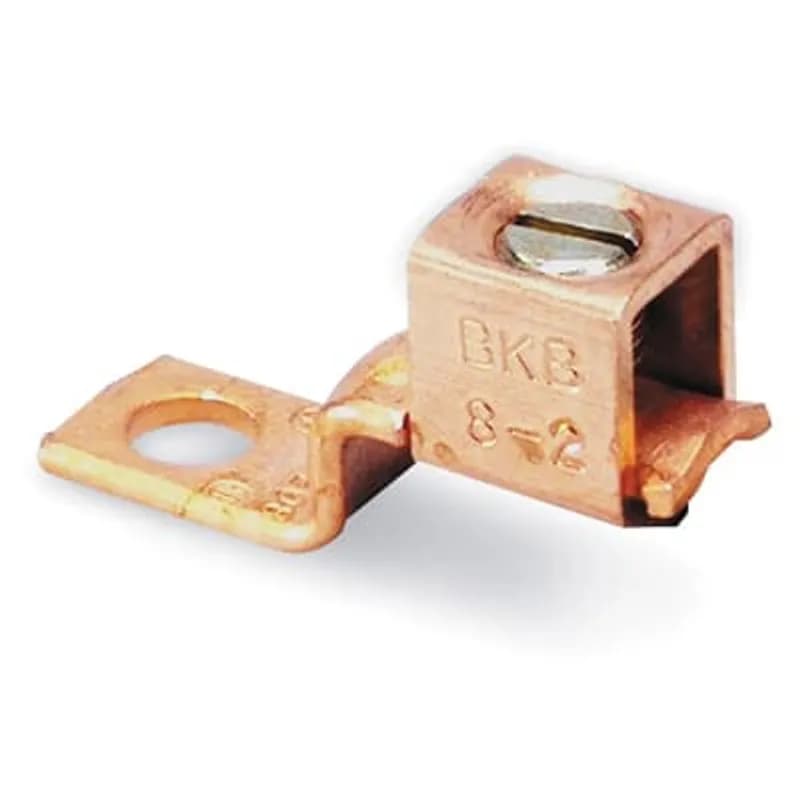
BTC0614
Type BTC - Copper Single-Conductor, One-Hole Mount (Offset-Tang), Conductor Range 6 Str-14 AWG, Length 1-9/64, Width 3/8 Inch, Height 11/16 Inch, 13/64 Bolt Inch Hole
NUR5C04BU-C
The NK5e Cat 5e U/UTP Riser copper cable is constructed of 24 AWG copper conductors with HDPE insulation. The copper conductors shall be twisted in pairs. All four pairs shall be covered by a flame retardant PVC (CMR), Blue jacket. Packaged 1000 ft./305m in an easy payout carton.
NUL6CR04BU-CE
The NK6 Cat 6 U/UTP LSZH copper cable is constructed of 24 AWG copper conductors with HDPE insulation. The copper conductors shall be twisted in pairs. All four pairs shall be covered by a flame retardant HDPE (LSZH), Blue jacket. Packaged 1000 ft./305m in an easy payout carton.
NUC6CR04BU-CE
The NK6 Cat 6 U/UTP CM copper cable is constructed of 24 AWG copper conductors with HDPE insulation. The copper conductors shall be twisted in pairs and separated by a cross divider. All four pairs shall be covered by a flame retardant PVC (CM), Blue jacket. Packaged 1000 ft./305m in an easy payout carton.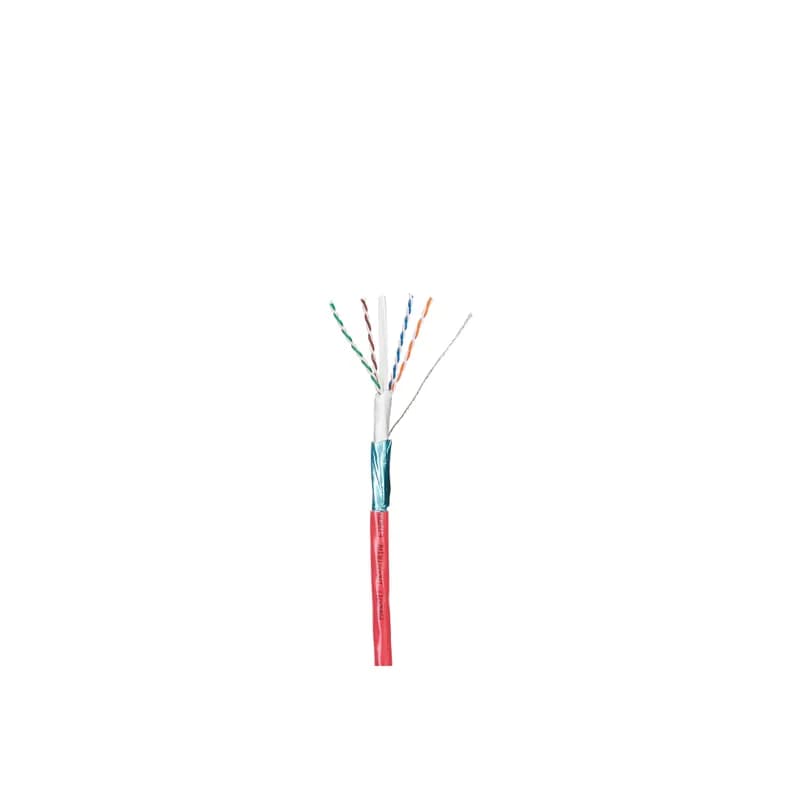
IFRH6C04BL-UG
This Cat 6 F/UTP copper cable is constructed of 23 AWG solid copper conductors with HDPE insulation. The copper conductors are twisted in pairs and wrapped with a foam polypropylene tape to form a core. All four pairs are covered with an industrially rated black PVC jacket which is oil and sunlight resistant and flame retardant. The cable is supplied 305 meters (1,000 feet) to a reel and black.
PUFP6X04IG-UG
The TX6A Cat 6A U/FTP Plenum copper cable is constructed of 23 AWG copper conductors with FEP insulation. The copper conductors are individually shielded, twisted in pairs and covered by a flame retardant PVC (CMP), Gray jacket. Packaged 1000ft/305m on a reel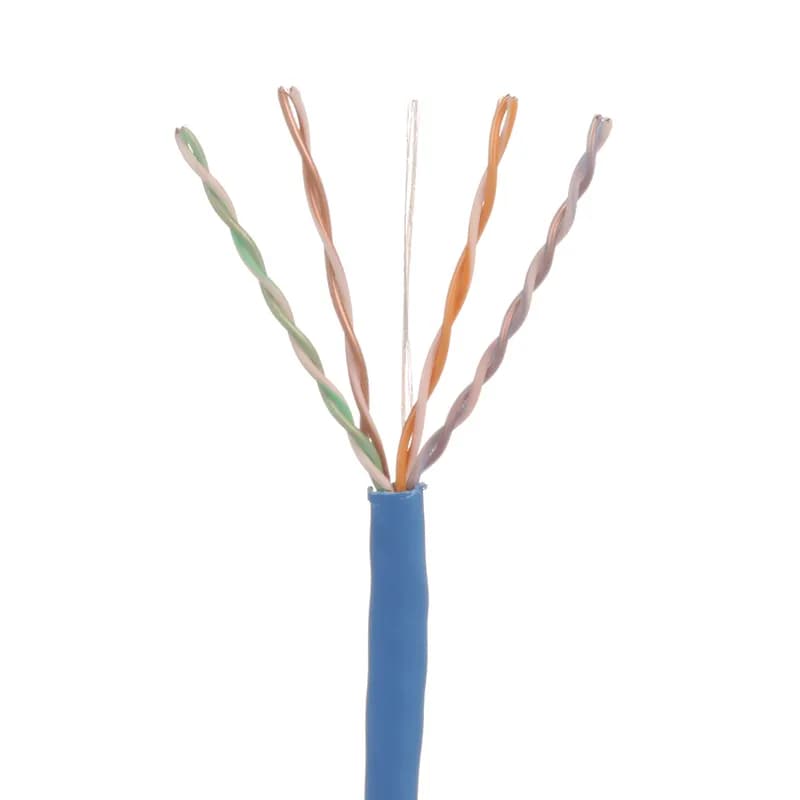
PUR5C04RD-U
The TX5e Cat 5e U/UTP Riser copper cable is constructed of 24 AWG copper conductors with HDPE insulation. The copper conductors shall be twisted in pairs. All four pairs shall be covered by a flame retardant PVC (CMR), Red jacket. Packaged 1000 ft./305m in an easy payout carton.Frequently Asked Questions
What cabling is recommended for 10GBASE-T?
Panduit recommends using Category 6A cabling for 10GBASE-T applications.
What is the maximum channel length for Category 7A?
The maximum channel length for Category 7A is 30 meters, with only 2 connectors allowed.
What is the bandwidth requirement for 40GBASE-T?
The minimum bandwidth requirement for 40GBASE-T is between 1600 and 2000 MHz.
What is the risk of using Category 7A cabling?
Using Category 7A cabling poses risks due to its insufficient bandwidth and potential signal loss beyond 1000 MHz.
What is the recommended cabling for future-proofing?
Panduit recommends against purchasing any cabling systems for future-proofing until standards are established.
Are Category 7A cables compatible with 25GBASE-T equipment?
Category 7A cables will likely require adapter patch cords to interface with 25GBASE-T equipment.
What is the current status of Category 8 cabling?
Category 8 cabling does not exist yet, but it is expected to support future 25 and 40GBASE-T standards.
What is the maximum frequency for Category 7A cabling?
The maximum frequency for Category 7A cabling is 1000 MHz.
What types of connectors are used with Category 7A?
Category 7A uses S/FTP cabling and may require hybrid patch cords for compatibility.
What are the termination requirements for S/FTP cabling?
S/FTP cabling requires more expensive and time-consuming termination methods due to fully shielded pairs.
How to Install the TX6A™ 10Gig™ Copper Cabling System
This guide provides step-by-step instructions for installing and testing the TX6A™ 10Gig™ Copper Cabling System to ensure optimal performance and compliance with industry standards.
Estimated time: 1h
Tools needed:
Screwdriver, Wire strippers, Multimeter, Fluke DTX-1800 Series Cable Analyzer
Supplies needed:
Mounting screws, Patch cords, Terminal connectors
- Mount the cabling system
Secure the TX6A™ components, including patch panels and jacks, to the designated mounting location using the provided mounting screws. Ensure all components are level and firmly attached.
- Connect the cables
Run the TX6A™ cables from the telecommunications room to the work area outlets. Use wire strippers to prepare the cable ends and connect them to the appropriate jacks using terminal connectors.
- Perform channel testing
Using the Fluke DTX-1800 Series Cable Analyzer, verify that your tester has the latest software. Perform a Set Reference procedure and then connect the main and remote units to the installed cabling. Select the appropriate testing standards and begin testing the channels.
- Submit test results
After testing, save all test results and troubleshoot any failing channels. Submit the electronic channel test reports to the Panduit Warranty Department along with the required warranty paperwork.
Frequently Asked Questions about Panduit
What environmental ratings do Panduit products have?
Panduit products feature comprehensive environmental ratings across multiple standards, including UL 508A Type 1, 2, 3, 4, 4X, 12, and 13; CSA Type 1, 2, 3, 4, 4X, 12, and 13; and NEMA Type 1, 2, 3, 4, 4X, 12, and 13. They meet IEC 60529 IP66 rating, providing robust protection against dust, water, and corrosion in both indoor and outdoor environments, with operating temperatures ranging from -40°C to 130°C.
What certifications and standards do Panduit products comply with?
Panduit products are certified to multiple critical industry standards, including UL (Underwriters Laboratories) in the USA and Canada, CSA (Canadian Standard Association), EN IEC 61386, LVD 2006/G5/EC, and ARRA standards. Our products meet rigorous certifications for electrical safety, environmental compliance (WEEE and RoHS), and are designed to perform in extreme temperatures ranging from -55°C to 105°C, making them suitable for demanding industrial environments.
What industries and applications are Panduit products used for?
Panduit products are engineered for critical applications across multiple industries, including commercial construction, food and beverage, oil and gas, renewable energy, transportation, and safety-critical environments. Their solutions span electrical infrastructure, wire management, cable ties, power connectors, and safety systems designed to withstand extreme conditions like high vibration, temperature variations, UV exposure, and corrosive agents. Key industries include solar and wind energy, aerospace, heavy trucking, military, commercial transportation, and industrial manufacturing.
What are the main product lines offered by Panduit?
Panduit offers a comprehensive range of electrical infrastructure products including power connectors, cable ties, grounding connectors, identification products, safety solutions, terminals, cable cleats, wiring duct, and cable tie accessories. These products are engineered for industrial environments across multiple sectors like commercial construction, food and beverage, oil and gas, renewable energy, transportation, and safety applications.
What are the key features of Panduit products?
Panduit products are engineered for robust performance in heavy-duty industrial environments, featuring a comprehensive range of solutions including cable ties, power connectors, terminals, and identification products. Key features include proven quality performance, subject matter expertise, and customer-driven innovation across multiple industrial sectors such as commercial construction, food and beverage, oil and gas, renewable energy, transportation, and safety applications. The product line is designed to maximize productivity, reliability, and safety while meeting stringent industry standards.
What is Panduit's warranty policy?
Panduit provides a comprehensive Limited Product Warranty that can be fully reviewed on their official website at www.panduit.com/warranty. All Panduit products are subject to the terms, conditions, and limitations of this current warranty. Customers are advised to review the specific warranty details for their particular product, as Panduit requires buyers to determine product suitability for their intended use and assumes all associated risks.
What technical support does Panduit offer?
Panduit offers comprehensive technical support through their dedicated customer service team, accessible via phone at 1-800-777-3300. They provide expert assistance for their full range of industrial infrastructure products, including cable ties, power connectors, terminals, and identification solutions. Customers can also access additional technical resources and product information through their website at www.panduit.com.
What accessories are available for Panduit products?
Panduit offers a wide range of accessories across multiple product lines, including cable ties, cable tie accessories, cable tie tools, identification products, cable cleats, grounding connectors, and VeriSafe accessories like the VeriSafe Network Module and Insulation Piercing Connectors. For a comprehensive view of all available accessories, customers are recommended to visit www.panduit.com for the full product catalog.
How are Panduit products typically installed?
Panduit products are engineered for comprehensive installation across industrial environments, utilizing specialized tools and techniques for precise mounting. Installation methods vary by product line - from cable ties and power connectors to terminals and identification solutions - but all are designed for robust performance in heavy-duty settings. Technicians typically use Panduit's dedicated installation tools and follow manufacturer guidelines available at www.panduit.com to ensure proper fitting and maximum infrastructure reliability.