
Panduit FLCSMCXCGR The OptiCam Keyed LC Fiber Optic Connector is a multimode 50/125?m OM3/OM4/OM5 simplex…
UPC: 074983066810
Contact for Pricing
Minimum Qty: 10
Multiplier: 1
*Contact for lower quantities*
Call +1 (262) 252-1600 (toll-free 877-268-3700) or email [email protected] for pricing and availability.
Overview
- Keyed LC connector (Keyed C, Green) for enhanced network security
- Supports multimode OM3, OM4, and OM5 fiber types
- Designed for 900-micron tight-buffered fiber installation
- Natural body, green backbone, and aqua 900µm boot for clear identification and protection
- Manufactured in the USA for high-quality fiber optic connectivity
Specifications
Application | Maintenance or emergency restoration of secure fiber networks and retrofit/initial install of behind the wall (BTW) connections and the permanent side of interconnect and cross-connect patch fields. |
Boot Color* | Black |
Color | Green |
Connection | Keyed LC Duplex |
Connection Type | LC |
Connector 1 Type* | LC |
Connector 2 Type* | Ceramics |
Fiber Type | OM3/OM4/OM5 |
Insertion Loss | 0.3 dB |
Series | OptiCam |
Size | 50/125 µm |
Special Features | Exceed TIA/EIA-568-B.3 requirements |
Standard | Exceed TIA/EIA-568-B.3 performance requirements |
Temperature Rating, Maximum | 140 F |
Temperature Rating, Maximum | 60 C |
Temperature Rating, Minimum | 140 F |
Temperature Rating, Minimum | 60 C |
Type | Fiber Optic Connector |
Package Dimensions (L x W x H) | 3.5 IN x 5 IN x 1 IN |
Package Weight (Imperial) | 0.025 lbs |

FLCDMCXCGR
Pre-Polished Keyed LC Duplex OptiCam OM3/OM4 Connector (Keyed C, Green) with 900um Aqua boot
FLCSMCXEOR
The OptiCam Keyed LC Fiber Optic Connector is a multimode 50/125?m OM3/OM4/OM5 simplex fiber connector, intended for 900-micron tight-buffered fiber installation. The connector is keyed (Keyed E, Orange) for network security when used with other Keyed LC products. The LC connector has a natural-colored body with an orange-colored backbone and aqua 900?m boot.
FLCSMCXDYL
The OptiCam Keyed LC Fiber Optic Connector is a multimode 50/125?m OM3/OM4/OM5 simplex fiber connector, intended for 900-micron tight-buffered fiber installation. The connector is keyed (Keyed D, Yellow) for network security when used with other Keyed LC products. The LC connector has a natural-colored body with a yellow-colored backbone and aqua 900?m boot.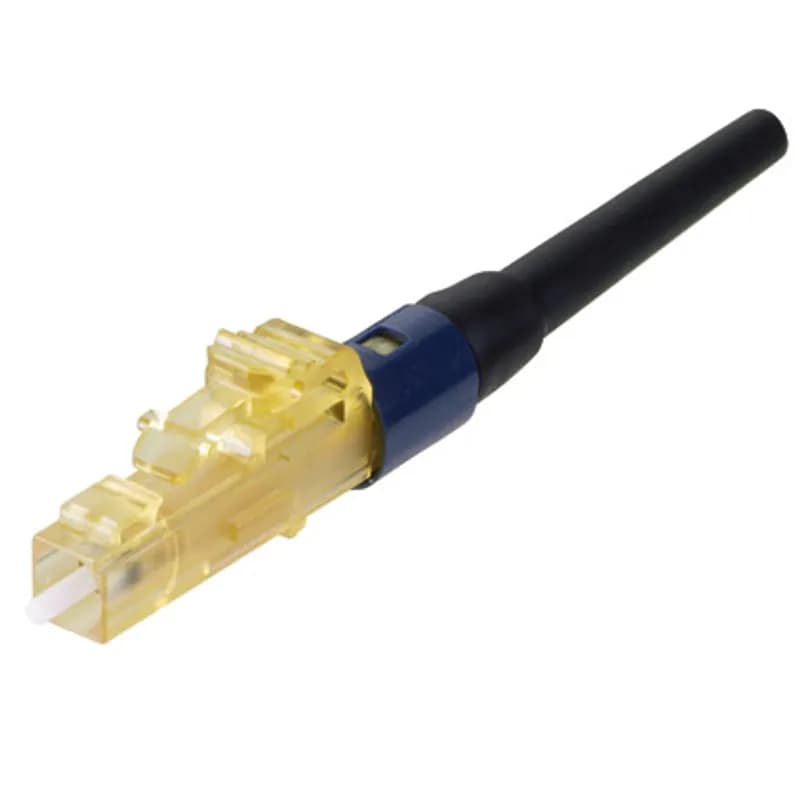
FLCSMCXFDB
The OptiCam Keyed LC Fiber Optic Connector is a multimode 50/125?m OM3/OM4/OM5 simplex fiber connector, intended for 900-micron tight-buffered fiber installation. The connector is keyed (Keyed F, Dark Blue) for network security when used with other Keyed LC products. The LC connector has a natural-colored body with a dark blue-colored backbone and aqua 900?m boot.
FLCDSCBUY
The OptiCam LC Fiber Optic Connector is a singlemode 9/125?m OS1/OS2 duplex fiber connector, intended for 900-micron tight-buffered fiber installation. Field termination can be done in about two minutes using the OptiCam 2 Termination Tool. The pre-polished fiber endface eliminates time-consuming field polishing, reducing installation costs. The LC connector has a natural-colored body with a blue-colored backbone and 900?m boot.
FLCSSCBUY
The OptiCam LC Fiber Optic Connector is a singlemode 9/125?m OS1/OS2 simplex fiber connector, intended for 900-micron tight-buffered fiber installation. Field termination can be done in about two minutes using the OptiCam 2 Termination Tool. The pre-polished fiber endface eliminates time-consuming field polishing, reducing installation costs. The LC connector has a natural-colored body with a blue-colored backbone and 900?m boot.
FLCSMC6EIY-C
The OptiCam LC Fiber Optic Connector is a multimode 62.5/125?m OM1 simplex fiber connector, intended for 900-micron tight-buffered fiber installation. Field termination can be done in about two minutes using the OptiCam 2 Termination Tool. The pre-polished fiber endface eliminates time-consuming field polishing, reducing installation costs. The LC connector has a natural-colored body with an electric ivory-colored backbone and 900?m boot, and is sold as a pack of 100.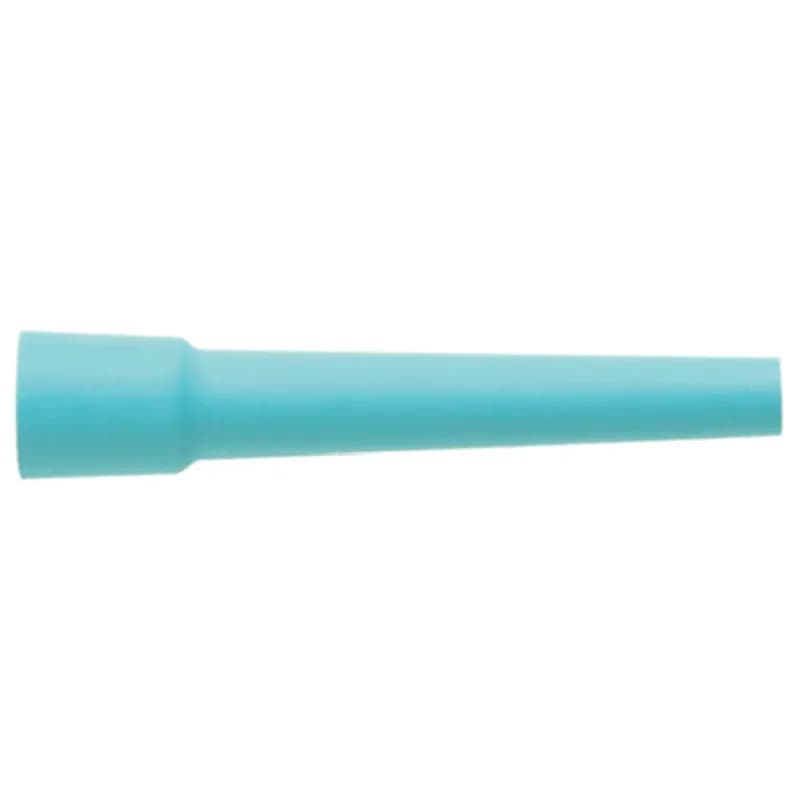
Frequently Asked Questions
What fiber types are compatible with FLCSMCXCGR?
The FLCSMCXCGR is compatible with 62.5/125μm OM1, 50/125μm OM2, 50/125μm OM3/OM4, and 9/125μm OS1/OS2 fiber types.
What is the benefit of factory pre-polished connectors?
Factory pre-polished connectors eliminate the need for field polishing, reducing installation time and tool requirements.
What is the average insertion loss for this connector?
The average insertion loss for the FLCSMCXCGR is 0.3dB for both multimode and singlemode fiber.
How many re-terminations can be performed?
The connector allows for up to two re-terminations without performance degradation.
What is the purpose of color-specific keys?
Color-specific keys prevent unintentional mating with unlike keyed or non-keyed adapters, enhancing network security.
What is the return loss specification?
The return loss is greater than 26dB for 10Gig multimode and greater than 50dB for singlemode.
What is the maximum tensile load for cable retention?
The connector can withstand a tensile load of 11.24 lbs with less than 0.1dB increase in insertion loss.
What is the design feature of the connector?
The connector features a dual cam design that secures both the fiber and buffer during termination.
What is the cable size compatibility?
The FLCSMCXCGR is compatible with jacketed cable sizes of 1.6mm to 3.0mm.
What tools are required for installation?
A universal termination tool is required for fast and consistent terminations of OptiCam connectors.
How to Install the FLCCLIPBL-L Fiber Optic Connector
This guide provides step-by-step instructions for installing and terminating the FLCCLIPBL-L fiber optic connector using the OptiCam Termination Tool.
Estimated time: 1h
Tools needed:
OptiCam Termination Tool (OCTT), Fiber Cable Jacket Stripper, Fiber Cleaver Tool, Screwdriver
Supplies needed:
250μm Coated Fiber, 900μm Boot, Adhesive (Loctite 401 or equivalent), Dust Caps
- Prepare the OptiCam Termination Tool
Ensure the laser switch on the OCTT is in the 'O' (OFF) position. Remove the protective dust cover from the laser.
- Insert the Patch Cord
Insert the ST end of the FVFLPC-1.25SMY patch cord into the laser aperture, aligning the tabs, and rotate the barrel clockwise to lock it in place.
- Insert the Connector Cradle
Align the LC Cradle with the OCTT cradle holder and slide it under the tabs until it stops. Slide the cradle holder towards the laser aperture to reach the pre-termination position.
- Insert the Connector into the Cradle
Remove both dust caps from the connector body. Hold the connector body with the latch facing up and slide it into the LC Cradle until it snaps into place.
- Strip the Fiber
Insert the fiber end through the boot and place a build-up tube onto the fiber. Strip at least 1.18" (30mm) of coating from the fiber.
- Cleave the Fiber
Clean the bare fiber with isopropyl alcohol. Insert the fiber into the cleaver tool and ensure it is positioned correctly before cleaving.
- Insert the Cleaved Fiber
Insert the cleaved fiber into the connector body until it stops on the fiber stub. Ensure the insertion mark is close to the back of the connector.
- Turn on the Laser
Toggle the switch on the OCTT to the 'I' (ON) position. Check that the connector glow is dim or dark.
- Cam the Connector
Rotate the connector body 90° counter-clockwise until it stops. Ensure the connector remains seated in the cradle.
- Turn Off the Laser
Toggle the OCTT switch back to the 'O' (OFF) position and remove the ferrule adapter end of the patch cord from the connector.
- Assemble the Connector and Boot
Push the boot onto the grooved area of the backbone until it is against the flange. Clean the ferrule end face and place a dust cap over it.
- Attach Duplex Clip (Optional)
Insert the connector into one side of the duplex clip, ensuring the upper tab slides into the pocket under the latch. Repeat for the other connector.
Frequently Asked Questions about Panduit
What environmental ratings do Panduit products have?
Panduit products feature comprehensive environmental ratings across multiple standards, including UL 508A Type 1, 2, 3, 4, 4X, 12, and 13; CSA Type 1, 2, 3, 4, 4X, 12, and 13; and NEMA Type 1, 2, 3, 4, 4X, 12, and 13. They meet IEC 60529 IP66 rating, providing robust protection against dust, water, and corrosion in both indoor and outdoor environments, with operating temperatures ranging from -40°C to 130°C.
What certifications and standards do Panduit products comply with?
Panduit products are certified to multiple critical industry standards, including UL (Underwriters Laboratories) in the USA and Canada, CSA (Canadian Standard Association), EN IEC 61386, LVD 2006/G5/EC, and ARRA standards. Our products meet rigorous certifications for electrical safety, environmental compliance (WEEE and RoHS), and are designed to perform in extreme temperatures ranging from -55°C to 105°C, making them suitable for demanding industrial environments.
What industries and applications are Panduit products used for?
Panduit products are engineered for critical applications across multiple industries, including commercial construction, food and beverage, oil and gas, renewable energy, transportation, and safety-critical environments. Their solutions span electrical infrastructure, wire management, cable ties, power connectors, and safety systems designed to withstand extreme conditions like high vibration, temperature variations, UV exposure, and corrosive agents. Key industries include solar and wind energy, aerospace, heavy trucking, military, commercial transportation, and industrial manufacturing.
What are the main product lines offered by Panduit?
Panduit offers a comprehensive range of electrical infrastructure products including power connectors, cable ties, grounding connectors, identification products, safety solutions, terminals, cable cleats, wiring duct, and cable tie accessories. These products are engineered for industrial environments across multiple sectors like commercial construction, food and beverage, oil and gas, renewable energy, transportation, and safety applications.
What are the key features of Panduit products?
Panduit products are engineered for robust performance in heavy-duty industrial environments, featuring a comprehensive range of solutions including cable ties, power connectors, terminals, and identification products. Key features include proven quality performance, subject matter expertise, and customer-driven innovation across multiple industrial sectors such as commercial construction, food and beverage, oil and gas, renewable energy, transportation, and safety applications. The product line is designed to maximize productivity, reliability, and safety while meeting stringent industry standards.
What is Panduit's warranty policy?
Panduit provides a comprehensive Limited Product Warranty that can be fully reviewed on their official website at www.panduit.com/warranty. All Panduit products are subject to the terms, conditions, and limitations of this current warranty. Customers are advised to review the specific warranty details for their particular product, as Panduit requires buyers to determine product suitability for their intended use and assumes all associated risks.
What technical support does Panduit offer?
Panduit offers comprehensive technical support through their dedicated customer service team, accessible via phone at 1-800-777-3300. They provide expert assistance for their full range of industrial infrastructure products, including cable ties, power connectors, terminals, and identification solutions. Customers can also access additional technical resources and product information through their website at www.panduit.com.
What accessories are available for Panduit products?
Panduit offers a wide range of accessories across multiple product lines, including cable ties, cable tie accessories, cable tie tools, identification products, cable cleats, grounding connectors, and VeriSafe accessories like the VeriSafe Network Module and Insulation Piercing Connectors. For a comprehensive view of all available accessories, customers are recommended to visit www.panduit.com for the full product catalog.
How are Panduit products typically installed?
Panduit products are engineered for comprehensive installation across industrial environments, utilizing specialized tools and techniques for precise mounting. Installation methods vary by product line - from cable ties and power connectors to terminals and identification solutions - but all are designed for robust performance in heavy-duty settings. Technicians typically use Panduit's dedicated installation tools and follow manufacturer guidelines available at www.panduit.com to ensure proper fitting and maximum infrastructure reliability.