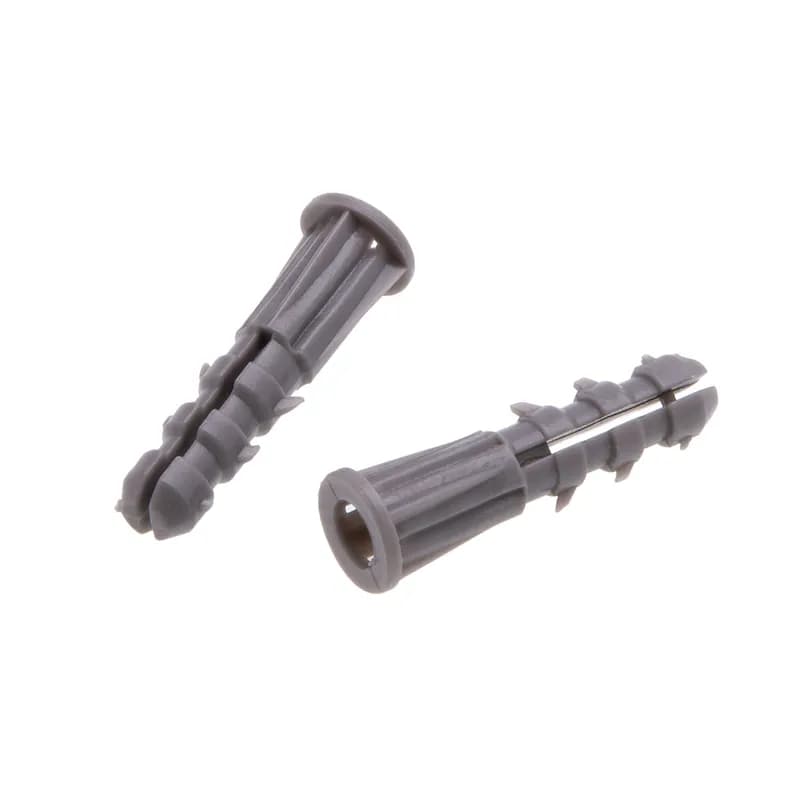
Contact for Pricing
Minimum Qty: 100
Multiplier: 100
*Contact for lower quantities*
Overview
- 3/16" diameter and 7/8" length
- Suitable for #6 to #8 screws
- 100 anchors per pack
- Corrosion-resistant plastic construction
- Easy installation
Specifications
Application | Electrical, Plumbing, Heating and Air Conditioning Industries |
Length | 7/8 in |
Material | Plastic |
Screw Size | #6-8 |
Size | 3/16 IN |
Type | Plastic Anchor |
Package Dimensions (L x W x H) | 3 IN x 3 IN x 2.15 IN |
Package Dimensions (L x W x H) | 7.62 cm x 7.62 cm x 5.461 cm |
Package Weight (Imperial) | 0.130 L |
Package Weight (Metric) | 0.059 kg |
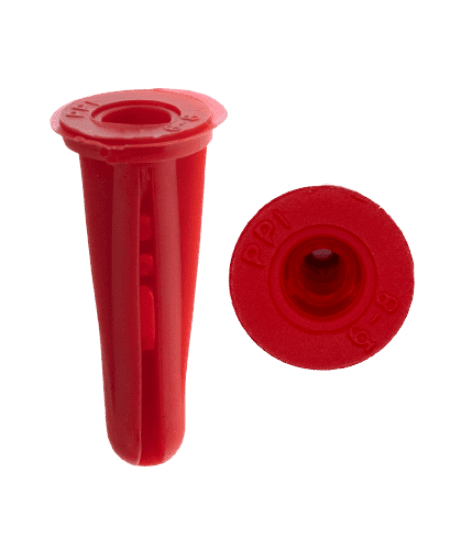
59410J
A light-duty plastic anchor for use in drywall, concrete, and hollow block or brick. It is made of engineered plastic and comes in a red conical design. The anchor size is #8–#10, with a length of 0.875 in and a 3/16 in drill size.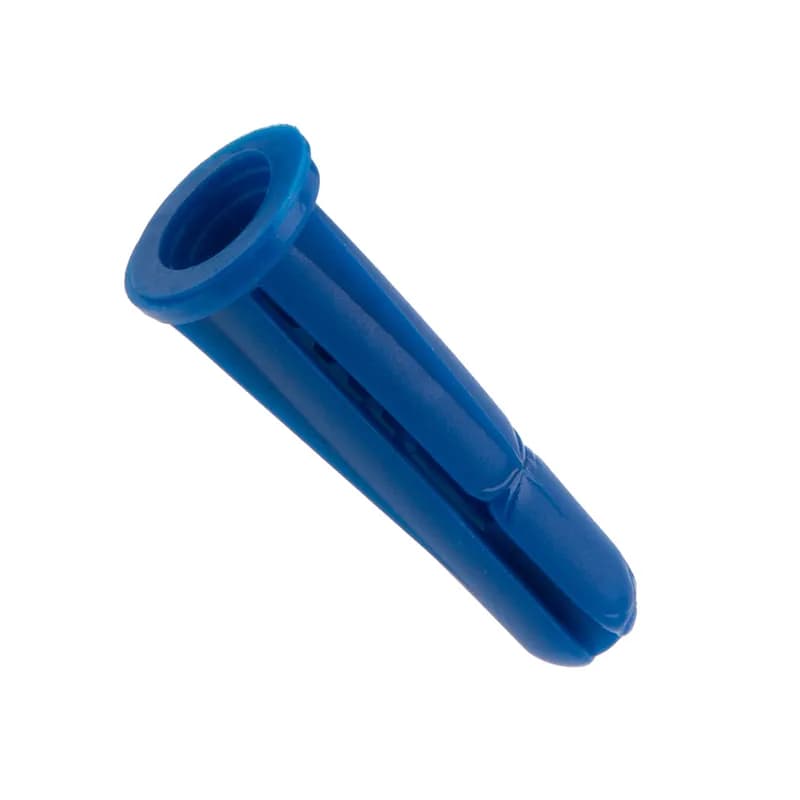

50-041
Plastic Anchor for Solid Masonry, #14 x 1 Inch Anchor, Use #10 to 12 Screws, Use 1/4 Inch Masonry BitFrequently Asked Questions
What is the JGA1 anchor used for?
The JGA1 is a light-duty plastic anchor for use in drywall, concrete, hollow block, or brick. It is not suited for applications where holding power is important.
What is the maximum recommended load?
The maximum recommended load is 75 lb. The document says this should be reduced by at least 75% to determine the safe working load.
What screw sizes fit the JGA1 anchor?
The anchor accepts #6, #8, and #10 screws.
What is the minimum drill size for installation?
The minimum drill size is 1/4 in.
What materials can the JGA1 be used in?
It can be used in drywall, concrete, hollow block, or brick.
How deep should the hole be drilled?
The minimum hole depth is 1 in.
What is the anchor length?
The anchor length is 1-1/4 in.
What is the anchor diameter?
The anchor diameter is 3/8 in.
Is the JGA1 suitable for holding power applications?
No. The document states it is not suited for applications where holding power is important.
How many anchors are used per application?
The document shows one anchor per application.
Frequently Asked Questions about NSI Industries
How are Tork products typically installed?
Tork products are typically installed by trained technicians who follow a comprehensive commissioning process. This includes verifying the work environment, conducting electrical installation checks, performing internal and external equipment inspections, powering on the system, and executing operational tests to ensure compatibility and reliability.
What environmental ratings do Tork products have?
Tork products are designed to meet various environmental ratings, including NEMA Type 4X and Type 6, which provide protection against corrosion, windblown dust, rain, and occasional temporary submersion. These ratings ensure that Tork products can withstand harsh industrial environments while maintaining operational integrity.
What communication protocols do Tork products support?
Tork products support a comprehensive range of communication protocols, including PROFIBUS DP V1, PROFINET with dual port, EtherNet/IP with dual port, CANopen, and Modbus RTU integrated as standard. These protocols facilitate flexible network integration and high-performance communication across various industrial automation systems.
What are the key features of Tork products?
Tork products are designed with advanced features that enhance efficiency and reliability in industrial applications. Key features include integrated harmonics and EMC design for improved power quality, removable terminals for quick installation, and USB ports for easy troubleshooting. Additionally, Tork solutions emphasize user-friendly setup with application wizards and memory modules for convenient parameter management.
What are the main product lines offered by Tork?
Tork offers a diverse range of products primarily focused on industrial automation, including TORK® Photocontrols, lighting controls, and various electrical components such as enclosures, occupancy sensors, and grounding solutions. These products are designed to enhance efficiency and reliability in commercial and industrial applications.
What technical support does Tork offer?
Tork offers a comprehensive range of technical support services, including 24/7 customer support, on-site service management, and a technical hotline network. With three advanced technical support centers and over 8,000 hours of technical training conducted annually, Tork ensures certified expertise across 25+ languages to assist customers effectively. Their commitment to service is reflected in a 98% Service Level Agreement compliance rate, providing reliable support for all operational needs.
What industries and applications are Tork products used for?
Tork products are utilized across a variety of industries, including food processing, healthcare, hospitality, and manufacturing. They are designed for applications such as hand hygiene, surface cleaning, and dispensing solutions, ensuring efficiency and compliance in environments that require high standards of cleanliness and safety.
What certifications and standards do Tork products comply with?
Tork products comply with UL and cUL certifications, ensuring they meet rigorous safety and performance standards. Additionally, many models are designed to meet NEMA enclosure ratings, providing protection against environmental factors.
How are Remke products typically installed?
Remke products are typically installed through a systematic process that includes site audits to verify proper wiring, followed by remote or on-site commissioning. This commissioning involves installation verification, programming, and communication testing to ensure the system operates reliably and meets design specifications.
What accessories are available for Remke products?
Remke offers a wide range of accessories for their products, including panel mounting kits, fuse holders for voltage inputs, ferrites for communication modules, and current transformers. These accessories enhance the functionality and protection of Remke's industrial automation solutions, ensuring reliable performance in various applications.