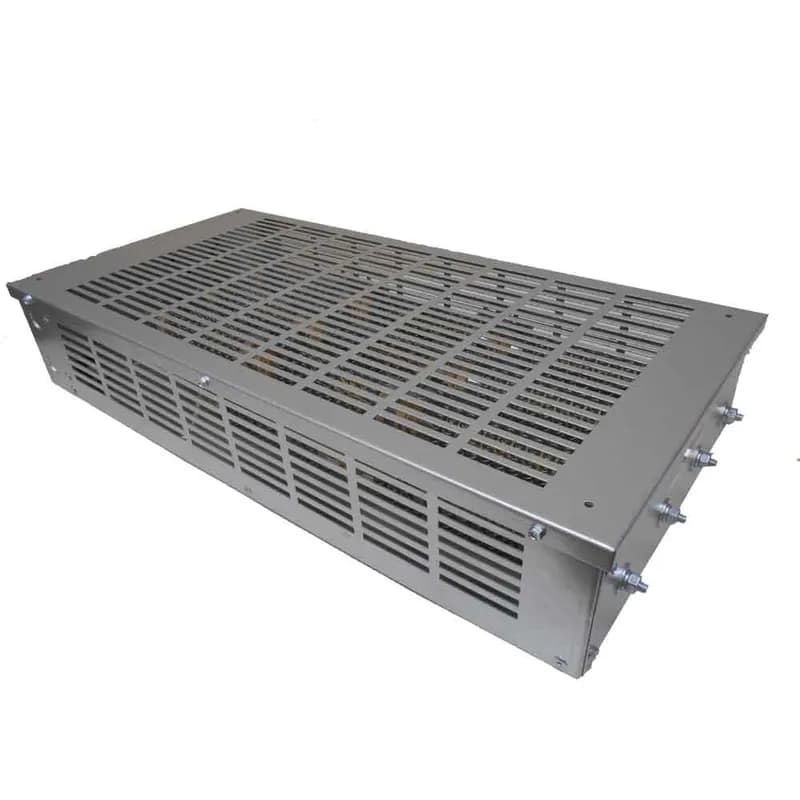
ABB Low Voltage Drives P14494-55 Braking Resistor, 15 OHMS, 6000 WATTS, GCE12 Enclosure, 26.5W x 13D x 5H in, 31 lbs
Alternate Item Number: 3AUA0000041887
UPC: 662348076453
Documents & Media
Contact for Pricing
Call +1 (262) 252-1600 (toll-free 877-268-3700) or email [email protected] for pricing and availability.
Overview
- 15 OHM resistance for effective energy dissipation
- 6000 Watt power rating for high braking capacity
- GCE12 enclosure for a compact and protected design
- Dimensions: 26.5"W x 13"D x 5"H
- Weight: 31 lbs




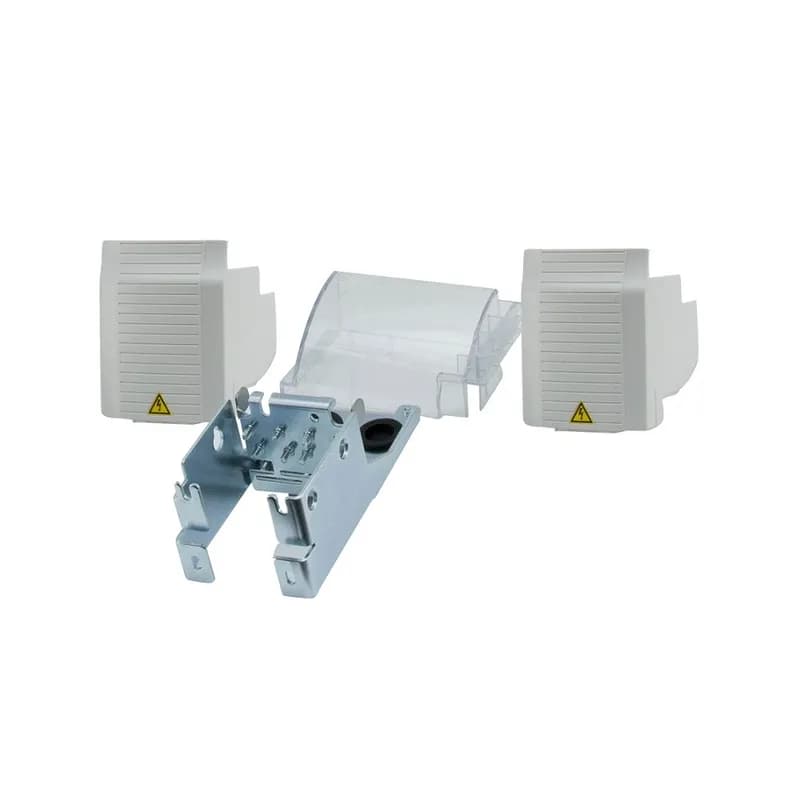
MUL1-R1
This option provides the necessary hardware to modify the ACS310, ACS350 or ACS355 drive from the standard fingersafe protected chassis to NEMA 1 protection capable of landing conduit. MUL1 R1 kit is used with frame sizes R0 through R2.
RDCO-03C-KIT
The RDCO-03 module includes the connectors for fiber optic DDCS channels CH0, CH1, CH2 and CH3. The usage of these channels is determined by the application but are normally assigned to the following: CH0 – overriding system (e.g. fieldbus adapter) - 5 MBd. CH1 – I/O extensions - 5MBd. CH2 – Master/Follower link - 5 MBd. CH3 – PC tools (such as DriveWare) - 5 MBd.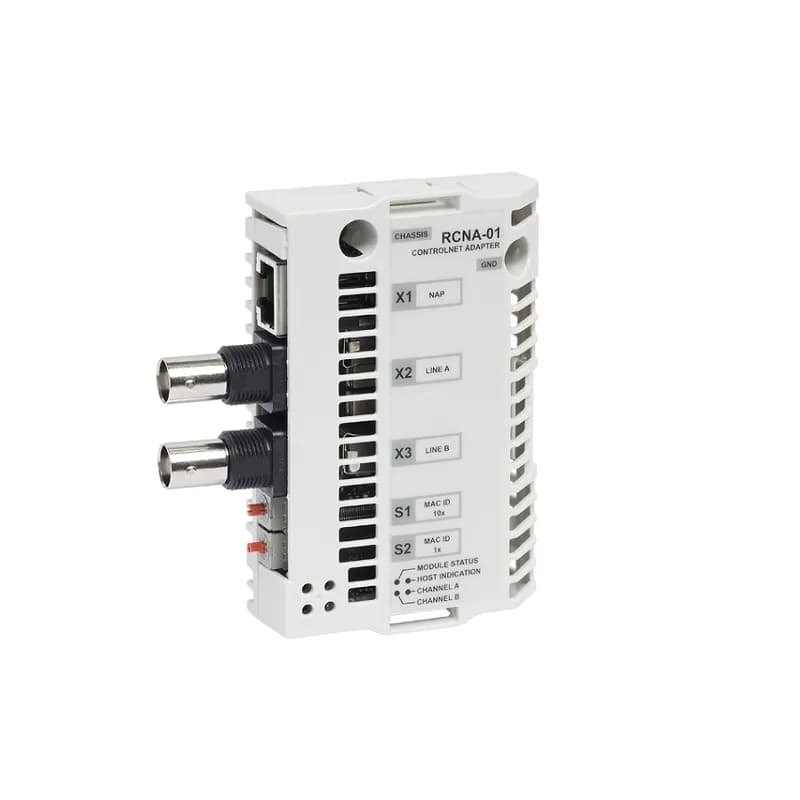
RCNA-01-KIT
The ControlNet network uses a RG-6 quad shielded cable or fiber with support for media redundancy. The RCNA-01 Adapter module supports only RG-6 quad shielded cable (coax) for the bus connection. ControlNet is flexible in topology options (bus, tree, star) to meet various application needs. The fieldbus speed is 5 Mbits/s. The RCNA-01 ControlNet Adapter module can not originate connections on its own, but a scanner node can open a connection towards it. The ControlNet protocol is implemented according to the ControlNet international specification for a Communication adapter.Frequently Asked Questions
What is the purpose of a braking resistor with variable frequency drives?
Braking resistors are used to dissipate regenerated power, preventing the bus voltage from exceeding the drive's rated limit, especially during faster deceleration or overhauling load conditions.
What is the purpose of a braking module?
Braking modules monitor the drive's DC bus and activate external braking resistors to manage regenerated power and improve system performance.
How are Powerohm Type CR resistors constructed?
They feature a nickel-chromium wire helically wound inside a ceramic fixture, housed in an aluminum case. Coil ends are terminated to high-temperature wire leads and encapsulated.
What is the voltage range for ACS150 and ACS355 single-phase applications?
These drives are for single-phase 200-240V applications and are intended for stopping duty only.
What is the voltage range for ACS150 and ACS355 three-phase applications?
These drives are for three-phase 200-240V and 380-480V applications and are intended for stopping duty only.
What is the voltage range for ACS250 single-phase applications?
These drives are for single-phase 100-120V and 200-240V applications and are intended for stopping duty only.
What is the voltage range for ACS250 three-phase UL Type 4X applications?
These drives are for three-phase 200-240V and 380-480V applications and are intended for stopping duty only.
What is the voltage range for ACS250 three-phase applications (non-UL Type 4X)?
These drives are for three-phase 575-690V applications and are intended for stopping duty only.
What is the voltage range for ACS550 three-phase applications?
These drives are for three-phase 200-240V and 380-480V applications and are intended for stopping duty only.
What is the function of the thermal switch in Type GCE and ED enclosures?
The normally closed thermal switch detects resistor temperature overloads, providing an alert or shutdown mechanism.