
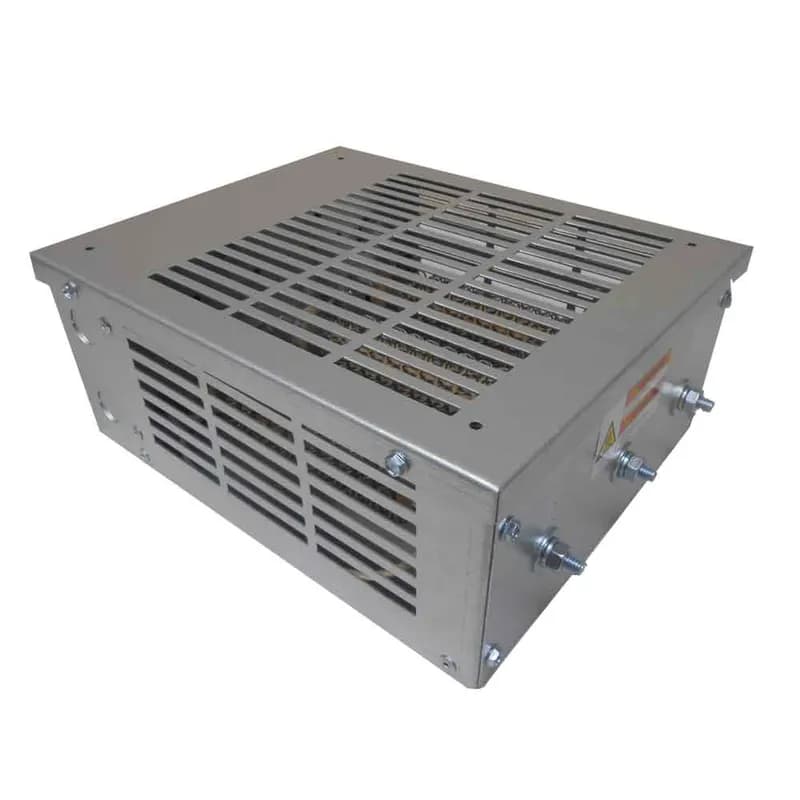
ABB Low Voltage Drives P14494-36 Braking Resistor, 35 OHMS, 3600 WATTS, GCE9 Enclosure, 26.5W x 10D x 5H in, 28 lbs
Alternate Item Number: 3AUA0000041894
UPC: 662348076293
Documents & Media
Contact for Pricing
Call +1 (262) 252-1600 (toll-free 877-268-3700) or email [email protected] for pricing and availability.
Overview
- 35 OHM resistance for effective energy dissipation
- 3600 WATTS power rating for high thermal loads
- GCE9 enclosure for robust protection and mounting
- Compact dimensions: 26.5" W x 10" D x 5" H
- Weight: 28 lbs




Frequently Asked Questions
What is the purpose of a braking resistor with variable frequency drives?
Braking resistors increase braking torque and dissipate regenerated power to prevent bus voltage from exceeding the drive's rated limit.
What is the purpose of a braking chopper module?
Braking modules monitor the drive's DC bus and activate external braking resistors to manage regenerated power and avoid over-voltage trips.
What is the voltage range for ACS150 and ACS355 single-phase applications?
These drives are for single-phase 200-240V applications.
What is the voltage range for ACS150 and ACS355 three-phase applications?
These drives are for three-phase 200-240V and 380-480V applications.
What is the voltage range for ACS250 single-phase applications?
These drives are for single-phase 100-120V and 200-240V applications.
What is the voltage range for ACS250 three-phase UL Type 4X applications?
These drives are for three-phase 200-240V and 380-480V applications.
What is the voltage range for ACS250 three-phase applications (non-UL Type 4X)?
These drives are for three-phase 575-690V applications.
What is the voltage range for ACS550 three-phase applications?
These drives are for three-phase 200-240V and 380-480V applications.
What is the function of the thermal switch in Type GCE and ED enclosures?
The normally closed thermal switch detects resistor temperature overloads.
When should 200ºC rated wire be used with Type ED enclosures?
Use 200ºC rated silicone or Teflon wire when attaching directly to resistor coils if not using optional terminal connections.