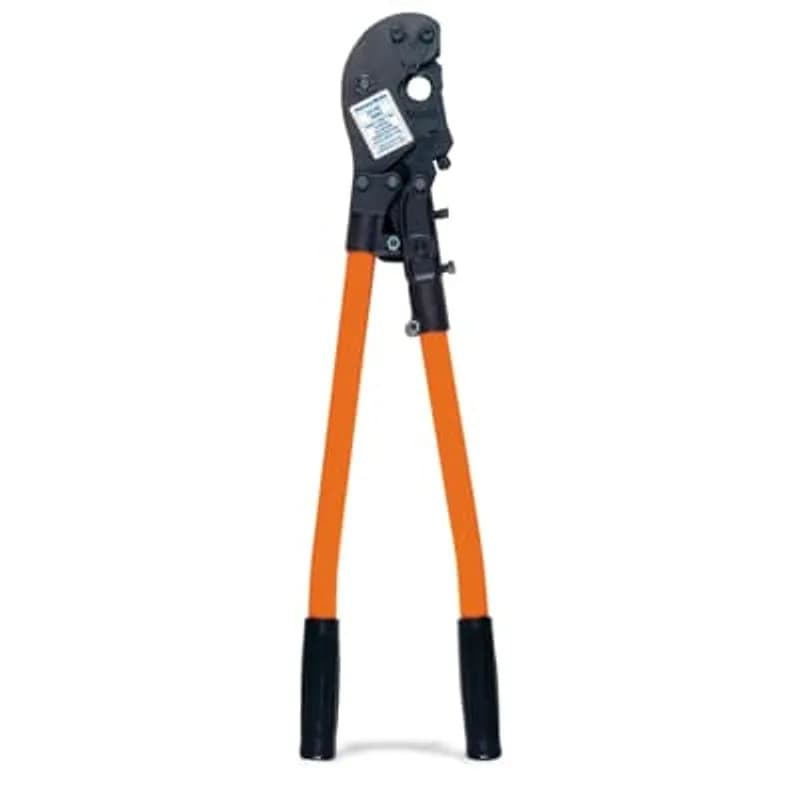
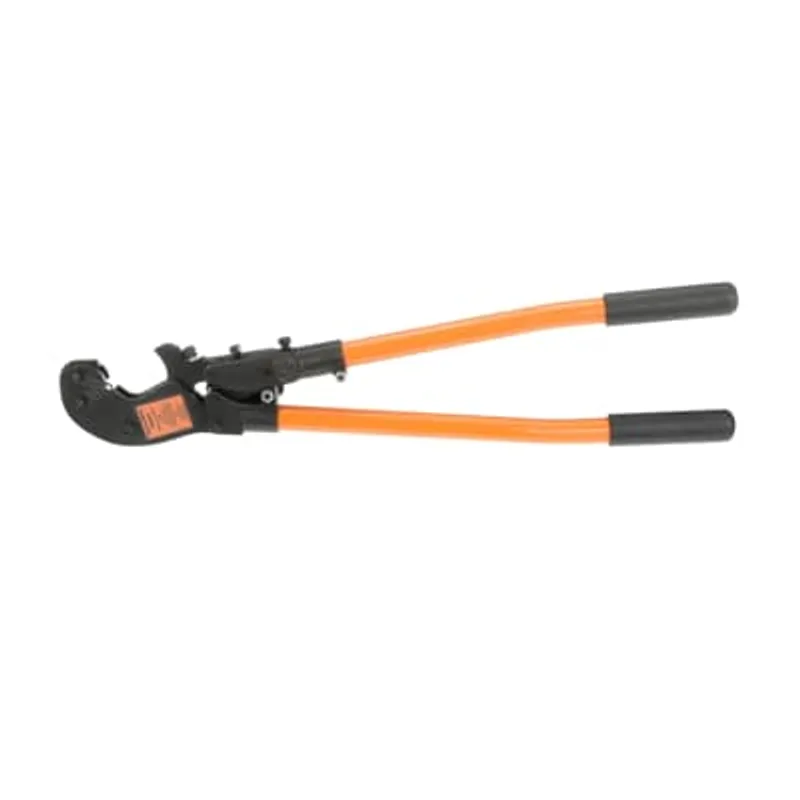
ABB Installation Products TBM6S Crimp Tool with Shure Stake Mechanism, Crimps #8-500MCM Cu, #10-350MCM Al Connectors…
UPC: 786210839448
Contact for Pricing
Call +1 (262) 252-1600 (toll-free 877-268-3700) or email [email protected] for pricing and availability.
Overview
- Features Shure Stake mechanism for guaranteed complete crimps
- Crimps #8-500MCM copper (Cu) conductors
- Crimps #10-350MCM aluminum (Al) conductors
- Compatible with 54705-54750 C-Taps
- Durable construction for industrial use
Specifications
Application | Crimping Lugs |
Handle Type | Palm Grip |
Special Features | Shure-Stake Ratchet, Dies Required |
Type | Manual Crimp Tool |
Package Dimensions (L x W x H) | 0.01 IN x 0.01 IN x 0.01 IN |
Package Dimensions (L x W x H) | 0.0254 cm x 0.0254 cm x 0.0254 cm |
Package Weight (Imperial) | 11.7000 L |
Package Weight (Metric) | 5.3070 kg |

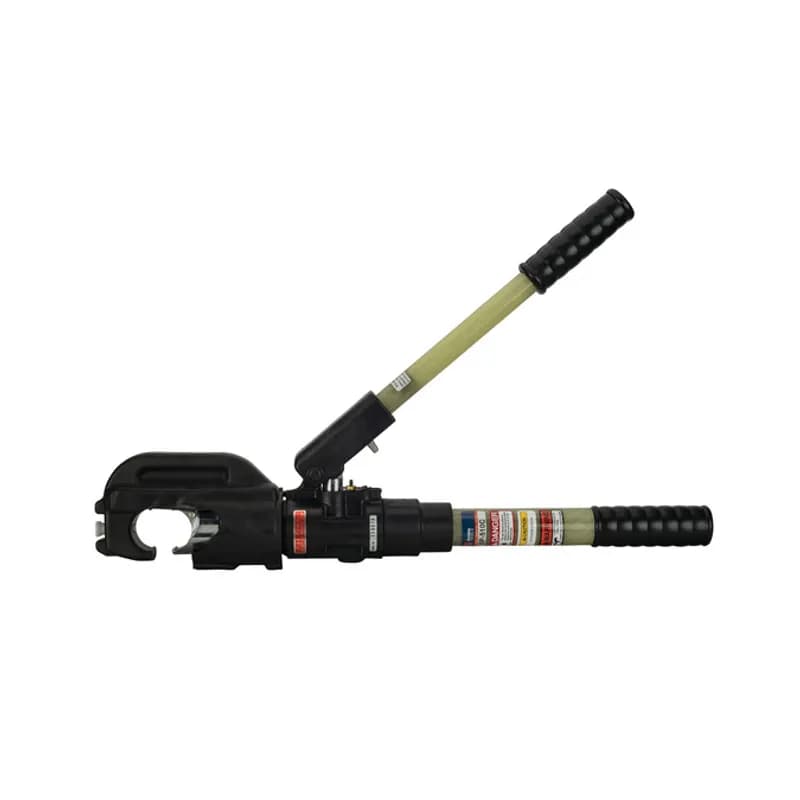
NSI-12
12-Ton Compression Tool for U-Type Dies APPLICATIONS: Delivers 12 tons of hydraulic force. It has a 1 1/2" jaw opening for large conductors and taps with automatic two-speed pump action for rapid ram advancement. It features a 180 degree head rotation and fast ram release with the twist of the handle. It accepts all standard U-Type dies.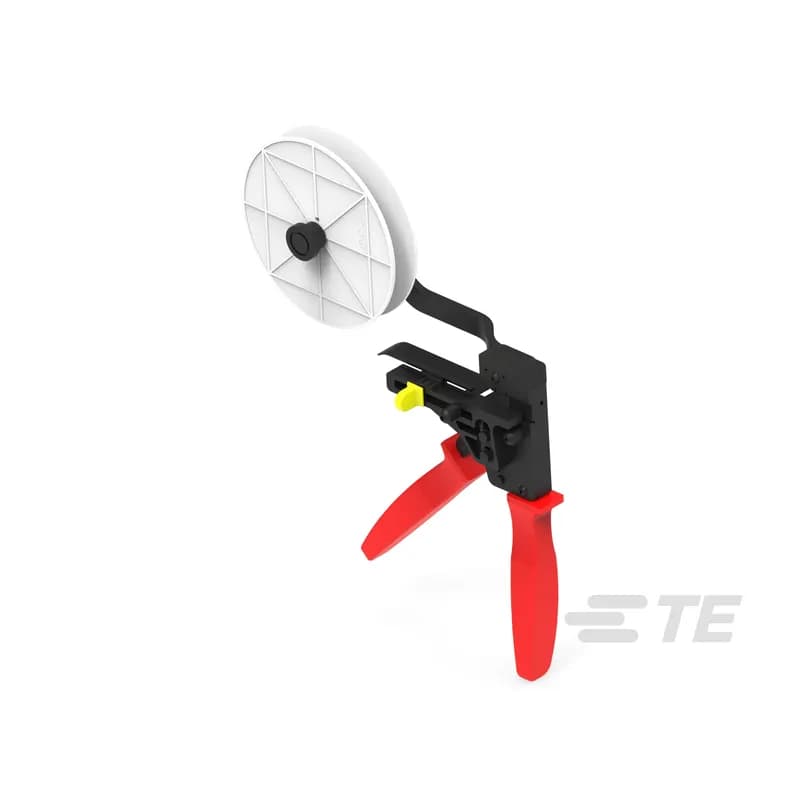
952050-E
Commercial Crimp Tooling, Removable/Interchangeable, Manual, Crimp Tool, ERNI MaxiBridge, Hand Crimping Tools
CT-720
Manual crimping tool for UL Listed or Recognized and CSA Certified terminations of Panduit copper compression lugs and splices for #8 AWG 500 kcmil copper code conductor and aluminum compression lugs and splices for #6 AWG 350 kcmil copper and aluminum code conductors. Provides UL Listed terminations of Panduit Pan-Term #8 2 AWG vinyl insulated terminals.Color-coded CD-720 crimping dies, carrying/storage case, and controlled cycle mechanism must be purchased separately.Specifications:Output: 6 tonsWeight: 7.7 lbs.Length: 26"Handle span: 58" (open), 2.5" (closed)
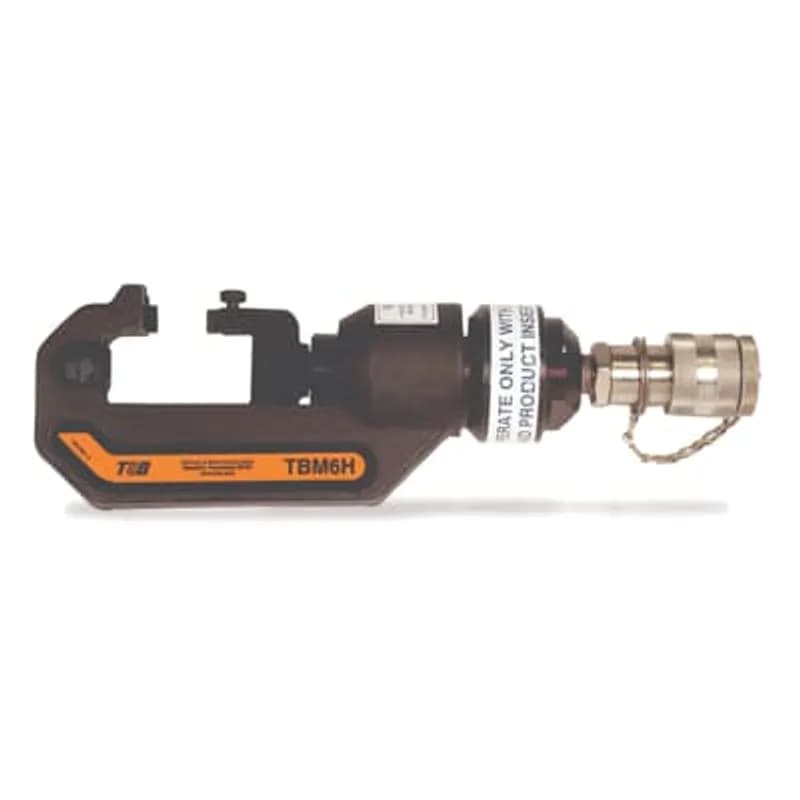
TBM6H
6 Ton Hydraulic Head - Operating Pressure 10,000 PSI, Application Range Copper 8 AWG - 500 kcmil and Aluminum 10 AWG - 350 kcmil, Tool Carrying Case Included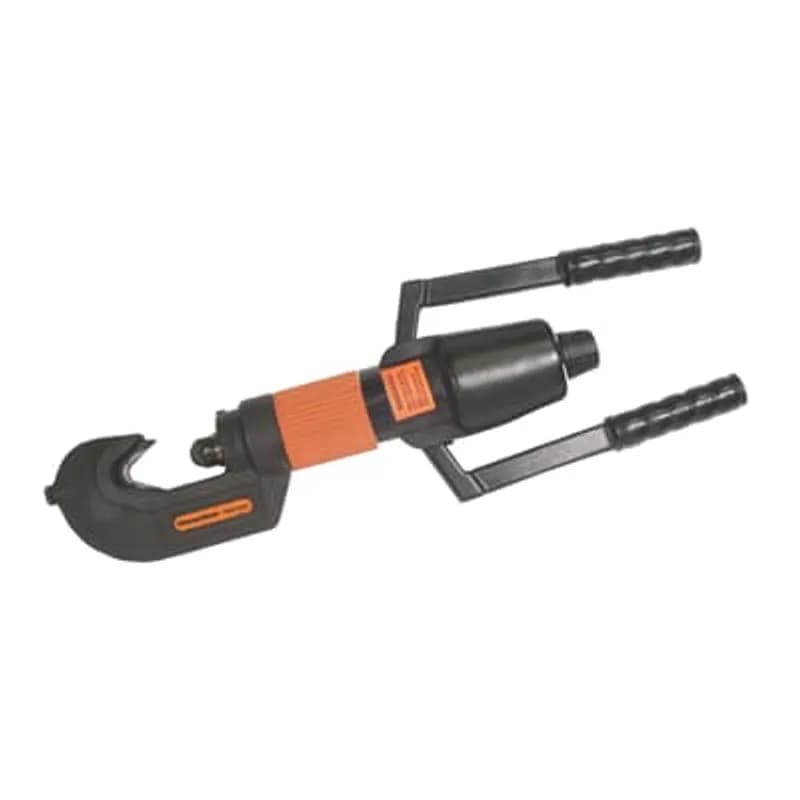
TBM8-750M-1
12 Ton Dieless Manual Hydraulic Compression Tool - Application Range 900 kcmil Copper Lugs and Splices, 750 kcmil Aluminum Lugs and Splices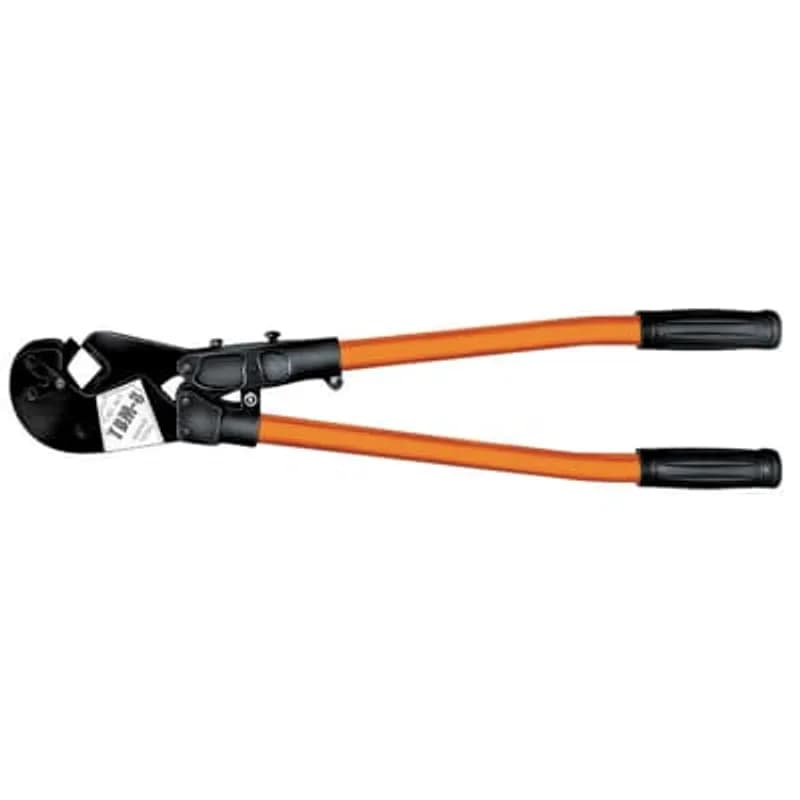
Frequently Asked Questions
What conductor sizes can the TBM6S crimp?
The ABB TBM6S crimp tool can crimp #8-500MCM copper (Cu) conductors and #10-350MCM aluminum (Al) conductors.
What is the Shure Stake mechanism?
The Shure Stake mechanism ensures that a complete crimp cycle is finished before the tool can be opened, preventing partial crimps.
Is the TBM6S compatible with C-Taps?
Yes, the ABB TBM6S crimp tool is compatible with 54705-54750 C-Taps.
What types of connectors can this tool crimp?
This tool crimps copper and aluminum connectors within its specified size ranges, as well as 54705-54750 C-Taps.
How to Operate and Calibrate the TBM6S Compression Tool
This guide provides instructions for installing and changing dies, preparing conductors, making electrical compressions, and verifying the calibration of the TBM6S compression tool. Always read and understand all safety information before operation.
Estimated time: 30m
Tools needed:
TBM6S Compression Tool, Dies (Color-Keyed or Sta-Kon), Wire brush or emery cloth, Gage pin (specific to die type)
Supplies needed:
Thomas & Betts connectors (UL and/or CSA listed), Conductor (copper or aluminum wire), Joint compound (for aluminum cable)
- Remove Dies
Open the tool handles until fully extended. Pull the locking pin all the way down, disengaging it from the lower die. Slip the lower die along its groove until it is out of the tool. Pull the upper die out from under the die retaining spring to remove it.
- Install or Change Dies
Hold the tool with the die retaining spring facing you and open the handles fully. Insert the upper die first, with the desired crimping nest facing the ram, under the die retaining spring. Hold the lower die with the rib down and the locking pin notch to the right. Slip the rib of the lower die into the groove in the ram. Push the lower die into the ram until it is properly seated and the locking pin snaps into the notch.
- Prepare the Conductor
Strip insulation properly without cutting or nicking the conductor strands. Refer to the instruction sheet supplied with your specific connectors to determine the correct strip length. For aluminum cable, smear a thin layer of joint compound onto the conductor strands and brush it in between the strands with a wire brush or emery cloth.
- Make a Compression (Color-Keyed® Connectors)
Insert the prepared conductor into the connector. Locate the connector in the tool's die grooves so the die is between the color code marks for copper, or on the color code marks for aluminum. If more than one compression is required, perform the first compression nearest the tongue of the terminal or center of a splice, then work progressively toward the end of the barrel. Close the tool handles completely for each compression.
- Make a Compression (Sta-Kon® Terminals)
Insert the prepared conductor into the terminal. Locate the terminal in the tool's die grooves so the die is centrally located over the barrel of the terminal. Close the tool handles completely for each compression.
- Perform Visual Inspection
Inspect the tool for any cracks, sharp edges, or other obvious imperfections that may affect its performance. Ensure the die nest area is free of burrs, dents, or scratches. This inspection is crucial for maintaining tool reliability.
- Check Handle Spread
Insert both upper and lower dies into the tool. Lay the tool on a flat surface, open handle A, and allow it to close under its own weight until the dies are touching. Measure the distance between the handle grips. For a properly adjusted tool, this distance should be between 11 inches and 14 inches.
- Adjust Tool Handle Spread (if needed)
If the handle spread is outside the 11-14 inch range, loosen the lockscrew. To increase the distance between handles, turn the adjusting screw clockwise. To decrease the distance, turn the adjusting screw counterclockwise. Once adjusted, tighten the lockscrew and recheck the handle distance. Adjust again if necessary.
- Perform Gaging Procedure
Wipe the dies clean before gaging. Squeeze the tool handles until the jaws are fully closed. Select the appropriate gage pin for your die type (refer to tables 3.4 or 3.5 in the manual) and insert it into the nest with minimal hand pressure. The gage pin should fall between the minimum and maximum limits specified in the relevant gaging table. If the tool cannot be calibrated, do not attempt repair; contact a T&B tool service center.
Frequently Asked Questions about ABB - Installation Products
How are Thomas and Betts products typically installed?
Thomas and Betts products are installed using a variety of methods tailored to specific applications, including the use of flexible cords and cable fittings, non-metallic cable glands, and armored cable fittings. Proper selection of fittings is crucial to match the cable type and installation environment, ensuring durability and preventing physical damage. Tools such as the Blackburn® Comfort Crimp® and HEX-FLEX® systems enhance installation efficiency and reliability, reducing labor time and ensuring secure connections.
What accessories are available for Thomas and Betts products?
Thomas and Betts offers a comprehensive range of accessories for their products, including various cord and cable fittings, non-metallic cable glands, service entrance cable fittings, and armored cable fittings. Their accessories are designed to enhance installation efficiency and ensure compatibility with different cable types and environmental conditions, providing reliable connections for a wide array of applications.
What environmental ratings do Thomas and Betts products have?
Thomas and Betts products feature robust environmental ratings, including NEMA Type 1, 2, 3, 4, 4X, 12, and 13 certifications, as well as IEC 60529 IP66 protection. These ratings ensure that their products are designed to withstand harsh industrial environments, with capabilities to resist dust, water, and corrosion, and operate effectively in a wide temperature range.
What communication protocols do Thomas and Betts products support?
Thomas and Betts products support a wide range of industrial communication protocols, including Ethernet, DeviceNet, PROFIBUS, Modbus, CANopen, and others. This extensive compatibility ensures seamless integration and reliable communication across various industrial automation systems, catering to diverse application needs.
What are the key features of Thomas and Betts products?
Thomas and Betts products are known for their innovative designs, high performance, and compliance with industry standards such as the National Electrical Code and Underwriters' Laboratories. They offer a comprehensive range of rugged and reliable electrical fittings, including liquidtight and dust-tight connections, which enhance installation efficiency and reduce overall project costs. Their products are engineered for durability in harsh environments, ensuring long-term reliability and lower installed costs.
What are the main product lines offered by Thomas and Betts?
Thomas and Betts offers a comprehensive range of product lines including electrical connectors, cable management systems, grounding and bonding solutions, and industrial automation components. Their products are designed for durability and reliability in demanding industrial environments, ensuring optimal performance and safety across various applications.
What technical support does Thomas and Betts offer?
Thomas and Betts offers comprehensive technical support, including access to field application engineers for onsite training and installation assistance. Their technical support staff is available to address inquiries related to product specifications and installation practices, ensuring optimal performance and safety of electrical systems. Additionally, they provide a variety of training programs to enhance the knowledge and skills of users in the field.
What industries and applications are Thomas and Betts products used for?
Thomas and Betts products are utilized across various industries including electrical construction, industrial automation, telecommunications, and utilities. Their extensive range of cord and cable fittings, electrical boxes, and metal framing systems are designed for applications that require durability and reliability in harsh environments, ensuring optimal performance in both permanent and temporary installations.
What certifications and standards do Thomas and Betts products comply with?
Thomas and Betts products comply with critical international certifications including UL (Underwriters Laboratories), CSA (Canadian Standards Association), and CE (European Community). Our products are designed to meet rigorous industrial standards such as NEMA enclosure ratings and IEC 60529 IP ratings, ensuring safety and reliability across various industrial applications.
What are the main product lines offered by Ocal?
Ocal offers a comprehensive range of corrosion-resistant conduit systems, including PVC-coated conduit and fittings, conduit bodies, hazardous location fittings, and strut accessories. Their products are designed to provide superior corrosion protection, featuring a hot-dipped galvanizing process and UL listed Type 4X PVC-coated conduit bodies, ensuring durability in the most demanding environments.