
ABB Installation Products M656I-BUS 35kV, 600 Amp Separable Cable Joints, 2-Way Insulated Bus Bar with Test Point.
UPC: 783786784523
Contact for Pricing
Call +1 (262) 252-1600 (toll-free 877-268-3700) or email [email protected] for pricing and availability.
Overview
- 35kV operating voltage rating
- 600 Amp current rating
- 2-way insulated bus bar configuration
- Integrated test point for diagnostics
- Manufactured by ABB Installation Products
Specifications
Application | 35 kV, 600 Amps |
Current Rating | 600 A |
Poles | 2-Way |
Temperature Rating, Maximum | 149 F |
Temperature Rating, Maximum | 65 C |
Temperature Rating, Minimum | -40 F |
Temperature Rating, Minimum | -40 C |
Type | Separable Cable Joint |
Voltage Rating | 35 kV |
Package Dimensions (L x W x H) | 0.01 IN x 0.01 IN x 0.01 IN |
Package Dimensions (L x W x H) | 0.0254 cm x 0.0254 cm x 0.0254 cm |
Package Weight (Imperial) | 1.0000 L |
Package Weight (Metric) | 0.4540 kg |
L1601PC-S2-CK3H
35kv, 200 Amp Loadbreak Bushing Clamp and Gasket Kit - 3 Holes, for use on Bushing Well without Bail Tabs. Equipped with Copper Conductor Rod. Molded Epoxy Flange for Gasketed Clamp Mounting. Includes Epoxy Bushing Well, Clamp, Gasket and Instruction Sheet.L1601PC-S2-CK4H
35kv, Short Shank Well without Bail Tabs and Non-Replaceable Well Stud (2-3/4 inch Bushing Shank Length), with Clamp and Gasket, 4 Holes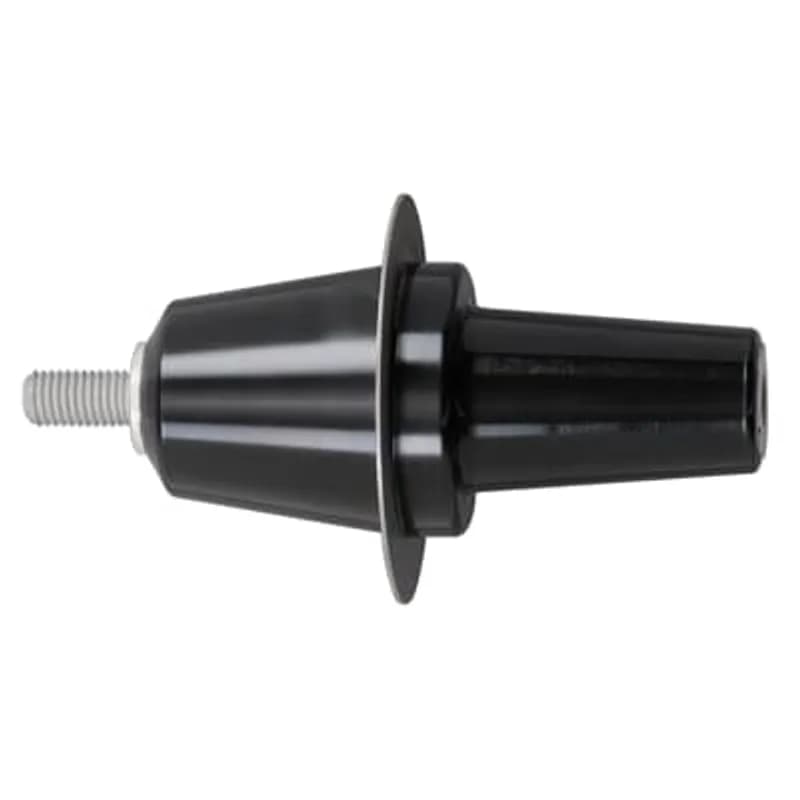
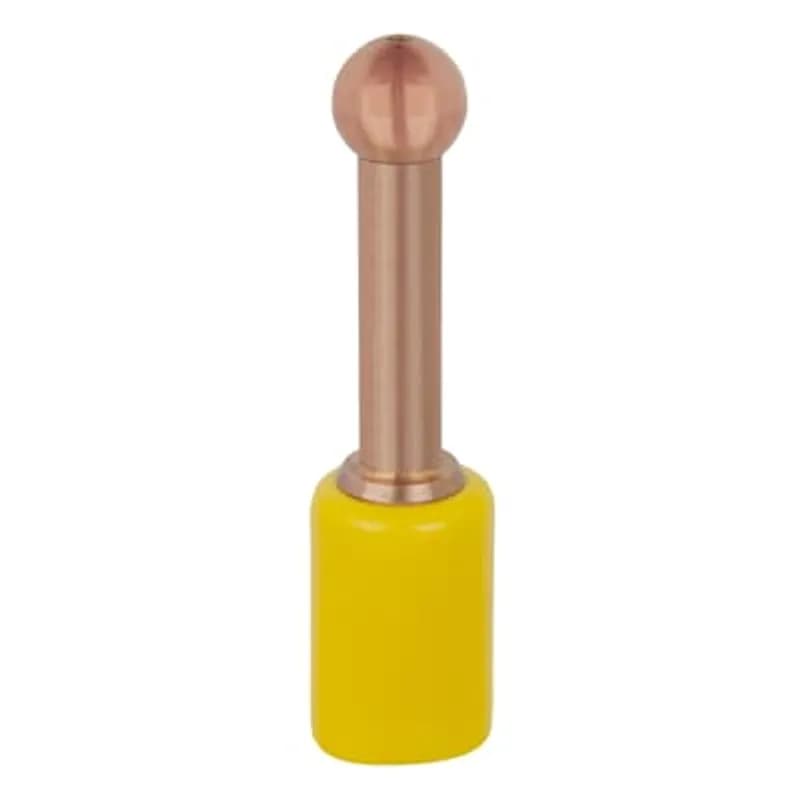
K650SLGB
15/25/35kV 600 Series Ground Bar for Spiking Aid. Tellurium Copper. Yellow Cap. 1 inch Diameter Ball end.Frequently Asked Questions
What is the maximum operating voltage for this cable joint?
The ABB M656I-BUS separable cable joint is designed for 35kV operating voltage.
What is the current carrying capacity of this bus bar joint?
This 2-way insulated bus bar cable joint has a current rating of 600 Amps.
How many cable connections can be made with this bus bar joint?
This is a 2-way insulated bus bar configuration, indicating it supports two cable connections.
Who is the manufacturer of the M656I-BUS cable joint?
The M656I-BUS separable cable joint is manufactured by ABB - Installation Products.
What is the purpose of the test point on this cable joint?
The integrated test point allows for diagnostic testing and system monitoring without compromising the primary insulation of the joint.
How to Install M656/M676 Series 600 Ampere Splices
This guide provides detailed instructions for the installation and assembly of M656/M676 CY, CH, and I series 600 ampere splices for solid dielectric type cables rated at 35kV, including cable preparation, crimping, and grounding procedures. Ensure all safety precautions are followed.
Estimated time: 2h
Tools needed:
Hex wrench, Torque wrench, 15/16” socket, Wire brush (for aluminum cable), 650ATY assembly tool OR 600RRT assembly tool, Wire strippers, Safety solvent
Supplies needed:
Receptacle housings, Cable adapters, I, Wye or H Center sections, Retaining ring, Hex-head bolts, Crimp connectors, Belleville washers, Flat washers, Nylon venting rod, ELASTIMOLD approved lubricant, Hose clamps, Short length of wire (No. 14 AWG, copper or equivalent), Rubber sheet (if using 30MA kit), Clamps (if using 30MA kit), Conductive copper strip (for flat metallic tape shielded cable), Tape (for markers), ECS grounding device (optional), 30MA grounding device (optional)
- Prepare Cables and Install Grounding Device
DANGER: All apparatus must be de-energized during installation or removal of parts. Train the cable ends and straighten them into their final position. Unwrap outer wires 30 inches and bend them back. Cut the cable end squarely. Wipe the outer jacket clean for a distance of 38 inches (30 inches for concentric neutral cable). If using an ECS grounding device, slide the tube onto the cable 38 inches. If using a 30MA grounding device, apply supplied lubricant to the inside and slide it onto the cable 38 inches. Slide the receptacle housing onto the cable 30 inches.
- Perform Cable Specific Preparation
Refer to the special cable preparation supplement for your cable type. For Concentric Neutral Cable: Remove the cable jacket 13-3/4 inches, bend neutral wires back, and remove the semi-con 10-1/4 inches. Wrap two turns of tape 1 inch from the semi-con end. Bevel the insulation at a 45-degree angle, approximately 1/4 inch back. Thoroughly clean the insulation with an approved safety solvent. For Flat Metallic Tape Shielded Cable: Remove the outer jacket 13-3/4 inches. Remove the tape shield 11-1/4 inches, wrap a conductive copper strip, and wrap two turns of tape as a marker. Remove the semi-con shield 10-1/4 inches. Bevel the insulation at a 45-degree angle, approximately 1/4 inch back. Thoroughly clean the insulation with an approved safety solvent. For both types: Apply lubricant sparingly along the cable and inside the cable adapter. Slide the adapter, small end first, over the cable with a twisting motion until flush with the tape marker. Remove the tape marker.
- Install Cable Adapter, Retaining Ring, and Crimp Connector
Remove any protruding cable insulation by cutting it even with the end of the cable adapter, ensuring not to cut or nick the adapter or conductor. The exposed conductor should measure 4 3/8 to 5 inches. Assemble the aluminum retaining ring over the conductor and snug it firmly against the cable adapter. Using the provided hex wrench, tighten the socket head screw hand tight. Confirm the exposed conductor measures 4 3/8 to 4 3/4 inches. Remove the protective cap from the crimp connector. If using aluminum cable, wire brush the conductor and immediately fully insert it into the crimp connector which contains inhibitor. Measure the distance from the end of the connector to the holding collar; it must be 6 3/4 to 7 inches. Repeat steps 2 and 3 for all remaining cables to be joined.
- Crimp Connectors and Assemble Splice Section
Prior to crimping, confirm all components are positioned correctly and that the bolt holes in the crimp connectors align with the bolt holes of the mating part. Crimp the connectors following the instructions packaged with them, rotating each crimp 90 degrees. After crimping, measure the distance from the end of the connector to the holding collar; it must be 6 3/4 to 7 inches. Assemble the washers and bolt in the following order: flat washer against the spade contact, Belleville washer (concave side down), then the hex-head bolt. Hand tighten. Clean and lubricate the components. Using a torque wrench with a 15/16 inch socket, tighten all bolts to 50 to 60 ft. lbs. Do not attempt to move or reposition any part of the assembly after the bolts are tightened.
- Install Receptacle Housing and Grounding
Apply supplied lubricant generously to the outside of the cable adapter, the splice section, and the inside mating surface of the receptacle housing. Slide the receptacle housing over the cable adapter and up to the edge of the interface. Insert the nylon venting rod. Using either the 650ATY or 600RRT assembly tool, slowly slide the receptacle housing over the splice section. WARNING: DO NOT place hand on threaded rod or guide shaft with the assembly tool in place. Remove the venting rod. Repeat steps 4 and 5 for any remaining cables. Check all cable adapters for proper location and remove all vinyl tape markers. Position a hose clamp between the locater bumps on the receptacle housing and tighten until an audible click. Finally, complete the grounding procedure according to your cable type and grounding device: for Concentric Neutral Cable, connect a No. 14 AWG copper wire to grounding eyes and neutral wires; for ECS, complete the device installation and connect a No. 14 AWG copper wire to grounding eyes; for Flat Metallic Tape Shielded Cable with a 30MA, install the corrugated contact, rubber sheet, and clamps, then connect a No. 14 AWG copper wire to grounding eyes.
Frequently Asked Questions about ABB - Installation Products
How are Thomas and Betts products typically installed?
Thomas and Betts products are installed using a variety of methods tailored to specific applications, including the use of flexible cords and cable fittings, non-metallic cable glands, and armored cable fittings. Proper selection of fittings is crucial to match the cable type and installation environment, ensuring durability and preventing physical damage. Tools such as the Blackburn® Comfort Crimp® and HEX-FLEX® systems enhance installation efficiency and reliability, reducing labor time and ensuring secure connections.
What accessories are available for Thomas and Betts products?
Thomas and Betts offers a comprehensive range of accessories for their products, including various cord and cable fittings, non-metallic cable glands, service entrance cable fittings, and armored cable fittings. Their accessories are designed to enhance installation efficiency and ensure compatibility with different cable types and environmental conditions, providing reliable connections for a wide array of applications.
What environmental ratings do Thomas and Betts products have?
Thomas and Betts products feature robust environmental ratings, including NEMA Type 1, 2, 3, 4, 4X, 12, and 13 certifications, as well as IEC 60529 IP66 protection. These ratings ensure that their products are designed to withstand harsh industrial environments, with capabilities to resist dust, water, and corrosion, and operate effectively in a wide temperature range.
What communication protocols do Thomas and Betts products support?
Thomas and Betts products support a wide range of industrial communication protocols, including Ethernet, DeviceNet, PROFIBUS, Modbus, CANopen, and others. This extensive compatibility ensures seamless integration and reliable communication across various industrial automation systems, catering to diverse application needs.
What are the key features of Thomas and Betts products?
Thomas and Betts products are known for their innovative designs, high performance, and compliance with industry standards such as the National Electrical Code and Underwriters' Laboratories. They offer a comprehensive range of rugged and reliable electrical fittings, including liquidtight and dust-tight connections, which enhance installation efficiency and reduce overall project costs. Their products are engineered for durability in harsh environments, ensuring long-term reliability and lower installed costs.
What are the main product lines offered by Thomas and Betts?
Thomas and Betts offers a comprehensive range of product lines including electrical connectors, cable management systems, grounding and bonding solutions, and industrial automation components. Their products are designed for durability and reliability in demanding industrial environments, ensuring optimal performance and safety across various applications.
What technical support does Thomas and Betts offer?
Thomas and Betts offers comprehensive technical support, including access to field application engineers for onsite training and installation assistance. Their technical support staff is available to address inquiries related to product specifications and installation practices, ensuring optimal performance and safety of electrical systems. Additionally, they provide a variety of training programs to enhance the knowledge and skills of users in the field.
What industries and applications are Thomas and Betts products used for?
Thomas and Betts products are utilized across various industries including electrical construction, industrial automation, telecommunications, and utilities. Their extensive range of cord and cable fittings, electrical boxes, and metal framing systems are designed for applications that require durability and reliability in harsh environments, ensuring optimal performance in both permanent and temporary installations.
What certifications and standards do Thomas and Betts products comply with?
Thomas and Betts products comply with critical international certifications including UL (Underwriters Laboratories), CSA (Canadian Standards Association), and CE (European Community). Our products are designed to meet rigorous industrial standards such as NEMA enclosure ratings and IEC 60529 IP ratings, ensuring safety and reliability across various industrial applications.
What are the main product lines offered by Ocal?
Ocal offers a comprehensive range of corrosion-resistant conduit systems, including PVC-coated conduit and fittings, conduit bodies, hazardous location fittings, and strut accessories. Their products are designed to provide superior corrosion protection, featuring a hot-dipped galvanizing process and UL listed Type 4X PVC-coated conduit bodies, ensuring durability in the most demanding environments.