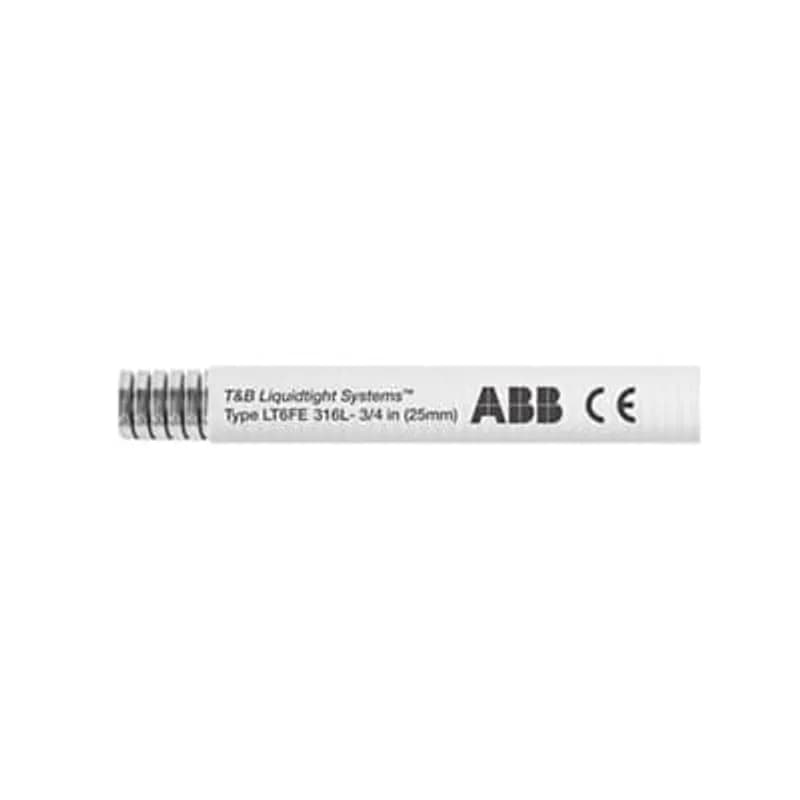
Contact for Pricing
Minimum Qty: 100
Multiplier: 100
*Contact for lower quantities*
Overview
- 316 stainless steel core for superior corrosion resistance in food processing and pharmaceutical environments
- White PVC jacket provides moisture, dust, and chemical resistance while meeting food-grade requirements
- 3/8-inch diameter, 30-meter (100-foot) length for flexible routing in tight or complex installations
- Operational temperature range: -45°C to 105°C for reliable performance across diverse processing conditions
- Flexible metallic core protects against vibration, crushing, and abrasion in washdown or high-traffic areas
Specifications
Color | White |
Inside Diameter | 0.484 in |
Inside Diameter | 12.2936 mm |
Length | 100 in |
Length | 2540 mm |
Material | 316 Stainless Steel Core with PVC Jacket |
Material Quality | 316 Stainless Steel Core with PVC Jacket |
Outside Diameter | 0.71 in |
Outside Diameter | 18.034 mm |
Series | LT6FES |
Size | 3/8 Inch |
Standard | RoHS, WEEE |
Trade Size | 3/8 in |
Type | Flexible Metal Conduit |
Package Dimensions (L x W x H) | 0.01 IN x 0.01 IN x 0.01 IN |
Package Dimensions (L x W x H) | 0.0254 cm x 0.0254 cm x 0.0254 cm |
Package Weight (Imperial) | 0.2100 L |
Package Weight (Metric) | 0.0950 kg |
SS16/25M
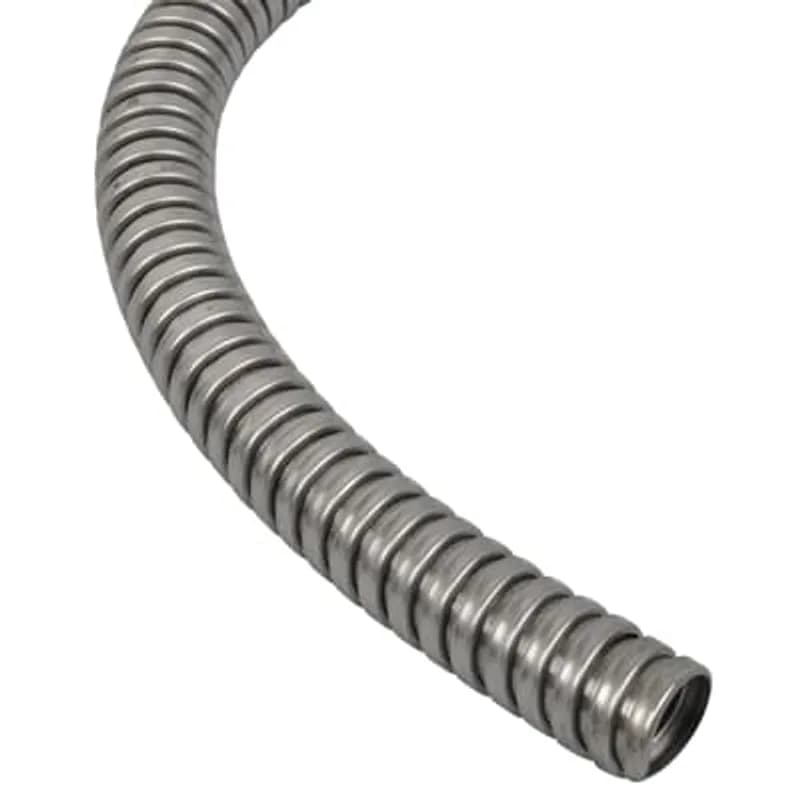
Inherent Low Fire Hazard Conduit, Nominal Conduit Size 16mm, Outside Diameter 16.0mm, Inside Diameter 13.0mm, Static Bend Radius 35mm, Reel Length 25 Meters, 316 Stainless Steel, Corrosion Resistant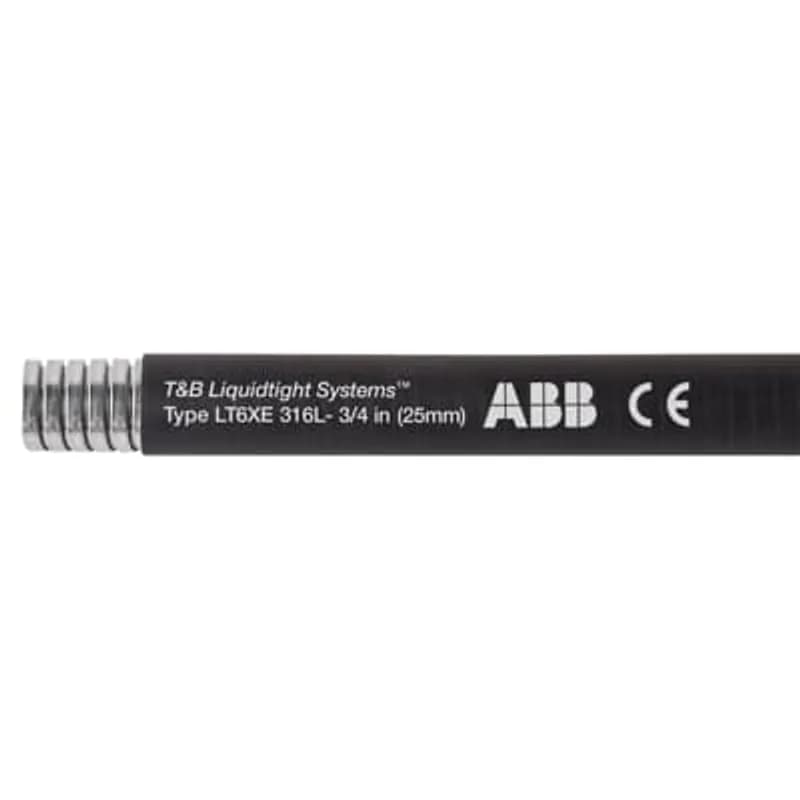
LT6XES04B-J
Liquid Tight Flexible Metallic Conduit, Extreme Temperature, 316 Stainless Steel Core with TRP Jacket (UL94-HB), Conduit Size 1 Inch, Length 120 Meters/400 Feet, Working Temperature -55 to 150 Degrees C, Compliant to RoHS and WEEE, BlackLT6FES02W-C
Liquid Tight Flexible Metallic Conduit, Food and Beverage Grade, 316 Stainless Steel Core with PVC Antimicrobial Jacket, Conduit Size 1/2 Inch, Length 30 Meters/100 Feet, Working Temperature -45 to 105 Degrees C, Compliant to RoHS and WEEE, WhiteLT6XES07B-C
Liquid Tight Flexible Metallic Conduit, Extreme Temperature, 316 Stainless Steel Core with TRP Jacket (UL94-HB), Conduit Size 2 Inch, Length 30 Meters/100 Feet, Working Temperature -55 to 150 Degrees C, Compliant to RoHS and WEEE, BlackLT6FES03W-C
Liquid Tight Flexible Metallic Conduit, Food and Beverage Grade, 316 Stainless Steel Core with PVC Antimicrobial Jacket, Conduit Size 3/4 Inch, Length 30 Meters/100 Feet, Working Temperature -45 to 105 Degrees C, Compliant to RoHS and WEEE, WhiteLT6XES05B-E
Liquid Tight Flexible Metallic Conduit, Extreme Temperature, 316 Stainless Steel Core with TRP Jacket (UL94-HB), Conduit Size 1-1/4 Inch, Length 60 Meters/200 Feet, Working Temperature -55 to 150 Degrees C, Compliant to RoHS and WEEE, BlackLT6FES04W-C
Liquid Tight Flexible Metallic Conduit, Food and Beverage Grade, 316 Stainless Steel Core with PVC Antimicrobial Jacket, Conduit Size 1 Inch, Length 30 Meters/100 Feet, Working Temperature -45 to 105 Degrees C, Compliant to RoHS and WEEE, WhiteLT6XES03B-L
Liquid Tight Flexible Metallic Conduit, Extreme Temperature, 316 Stainless Steel Core with TRP Jacket (UL94-HB), Conduit Size 3/4 Inch, Length 300 Meters/1,00 Feet, Working Temperature -55 to 150 Degrees C, Compliant to RoHS and WEEE, BlackFrequently Asked Questions
How is chemical resistance rated for this product?
Chemical resistance is rated from A (Excellent to Good) to D (Unsatisfactory), with B (Good to Fair) and C (Fair to Limited) in between.
Which materials are covered in the chemical resistance guide?
The guide covers chemical resistance for PVC (Polyvinyl Chloride) and PU (Polyurethane) materials, as well as a Type LTXE thermoplastic rubber jacket.
Is the chemical resistance data guaranteed for all applications?
This information is provided as a guideline only, and no guarantee is implied. Results are based on controlled laboratory tests, not installed end-product applications.
How should chemical resistance be verified for extreme conditions?
ABB recommends exposing and observing samples in actual service conditions for extreme or unusual situations to verify chemical resistance.
How should chemical resistance be verified for extreme conditions?
ABB recommends exposing and observing samples in actual service conditions for extreme or unusual situations to verify chemical resistance.
Is the chemical resistance data guaranteed for all applications?
This information is provided as a guideline only, and no guarantee is implied. Results are based on controlled laboratory tests, not installed end-product applications.
Which materials are covered in the chemical resistance guide?
The guide covers chemical resistance for PVC (Polyvinyl Chloride) and PU (Polyurethane) materials, as well as a Type LTXE thermoplastic rubber jacket.
How is chemical resistance rated for this product?
Chemical resistance is rated from A (Excellent to Good) to D (Unsatisfactory), with B (Good to Fair) and C (Fair to Limited) in between.
Which materials are covered in the chemical resistance guide?
The guide covers chemical resistance for PVC (Polyvinyl Chloride) and PU (Polyurethane) materials, as well as a Type LTXE thermoplastic rubber jacket.
Is the chemical resistance data guaranteed for all applications?
This information is provided as a guideline only, and no guarantee is implied. Results are based on controlled laboratory tests, not installed end-product applications.
Frequently Asked Questions about ABB - Installation Products
How are Thomas and Betts products typically installed?
Thomas and Betts products are installed using a variety of methods tailored to specific applications, including the use of flexible cords and cable fittings, non-metallic cable glands, and armored cable fittings. Proper selection of fittings is crucial to match the cable type and installation environment, ensuring durability and preventing physical damage. Tools such as the Blackburn® Comfort Crimp® and HEX-FLEX® systems enhance installation efficiency and reliability, reducing labor time and ensuring secure connections.
What accessories are available for Thomas and Betts products?
Thomas and Betts offers a comprehensive range of accessories for their products, including various cord and cable fittings, non-metallic cable glands, service entrance cable fittings, and armored cable fittings. Their accessories are designed to enhance installation efficiency and ensure compatibility with different cable types and environmental conditions, providing reliable connections for a wide array of applications.
What environmental ratings do Thomas and Betts products have?
Thomas and Betts products feature robust environmental ratings, including NEMA Type 1, 2, 3, 4, 4X, 12, and 13 certifications, as well as IEC 60529 IP66 protection. These ratings ensure that their products are designed to withstand harsh industrial environments, with capabilities to resist dust, water, and corrosion, and operate effectively in a wide temperature range.
What communication protocols do Thomas and Betts products support?
Thomas and Betts products support a wide range of industrial communication protocols, including Ethernet, DeviceNet, PROFIBUS, Modbus, CANopen, and others. This extensive compatibility ensures seamless integration and reliable communication across various industrial automation systems, catering to diverse application needs.
What are the key features of Thomas and Betts products?
Thomas and Betts products are known for their innovative designs, high performance, and compliance with industry standards such as the National Electrical Code and Underwriters' Laboratories. They offer a comprehensive range of rugged and reliable electrical fittings, including liquidtight and dust-tight connections, which enhance installation efficiency and reduce overall project costs. Their products are engineered for durability in harsh environments, ensuring long-term reliability and lower installed costs.
What are the main product lines offered by Thomas and Betts?
Thomas and Betts offers a comprehensive range of product lines including electrical connectors, cable management systems, grounding and bonding solutions, and industrial automation components. Their products are designed for durability and reliability in demanding industrial environments, ensuring optimal performance and safety across various applications.
What technical support does Thomas and Betts offer?
Thomas and Betts offers comprehensive technical support, including access to field application engineers for onsite training and installation assistance. Their technical support staff is available to address inquiries related to product specifications and installation practices, ensuring optimal performance and safety of electrical systems. Additionally, they provide a variety of training programs to enhance the knowledge and skills of users in the field.
What industries and applications are Thomas and Betts products used for?
Thomas and Betts products are utilized across various industries including electrical construction, industrial automation, telecommunications, and utilities. Their extensive range of cord and cable fittings, electrical boxes, and metal framing systems are designed for applications that require durability and reliability in harsh environments, ensuring optimal performance in both permanent and temporary installations.
What certifications and standards do Thomas and Betts products comply with?
Thomas and Betts products comply with critical international certifications including UL (Underwriters Laboratories), CSA (Canadian Standards Association), and CE (European Community). Our products are designed to meet rigorous industrial standards such as NEMA enclosure ratings and IEC 60529 IP ratings, ensuring safety and reliability across various industrial applications.
What are the main product lines offered by Ocal?
Ocal offers a comprehensive range of corrosion-resistant conduit systems, including PVC-coated conduit and fittings, conduit bodies, hazardous location fittings, and strut accessories. Their products are designed to provide superior corrosion protection, featuring a hot-dipped galvanizing process and UL listed Type 4X PVC-coated conduit bodies, ensuring durability in the most demanding environments.