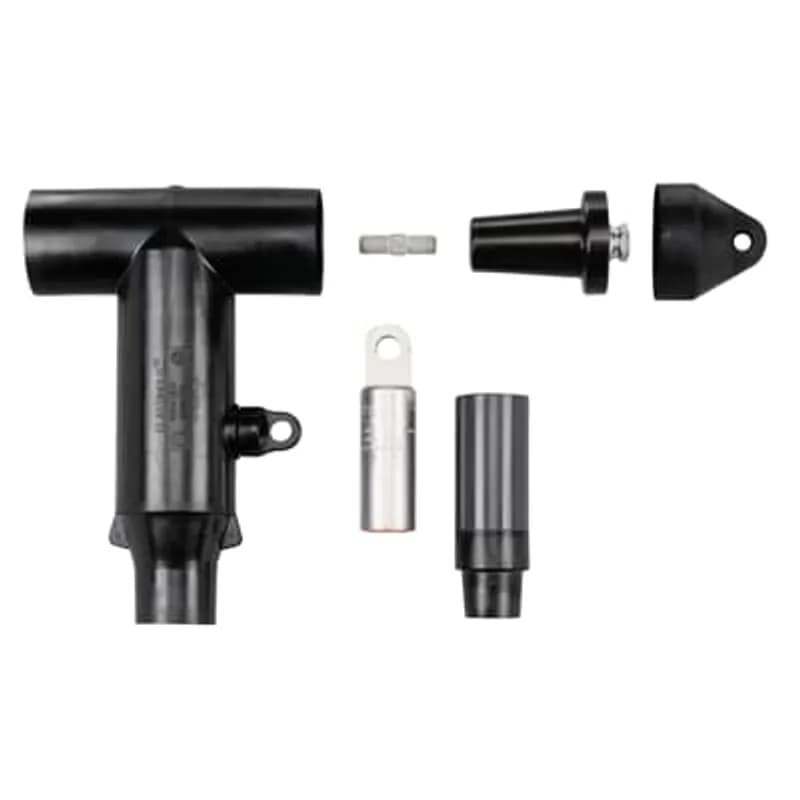
Contact for Pricing
Overview
- 15/25kV Voltage Rating
- 600 Amp Continuous Current Rating
- Series Deadbreak Elbow Design
- Integrated Test Point for Diagnostics
- Accommodates 0.640" to 0.820" Cable Insulation Diameter
Specifications
Amperage Rating | 600 A |
Application | 15/25kV, 600 Amp Deadbreak Elbow Connection |
Color | Black |
Conductor Range | #2 STR/COMPR AWG , #1 SOL/COMPT AWG |
Connection Type | Deadbreak |
Current Rating | 600 A |
Environmental Conditions | Fully Submersible |
Insulation | True |
Length | 13 in |
Length | 330.2 mm |
Material | Aluminum |
Material | Housing - EPDM-Rubber |
Series | 600 Series |
Size | Cable Insulation Diameter 0.640 inch to 0.820 inch |
Special Features | Fully Shielded, Fully Submersible Molded Rubber Housing. 100 percent Peroxide-Cured Construction includes Insulation and Conductive EPDM Materials. Can be Easily Connected or Disconnected using Standard Hand Tools and Equipment in a De-Energized State. Non-Corrosive, Capacitive Test Point |
Standard | ANSI/IEEE Standard 386 |
Temperature Rating, Maximum | 149 F |
Temperature Rating, Maximum | 65 C |
Temperature Rating, Minimum | -40 F |
Temperature Rating, Minimum | -40 C |
Type | Deadbreak Elbow Connector with Test Point |
Voltage Rating | 25 kV |
Voltage Rating | 15/25 kV |
Width | 10.36 in |
Width | 263.144 mm |
Package Dimensions (L x W x H) | 0.01 IN x 0.01 IN x 0.01 IN |
Package Dimensions (L x W x H) | 0.0254 cm x 0.0254 cm x 0.0254 cm |
Package Weight (Imperial) | 0.0010 L |
Package Weight (Metric) | 0.0010 kg |
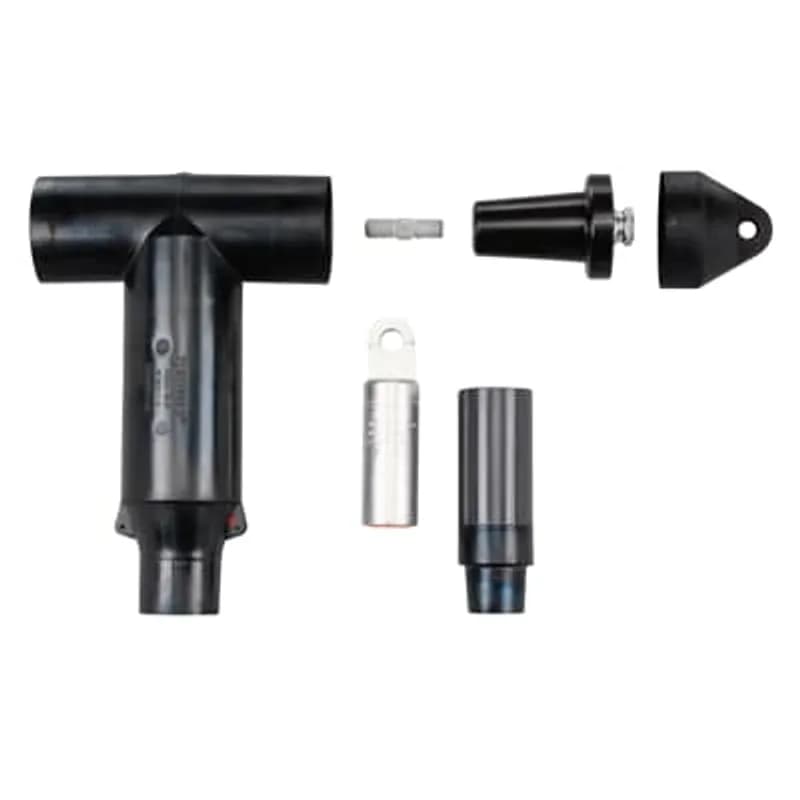
655LR-F0220
Elbow, 600 Amp, Deadbreak, 15/25KV, Cable Insulation Diameter 0.640 inch to 0.820 inch. Aluminum Compression Lug. Conductor Size AWG Compressed Stranded #2/Solid #1/mmSquared 33.62.
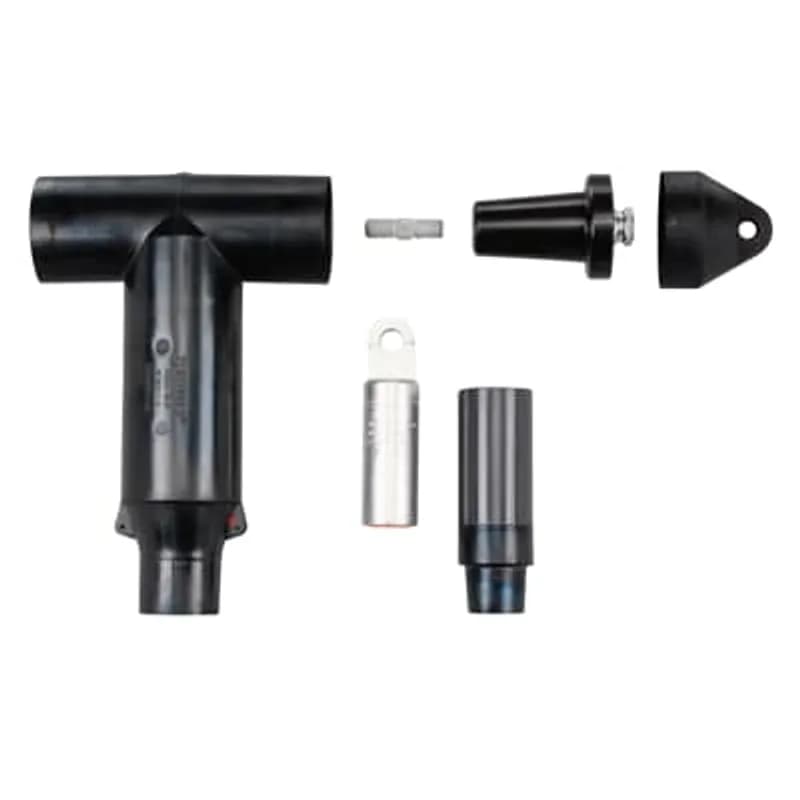
K655LR-N0240
600 Amp, 15/25kV, 600 Series Deadbreak, Elbow with Insulated Plug, Cap, Stud, Lug and Cable Adapter. Aluminum Compression Lug. Cable Insulation Diameter 1.515 inch to 1.780 inch. Conductor Size AWG Compressed Stranded 1/0 or Compacted Solid 2/0.K656LR-H0220
15/25kV 600 Amp Series Deadbreak Elbow with Test Point (with Insulated Plug, Cap, Stud, Lug and Cable Adapter), Aluminum Compression Lug. Cable Insulation Diameter 0.850 inch to 1.050 inch. Conductor Size Compressed/Stranded #2 or Compact/Solid #1 or mm2 Compact 35.K656LR-F0230
15/25kV 600 Amp Series Deadbreak Elbow with Test Point (with Insulated Plug, Cap, Stud, Lug and Cable Adapter), Aluminum Compression Lug. Cable Insulation Diameter 0.640 inch to 0.820 inch. Conductor Size Compressed/Stranded #1 or Compact/Solid 1/0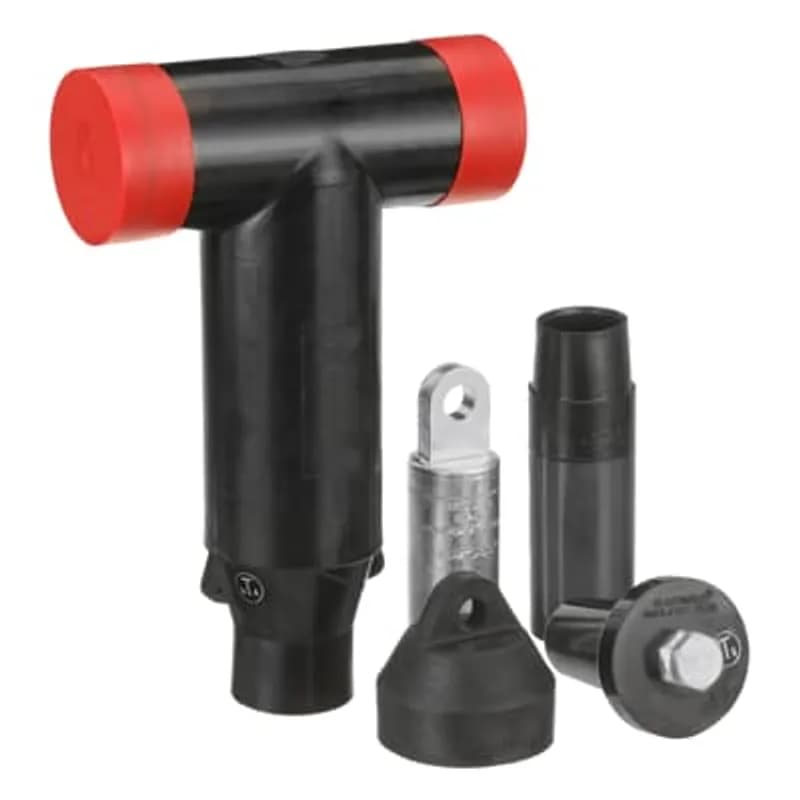
K655LR-N0410
600 Amp, 15/25kV, 600 Series Deadbreak, Elbow with Insulated Plug, Cap, Stud, Lug and Cable Adapter. Aluminum Compression Lug. Cable Insulation Diameter 1.515 inch to 1.780 inch. Conductor Size kcmil Compressed/Stranded 1000.K656LR-G5230-S-TL
15/25kV 600 Amp Series Deadbreak Elbow with Test Point (with Insulated Plug, Cap, Stud, Lug and Cable Adapter), Bi-Metal Compression Lug. Cable Insulation Diameter 0.760 inch to 0.950 inch. Conductor Size Compressed/Stranded #1 or Compact/Solid 1/0 or mm2 Compact 50. Cold-Shrinkable Jacket Seal Included. With Sheild Adapter.K655LR-P0410
600 Amp, 15/25kV, 600 Series Deadbreak, Elbow with Insulated Plug, Cap, Stud, Lug and Cable Adapter. Aluminum Compression Lug. Cable Insulation Diameter 1.725 inch to 1.935 inch. Conductor Size kcmil Compressed/Stranded 1000.Frequently Asked Questions
What is the maximum operating voltage for the K656LR elbow connector?
For the 15kV voltage class, the maximum operating voltage is 8.3kV phase-to-ground and 14.4kV phase-to-phase. For the 28kV voltage class, it is 16.2kV phase-to-ground and 28kV phase-to-phase.
What conductor sizes can the K656LR connector accommodate?
It can be used with conductor sizes ranging from #2 AWG to 1250 kcmil for both aluminum and copper conductors.
What is the insulation diameter range for this elbow connector?
The connector is designed for insulation diameters ranging from 0.640 inches to 1.935 inches.
What standards does the K656LR connector meet?
The K656LR connector meets ANSI/IEEE Standard 386, Latest Revision.
What is the continuous current rating for the K656LR?
The K656LR elbow connector has a continuous current rating of 600 Amps.
What is the impulse withstand rating for the 28kV voltage class?
For the 28kV voltage class, the impulse withstand rating is 140kV BIL for a 1.2 x 50 microsecond wave.
What is the AC one-minute withstand voltage for the 15kV class?
The AC one-minute withstand voltage for the 15kV voltage class is 34kV.
What is the corona extinction rating for the 28kV voltage class?
The corona extinction rating for the 28kV voltage class is 21.5kV AC at 3pC sensitivity.
What accessories are available for the K656LR connector?
Optional accessories include those for visible external separation, by-pass, isolation, dead-ending, grounding, testing, and adding taps, surge arrestors, and fault current indicators.
Is a grounding device recommended when using this connector?
Yes, when used on metallic tape shield or drain wire cable, an ECS cable seal grounding device for safety is highly recommended.
How to Install Elastimold 655/675LR and K655/K675LR Deadbreak Elbow Connectors
This guide provides step-by-step instructions for the safe and proper installation of Elastimold 655/675LR and K655/K675LR deadbreak elbow connectors on 15kV and 25kV class systems. It covers cable preparation, connector assembly, and grounding procedures.
Estimated time: 2h
Tools needed:
Cable cutter, Measuring tape, Cable strippers, Utility knife, Wire brush (for aluminum conductors), Crimping tool, Torque wrench, Hotstick, Capacitive voltage sensing device
Supplies needed:
Elastimold deadbreak elbow connector (655/675LR or K655/K675LR), Cable adapter, Compression lug, Insulating plug (if used), Lubricant, Threaded stud (if mating part not equipped), Cleaning solution, Lint-free cloth, Grounding wire (No. 14 AWG Copper or equivalent), Suitable grounding connector, Waterproofing material (optional), Voltage detection cap (if insulating plug used), Tape marker
- Ensure Safety and Inspect Components
DANGER: All apparatus must be de-energized during installation or removal of parts. Do not touch or move energized products. Inspect all package contents and components for completeness, damage, proper rating, and compatibility with mating parts. Remove any protective shipping covers and replace with appropriate HV insulated caps or connectors before energizing.
- Prepare Cable for Assembly
Assemble the cable in its final position, ensuring enough slack for elbow removal. For concentric neutral cable, unwind the neutral wires. Cut the cable 1-3/4 inches (45mm) from the centerline of the mating product. Clean the outer surface of the cable for a distance of 24 inches (610mm) or up to the bent back concentric neutral wires.
- Perform Cable Preparation
Remove the outer jacket (if applicable) and prepare the cable according to the specific type (e.g., non-jacketed concentric neutral, jacketed shield wires, flat metallic tape shield, fabric tape shield, or longitudinally corrugated shield) as shown in the product diagrams. Refer to separate instructions for 20MA/21MA grounding devices, 600ECS Jacket Cable Seals, or 10TL cable shield adapters if used.
- Install Cable Adapter
Bevel the end of the cable insulation at a 45-degree angle, approximately 1/4 inch (6mm) back. Thoroughly clean and then lubricate the cable insulation, working towards the semi-con shield. Install the cable adapter, small end first, until it is flush with the edge of the tape marker.
- Prepare Conductor
Remove the protruding cable insulation by cutting it even with the end of the cable adapter. Do not cut or nick the cable adapter or the conductor. Verify that the length of the exposed conductor is between 4-1/4 inches and 4-9/16 inches (108mm-116mm); otherwise, redo the assembly.
- Install Compression Lug
For copper conductors, fully insert the conductor into the compression lug. For aluminum conductors, wire brush the conductor and immediately fully insert it into the compression lug. Measure the 'Check Dimension' before crimping (it should be less than 6-3/8 inches). Crimp the compression lug following the instructions supplied with the lug. Wipe all excess inhibitor from the lug and cable adapter. Verify the distance from the end of the lug to the cable adapter after crimping is between 6-3/8 inches to 7-1/8 inches (162mm-181mm); otherwise, redo the assembly.
- Install Elbow Connector
Lubricate the cable adapter and the inside of the elbow cable entrance. Install the elbow onto the cable adapter until it cannot advance further. Ensure the cable adapter remains flush with the tape marker; reposition if necessary. Remove the tape marker.
- Prepare Mating Products
DANGER: DO NOT CONNECT OR DISCONNECT MATING PRODUCTS WHILE ENERGIZED. DO NOT ENERGIZE WHILE DISCONNECTED. Remove protective caps from the elbow and the mating part. Hand tighten the threaded stud (supplied with the elbow) into the mating part if it is not already equipped with a stud. Clean and lubricate both the elbow and the mating part with the supplied lubricant, ensuring surfaces remain clean.
- Connect Elbow to Mating Part
Push the elbow onto the mating part, carefully lining up the hole in the compression lug with the stud on the mating part.
- Connect Opposite Mating Product (if applicable)
Clean and lubricate the mating part for the opposite end of the elbow. Insert this mating part into the elbow, engage the threads, and hand tighten. Torque the mating part according to the instructions supplied with that specific mating part. CAUTION: When constructing 600amp L-Kits, ensure each component is tightened to its specified torque.
- Install Insulating Plug (if applicable)
If an insulating plug is used as a mating part, clean and lubricate the inner surface of the voltage detection cap. Place the cap on the elbow and push down hard until it snaps into place. Proceed to the voltage test directions.
- Ground Cable Shield
Insert one end of a grounding wire (with ampacity at least equivalent to No. 14 AWG Copper) through the grounding eye and twist to form a small loop, taking care not to damage the eye. Connect this wire to ground using a suitable connector. The cable shield must be grounded; follow instructions for any grounding device used, or ground via an alternate method if no device is present. It is also recommended to waterproof the cable jacket at this point to prevent moisture ingress.
- Perform Voltage Test
Remove the test point cap with a hotstick, peeling it off at an angle. WARNING: The voltage test point is a capacitance device, not directly connected to the conductor. Do not use conventional voltage measuring equipment. Use a suitable sensing device designed for capacitive test points to determine if the cable is energized. Treat the elbow as energized until the 'no voltage' indication is confirmed by other means to prevent serious injury. After testing, clean and lubricate the inside surface of the cap with silicone lubricant and replace it on the test point.
Frequently Asked Questions about ABB - Installation Products
How are Thomas and Betts products typically installed?
Thomas and Betts products are installed using a variety of methods tailored to specific applications, including the use of flexible cords and cable fittings, non-metallic cable glands, and armored cable fittings. Proper selection of fittings is crucial to match the cable type and installation environment, ensuring durability and preventing physical damage. Tools such as the Blackburn® Comfort Crimp® and HEX-FLEX® systems enhance installation efficiency and reliability, reducing labor time and ensuring secure connections.
What accessories are available for Thomas and Betts products?
Thomas and Betts offers a comprehensive range of accessories for their products, including various cord and cable fittings, non-metallic cable glands, service entrance cable fittings, and armored cable fittings. Their accessories are designed to enhance installation efficiency and ensure compatibility with different cable types and environmental conditions, providing reliable connections for a wide array of applications.
What environmental ratings do Thomas and Betts products have?
Thomas and Betts products feature robust environmental ratings, including NEMA Type 1, 2, 3, 4, 4X, 12, and 13 certifications, as well as IEC 60529 IP66 protection. These ratings ensure that their products are designed to withstand harsh industrial environments, with capabilities to resist dust, water, and corrosion, and operate effectively in a wide temperature range.
What communication protocols do Thomas and Betts products support?
Thomas and Betts products support a wide range of industrial communication protocols, including Ethernet, DeviceNet, PROFIBUS, Modbus, CANopen, and others. This extensive compatibility ensures seamless integration and reliable communication across various industrial automation systems, catering to diverse application needs.
What are the key features of Thomas and Betts products?
Thomas and Betts products are known for their innovative designs, high performance, and compliance with industry standards such as the National Electrical Code and Underwriters' Laboratories. They offer a comprehensive range of rugged and reliable electrical fittings, including liquidtight and dust-tight connections, which enhance installation efficiency and reduce overall project costs. Their products are engineered for durability in harsh environments, ensuring long-term reliability and lower installed costs.
What are the main product lines offered by Thomas and Betts?
Thomas and Betts offers a comprehensive range of product lines including electrical connectors, cable management systems, grounding and bonding solutions, and industrial automation components. Their products are designed for durability and reliability in demanding industrial environments, ensuring optimal performance and safety across various applications.
What technical support does Thomas and Betts offer?
Thomas and Betts offers comprehensive technical support, including access to field application engineers for onsite training and installation assistance. Their technical support staff is available to address inquiries related to product specifications and installation practices, ensuring optimal performance and safety of electrical systems. Additionally, they provide a variety of training programs to enhance the knowledge and skills of users in the field.
What industries and applications are Thomas and Betts products used for?
Thomas and Betts products are utilized across various industries including electrical construction, industrial automation, telecommunications, and utilities. Their extensive range of cord and cable fittings, electrical boxes, and metal framing systems are designed for applications that require durability and reliability in harsh environments, ensuring optimal performance in both permanent and temporary installations.
What certifications and standards do Thomas and Betts products comply with?
Thomas and Betts products comply with critical international certifications including UL (Underwriters Laboratories), CSA (Canadian Standards Association), and CE (European Community). Our products are designed to meet rigorous industrial standards such as NEMA enclosure ratings and IEC 60529 IP ratings, ensuring safety and reliability across various industrial applications.
What are the main product lines offered by Ocal?
Ocal offers a comprehensive range of corrosion-resistant conduit systems, including PVC-coated conduit and fittings, conduit bodies, hazardous location fittings, and strut accessories. Their products are designed to provide superior corrosion protection, featuring a hot-dipped galvanizing process and UL listed Type 4X PVC-coated conduit bodies, ensuring durability in the most demanding environments.