
Contact for Pricing
Overview
- Two integrated JSTD1-B Safeballs for dual-hand activation
- 1 Normally Open (NO) and 1 Normally Closed (NC) independent switch per Safeball
- Pre-wired to a 5-pin M12 male connector for simplified integration
- IP67 rated for dust and water ingress protection in harsh environments
- Compatible with ABB safety relays (SSR20, SSR20M, USR10, USR22) and Pluto safety controllers
- Includes protective flanges for Safeballs
- Max load: 30 V DC, 2A resistive
- Compatible with ABB safety relays and controllers
Specifications
Connection Type | M12-5 male connector |
Current Rating | 2 A |
IP Rating | IP67 |
Material | Plastic |
Mounting Type | Extruded aluminum profile mounting |
Poles | 2P (1 NO + 1 NC per Safeball) |
Series | JSTD25F |
Size | 44x88 mm |
Voltage Rating | 30 V DC |
Package Dimensions (L x W x H) | 3.74 IN x 1503.94 IN x 5.51 IN |
Package Dimensions (L x W x H) | 9.4996 cm x 3820.0076 cm x 13.9954 cm |
Package Weight (Imperial) | 2.910 L |
Package Weight (Metric) | 1.320 kg |

2TLA020007R6300
Two-hand device with JSTD1-B Safeballs. Safeballs are side mounted on a 44x88 extruded aluminum profile designed for two-hand applications. Pre-wired to a M12-8 male connector with protective flanges on the safeballs.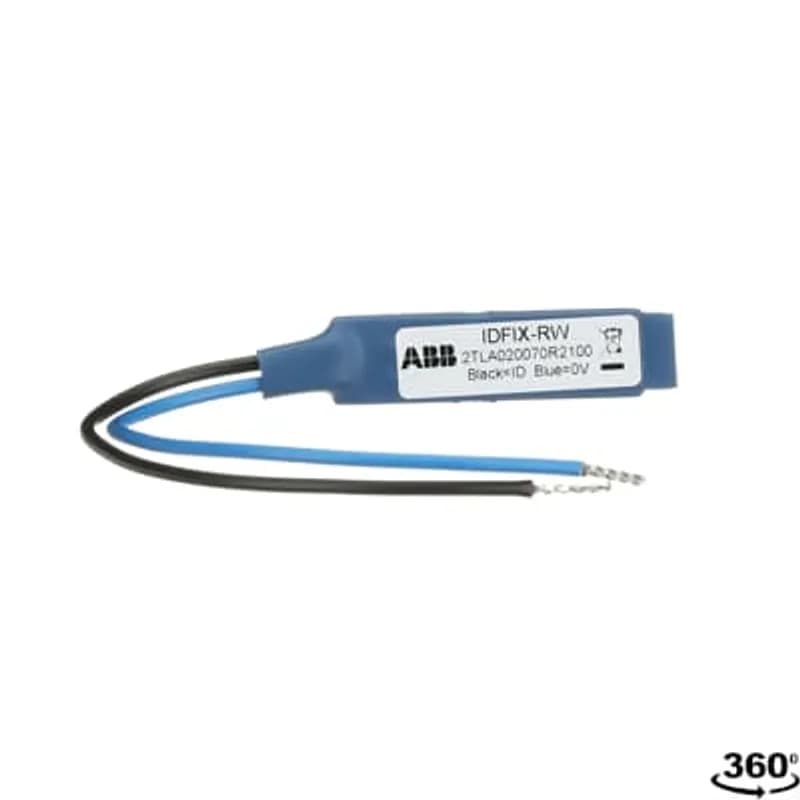
2TLA020070R2100
IDFIX is an identifier circuit which gives each Pluto an address on the bus. It contains an identification code which can be read by the system. The identification code is declared in the PLC program so that the correct part of the PLC program is executed by each specific Pluto. The use of IDFIX is mandatory in a multi-Pluto project, but voluntary if a unit works alone. If one Pluto in a multi-Pluto project needs to be replaced it is possible to let the new Pluto selfload the PLC program from another Pluto on the bus. The IDFIX will ensure that the new Pluto has the correct address on the bus.
2TLA020070R2300
IDFIX is an identifier circuit which gives each Pluto an address on the bus. It contains an identification code which can be read by the system. The identification code is declared in the PLC program so that the correct part of the PLC program is executed by each specific Pluto. The use of IDFIX is mandatory in a multi-Pluto project, but voluntary if a unit works alone. If one Pluto in a multi-Pluto project needs to be replaced it is possible to let the new Pluto selfload the PLC program from another Pluto on the bus. The IDFIX will ensure that the new Pluto has the correct address on the bus.
2TLA020070R2400
IDFIX is an identifier circuit which gives each Pluto an address on the bus. It contains an identification code which can be read by the system. The identification code is declared in the PLC program so that the correct part of the PLC program is executed by each specific Pluto. The use of IDFIX is mandatory in a multi-Pluto project, but voluntary if a unit works alone. If one Pluto in a multi-Pluto project needs to be replaced it is possible to let the new Pluto selfload the PLC program from another Pluto on the bus. The IDFIX will ensure that the new Pluto has the correct address on the bus.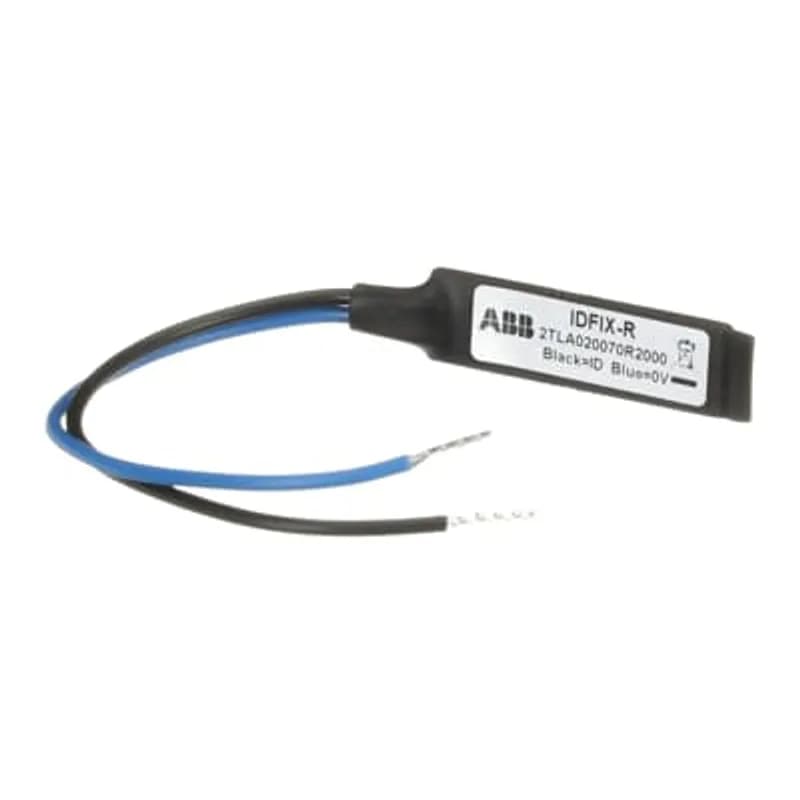
2TLA020070R2000
IDFIX is an identifier circuit which gives each Pluto an address on the bus. It contains an identification code which can be read by the system. The identification code is declared in the PLC program so that the correct part of the PLC program is executed by each specific Pluto. The use of IDFIX is mandatory in a multi-Pluto project, but voluntary if a unit works alone. If one Pluto in a multi-Pluto project needs to be replaced it is possible to let the new Pluto selfload the PLC program from another Pluto on the bus. The IDFIX will ensure that the new Pluto has the correct address on the bus.
Frequently Asked Questions
What is the current rating for each JSTD1-B Safeball?
Each JSTD1-B Safeball is rated for a maximum load of 2A resistive at 30V DC.
What type of connector does the JSTD25F use?
The JSTD25F uses a 5-pin M12 male connector for wiring connections.
What is the IP rating of the JSTD25F?
The JSTD25F has an IP67 rating, providing protection against dust and water ingress.
What are the dimensions of the JSTD25F?
The JSTD25F is mounted on a 44x88 mm extruded aluminum profile.
What is the operating voltage of the JSTD25F?
The JSTD25F operates on 24V DC, as specified in the ABB catalog.
Can the JSTD25F be used with safety relays?
Yes, the JSTD25F is compatible with ABB safety relays such as SSR20, SSR20M, USR10, USR22, and Pluto safety controllers.
Is the JSTD25F suitable for harsh industrial environments?
Yes, the JSTD25F is designed for industrial environments with an IP67 rating and durable plastic construction.
What is the purpose of the protective flanges on the Safeballs?
The protective flanges enhance the durability and protection of the JSTD1-B Safeballs against environmental damage.
How to Install the ABB JSTD25F Two-Hand Device
Step-by-step guide to mounting and wiring the JSTD25F for two-hand safety control.
Estimated time: 20m
Tools needed:
Screwdriver, Wire strippers, Crimping tool
Supplies needed:
Mounting screws, M12 cable assembly, Safety relay or controller
- Mount the device on a DIN rail or surface
Secure the JSTD25F to a DIN rail or flat surface using the provided mounting screws. Ensure the 44x88 mm extruded aluminum profile is level for proper Safeball alignment.
- Connect the M12 cable assembly
Insert the M12 5-pin male connector into the JSTD25F's M12 female port. Ensure the connector is fully seated and locked to prevent accidental disconnection.
- Wire the device to a safety relay or controller
Connect the M12 cable's wires to the corresponding inputs on your safety relay (e.g., SSR20) or Pluto safety controller. Follow the wiring diagram in the ABB manual to ensure correct NO/NC contact assignments.
- Verify the two-hand activation function
Test the device by pressing both Safeballs simultaneously. Confirm that the connected safety relay or controller responds correctly and that the machine cycle initiates only when both hands are engaged.
Frequently Asked Questions about ABB - Electrification
What industries and applications are Jokab Safety products used for?
Jokab Safety products are specifically designed for machine safety applications across multiple critical industrial sectors, including Food and Beverage, Packaging, and Material Handling industries. Their safety solutions cover a wide range of machine safeguarding needs, such as safety light guards, safety controllers, safety relays, safety edges, safety mats, and two-hand control devices that protect personnel and equipment in complex industrial automation environments.
What technical support does Jokab Safety offer?
Jokab Safety offers comprehensive technical support through multiple channels, including a dedicated technical support phone line at (888) 385-1221 (Option 1) and email support at [email protected]. For advanced technical assistance, customers can contact their specialized Jokab Tech Support at (519) 982-0976 or email [email protected]. Additionally, they provide product specialist support through Jeff Leslie, who can be reached at (519) 982-0976, offering in-depth application and technical guidance.
What are the main product lines offered by Jokab Safety?
Jokab Safety offers a comprehensive range of machine safety products including safety light guards (Orion), safety controllers (Pluto), safety relays (Sentry), safety edges, safety contact mats, safety locks (Gkey), and safety sensors with OSSD and DYNlink interfaces. Their product lines are specifically designed for industrial applications in food and beverage, packaging, and material handling industries, providing robust safety solutions for machine guarding and personnel protection.
What are the key features of Jokab Safety products?
Jokab Safety products offer comprehensive industrial safety solutions with key features including: highest safety certification levels (up to PL e/Cat 4), extensive fault detection, multiple safety device types (optical safety devices, pressure sensitive devices, sensors, switches, locks, emergency stops), and innovative DYNlink technology that reduces cable requirements and simplifies installation. Their products are certified, verified, and compatible with major industrial automation systems like B&R, featuring easy M12 connector connections and a wide range of adapters to streamline safety implementation.
What certifications and standards do ABB - Electrification products comply with?
ABB - Electrification products comply with a comprehensive range of international certifications and standards, including UL (United States), CSA (Canada), CE (European Community), UKCA (United Kingdom), EAC (Russia), and C-Tick (Australia & New Zealand). Our products meet critical international standards such as IEC 60947 series for low-voltage switchgear, functional safety standards EN 61800-5-2 and ISO 13849-1, and marine classification standards from Bureau Veritas, DNV, and Lloyd's Register of Shipping.
What industries and applications are ABB - Electrification products used for?
ABB - Electrification products are engineered for critical applications across multiple industries, including Energy, Oil & Gas, Manufacturing, Power Generation, HVAC, Marine, Food & Beverage, Mining, Pulp & Paper, Water Treatment, and Automotive. Their solutions cover essential electrical infrastructure needs such as switchgear, power distribution systems, circuit protection, digital control technologies, and drive systems designed for high-reliability environments with a strong focus on sustainability, efficiency, and safety.
What technical support does ABB - Electrification offer?
ABB - Electrification offers comprehensive technical support through multiple channels, including a dedicated technical support hotline at 888-385-1221 (Option 1), available 7:00 a.m. - 5:00 p.m. CST, Monday-Friday. Their support services encompass 24/7/365 emergency services, on-site support, remote monitoring and diagnostics, installation and commissioning, equipment assessments, repair coordination, and multi-vendor technical assistance. Customers can also access resources like personnel safety training, disaster recovery support, and service agreements tailored to their specific electrification needs.
What are the main product lines offered by ABB - Electrification?
ABB - Electrification offers a comprehensive range of electrical distribution and protection products, including circuit monitoring systems, panelboards, switchgear, motor control centers, circuit breakers, softstarters, and power distribution solutions. Key product lines span low and medium voltage applications across utilities, commercial, industrial, healthcare, and manufacturing sectors, with specialized offerings like the ReliaGear® panelboards, SMISSLINE TP bus systems, and Ekip UP protection and metering relays.
What are the key features of ABB - Electrification products?
ABB - Electrification products feature advanced integrated design elements that enhance industrial performance and reliability. Key features include harmonics and EMC design, integrated DC choke, removable terminals for fast installation, USB ports for troubleshooting, and integrated Safe Torque Off (STO) functionality. The products deliver superior motor control capabilities, support both induction and permanent magnet motors, and offer robust operational features like side-by-side mounting without derating and operation at temperatures up to 45°C. Additionally, ABB's Electrification solutions emphasize digital innovation, with technologies like Novolink enabling predictive maintenance, enhanced analytics, and seamless system integration.
What communication protocols do ABB - Electrification products support?
ABB - Electrification products support a comprehensive range of industrial communication protocols, including Modbus RTU, PROFIBUS DP, PROFINET, EtherNet/IP, CANopen, DeviceNet, and IEC 61850. These protocols enable flexible connectivity across multiple industrial automation platforms, with support for various network topologies and high-speed data transmission up to 100 Mbps.