
Contact for Pricing
Minimum Qty: 6000
Multiplier: 6000
*Contact for lower quantities*
Overview
- Wire gauge range: 22–18 AWG (0.14–2.5 mm²)
- Rated current: 10A (silver-plated) or 16A (gold-plated)
- Voltage ratings: 250/600V AC and 250/600V DC
- Contact resistance: ≤3mΩ (silver) or ≤1mΩ (gold)
- Spring contact retention for secure wire termination
Specifications
Amperage Rating | 5 A |
Application | Power & Signal |
Material | Copper Alloy |
Operating Temperature | -55 +105 |
Type | Connector Receptacle Contact |
Voltage Rating | 250 600 |
Voltage Rating | V |

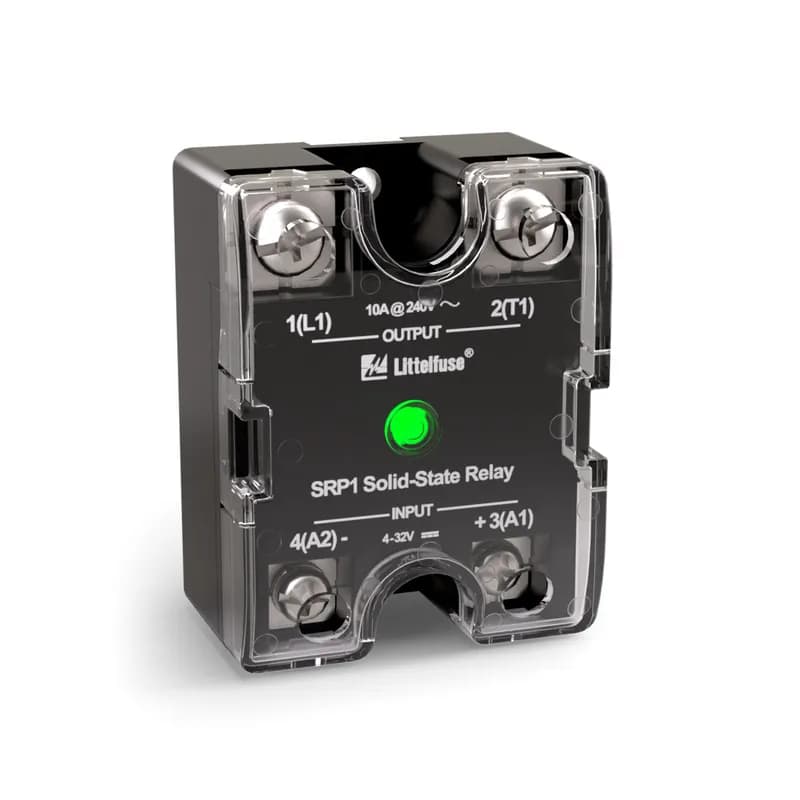



2319263-9
DC Input Solid State Relay, 1 Form A SPST-NO, 18 – 32 VDC Input, 3 – 60 VDC Output, 3 A Contact Rating, DC Output, Board Mount, Red. An SSR, or Solid-State Relay is an electronic switching device that functions similarly to an electromechanical relay but with no moving contacts. It works by employing semiconductor switching elements like triacs, thyristors, and diodes. Solid State Relays are designed for applications that require high switching speed and feature low switching acoustical noise and extremely long life. These relays are used when direct control by electronic circuits is necessary and switching without arcing or contact chatter is required. SSRs are not a replacement but complement electromechanical power relays
100-8012
4 digital solid state relay output - 110VDC/1A - 110VAC/1A - cage clamp - 10pt removable terminal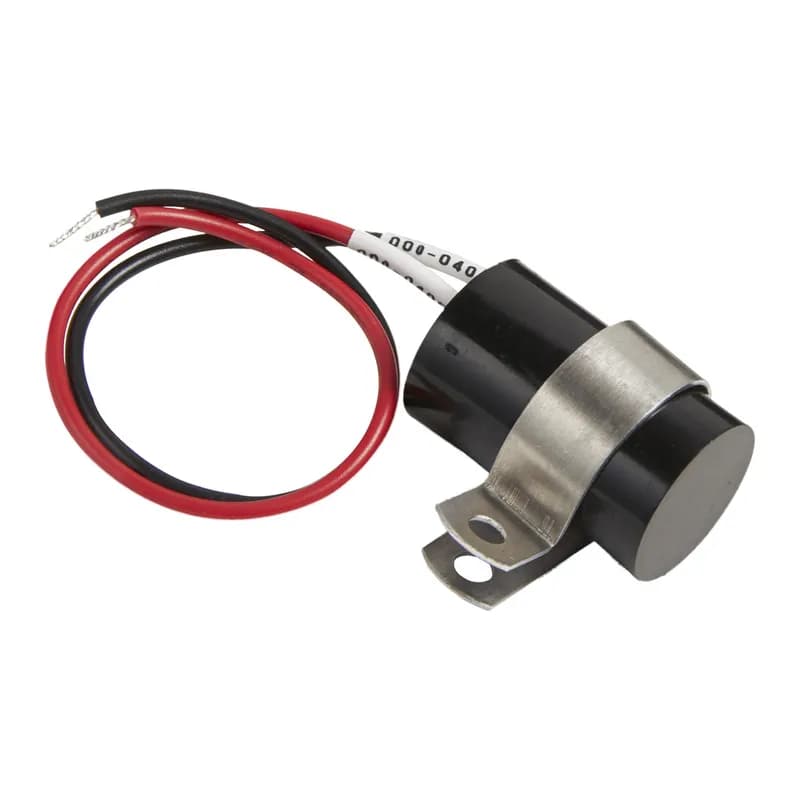
FS126
The FA and FS Series Flashers have proven their reliability through years of use on communication towers, smoke stacks, cooling towers, tall buildings, bridges and utility towers. The highest quality components are encapsulated in a rugged plastic housing with a molded-in heat transfer plate. The flash rate, ratio, and failsafe design meet FAA regulations. Zero voltage switching can increase lamp life up to ten times. The FS155-30RF & FS165-30RF include superior RF filtering circuitry for use in high RF installations, including AM hot towers. Operation: FS Series - Flasher (OFF First), FA Series - Flashers & Aux. Modules: Upon application of input voltage, the T2 OFF time begins. At the end of the OFF time, the T1 ON time begins and the load energizes. At the end of T1, T2 begins and the load de-energizes. This cycle repeats until voltage is removed. Reset: Removing input voltage resets the output and the sequence to T2.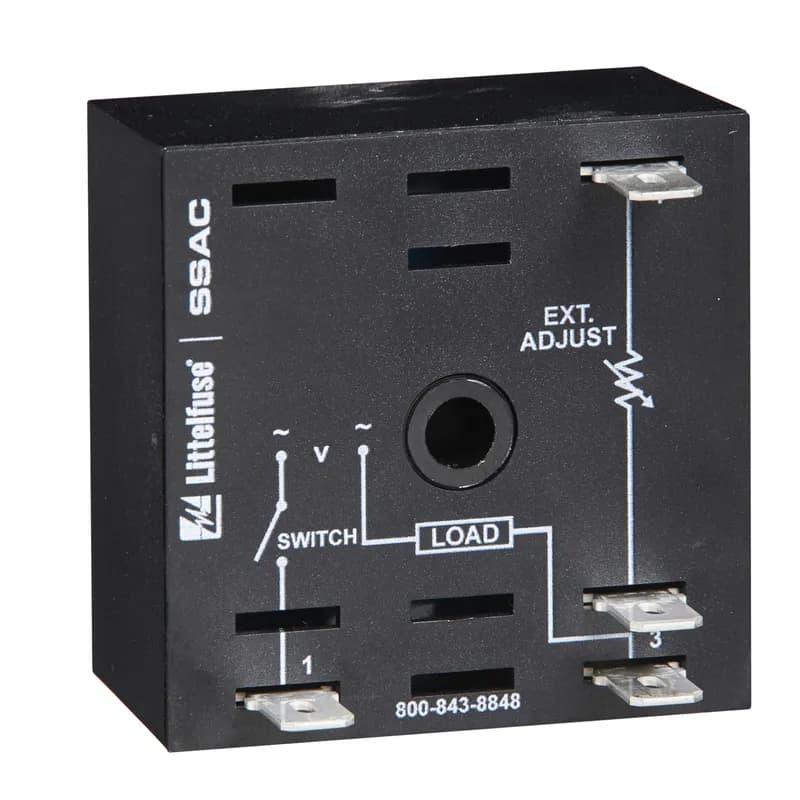
PHS120A10
The PHS120A10 relay provides phase control protection with input voltage at 120 V ac and output load rating at steady state (100% on) of 10 A; inrush of 100 A.Frequently Asked Questions about TE Connectivity
What technical support does TE Connectivity offer?
TE Connectivity offers comprehensive technical support through multiple channels, including a dedicated technical hotline at 1-800-777-3300. The company provides advanced technical support with 3 dedicated support centers, a global technical hotline network, and delivers over 8,000 hours of technical training annually to ensure certified expertise across 25+ languages.
What environmental ratings do TE Connectivity products have?
TE Connectivity products feature robust environmental ratings across multiple standards, including NEMA Type 1, 2, 3, 3R, 4, 4X, 12, and 13 certifications, as well as IEC 60529 IP66 protection. Our enclosures are designed to withstand challenging industrial environments, with operating temperatures ranging from -40°C to 130°C, and include enhanced UV inhibitors for outdoor applications.
What certifications and standards do TE Connectivity products comply with?
TE Connectivity products meet rigorous international certifications and standards across industrial automation applications, including UL (United States), CSA (Canada), CE (European Community), and international safety standards. Our product lines are designed to comply with critical industrial certifications such as NEMA (Types 4, 4X, 6, 6P), IP ratings (IP65, IP66, IP67, IP69K), and industrial communication protocols including PROFINET, EtherNet/IP, and DeviceNet. We ensure comprehensive compliance through active participation in key industrial standards committees and maintaining ISO 9001 quality system certification.
What industries and applications are TE Connectivity products used for?
TE Connectivity products are engineered for critical industrial applications across multiple sectors, including industrial device manufacturing, automotive, robotics, food and beverage, material handling, alternative energy, and commercial vehicle industries. Their solutions span connectivity, power distribution, network communications, and sensor technologies that support complex industrial automation requirements, with a focus on robust connectivity solutions for challenging manufacturing environments.
What are the main product lines offered by TE Connectivity?
TE Connectivity offers a comprehensive range of industrial connectivity solutions including Cable Ties, Cable Cleats, Power Connectors, Grounding Connectors, Terminals, Safety Solutions, Identification Products, and Wiring Duct. Their product lines are designed for robust industrial applications, featuring various connection technologies like wave soldering, spring-cage connections, and mis-insertion protection across multiple electrical and connectivity categories.
What accessories are available for TE Connectivity products?
TE Connectivity offers a comprehensive range of communication and bus accessories for industrial automation systems, including communication terminal boards (CTB810, CTB811), bus extenders (horizontal and vertical models like cHBX01L/R, HBX01L/R, VBX01T/B), and bus terminators (TER800, TER810). These accessories are designed to enhance connectivity, power distribution, and communication capabilities for HN800 and CW800 controller systems, with options for left/right side mounting, power connections, and network termination.
How are TE Connectivity products typically installed?
TE Connectivity products are typically installed through professional commissioning services that include site audits, precise wiring verification, and both remote and on-site installation support. Our expert service engineers conduct comprehensive installation processes involving system verification, programming, communication testing, and personnel training to ensure optimal performance and reliability of the equipment.