Contact for Pricing
Overview
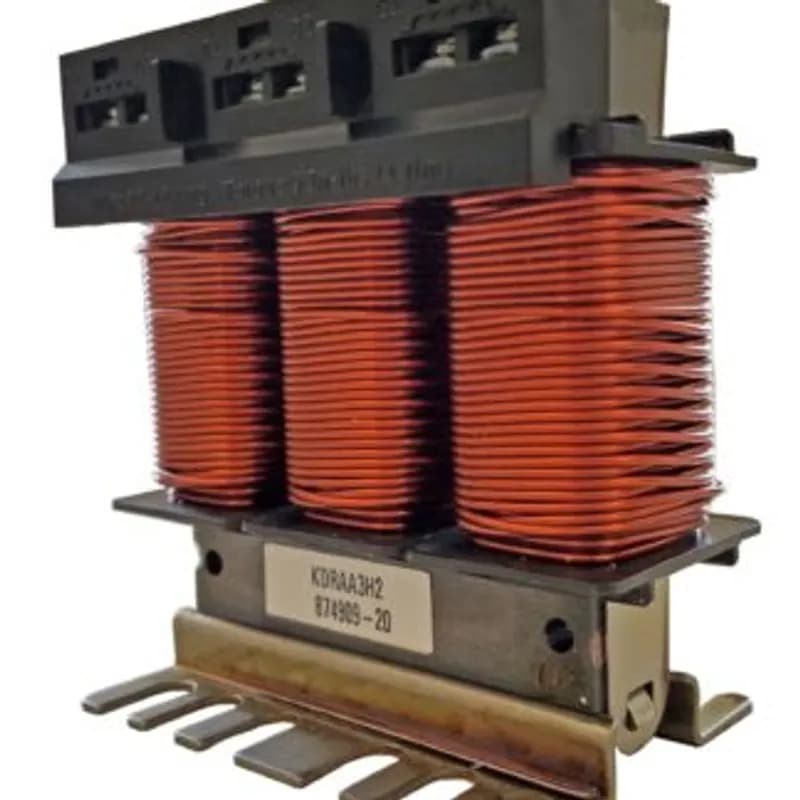
- 208V Voltage Rating
- 17A Current Rating
- 5HP Motor Load Support
- DIN Rail Mounting
- UL Listed for Safety Compliance
- UL Listed for Safety
- Harmonic Reduction
- Power Quality Improvement
Specifications
Current Rating | 17 A |
Mounting Type | DIN Rail |
Mounting Type | DIN Rail Mounting |
Poles | 3 |
Series | KDR |
Voltage Rating | 208 V |
Voltage Rating | 208 VAC |

Frequently Asked Questions about TCI
What environmental ratings do TCI products have?
TCI products feature robust environmental ratings across multiple standards, including UL 508A Type 1, 2, 3, 4, 4X, 12, and 13; CSA Type 1, 2, 3, 4, 4X, 12, and 13; and NEMA Type 1, 2, 3, 4, 4X, 12, and 13. Additionally, they meet IEC 60529 IP66 standards, providing exceptional protection against dust, water, and corrosive environments with operating temperatures ranging from -40°C to 130°C.
What industries and applications are TCI products used for?
TCI products are engineered for critical applications across multiple industrial sectors, including HVAC, metals manufacturing, elevators and escalators, marine and shipping, food processing, pulp and paper, and underground construction. Their TorqueDrive Series offers specialized solutions for diverse load types such as fans, pumps, compressors, conveyors, hoists, winders, and synchronized positioning applications, with specific product lines designed for high-performance environments requiring precise torque control, energy efficiency, and robust environmental resistance.
What are the main product lines offered by TCI?
TCI offers four primary product lines: Harmonic Solutions, Motor Protection Solutions, Power Factor Correction Solutions, and High Frequency Noise Solutions. These comprehensive product lines include advanced technologies like HarmonicGuard® Active and Passive Filters, MotorGuard™ Sine Wave Output Filters, PF Guard Capacitor Banks, and KRF 3-Phase EMC Power Line Filters designed for industrial automation and electrical system optimization.
What are the key features of TCI products?
TCI products feature advanced harmonic mitigation solutions including HarmonicGuard® Active and Passive Filters, specialized line and load reactors, and power factor correction technologies. Key capabilities include integrated EMC design, high-endurance capacitors capable of handling 190% rated current, and solutions specifically engineered for harmonically-rich industrial environments like manufacturing facilities, water treatment plants, and facilities with variable frequency drives.
What certifications and standards do TCI products comply with?
TCI products are certified to meet critical North American standards including UL (Underwriters Laboratories) and CSA (Canadian Standards Association) certifications. Our products comply with rigorous safety and performance requirements for industrial automation equipment, with UL Listed Product and Recognized Component classifications ensuring high-quality manufacturing and reliability across multiple industrial applications.
What is TCI's warranty policy?
TCI offers a Limited Warranty policy that requires customers to obtain a Return Material Authorization (RMA) number before returning any products. Returns must be submitted within 30 days of the initial return request to TCI's Germantown, Wisconsin facility. All returned goods are subject to inspection, and restocking charges may apply. Customers should contact TCI's Customer Service for specific warranty details and return instructions.
What communication protocols do TCI products support?
TCI products support a comprehensive range of industrial communication protocols, including PROFIBUS DP V1, PROFINET with dual port, EtherNet/IP with dual port, CANopen, and Modbus RTU. These protocols enable flexible network integration, high-performance communication, and seamless connectivity with major PLC systems across diverse industrial automation environments.
What accessories are available for TCI products?
TCI offers a comprehensive range of communication and bus accessories for industrial automation systems. Key accessories include communication terminal boards (CTB810, CTB811), horizontal and vertical bus extenders (cHBX01L/R, HBX01L/R, VBX01T/B), and bus terminators (TER800, TER810). These accessories support connection, power distribution, and signal integrity for HN800 and CW800 device networks, enabling flexible and robust system configurations.
How are TCI products typically installed?
TCI products are typically installed by trained, manufacturer-certified technicians following a comprehensive commissioning process. Installation involves critical steps including work environment inspection, electrical installation checks, internal and external equipment verification, system power-up, and comprehensive operational testing. Authorized installation personnel ensure compliance with industry standards, complete factory acceptance tests, and provide a conformity certificate to guarantee safe and reliable system integration.