
Macromatic CAH20A2AH Overcurrent & Undercurrent
Contact for Pricing
Call +1 (262) 252-1600 (toll-free 877-268-3700) or email [email protected] for pricing and availability.
Overview

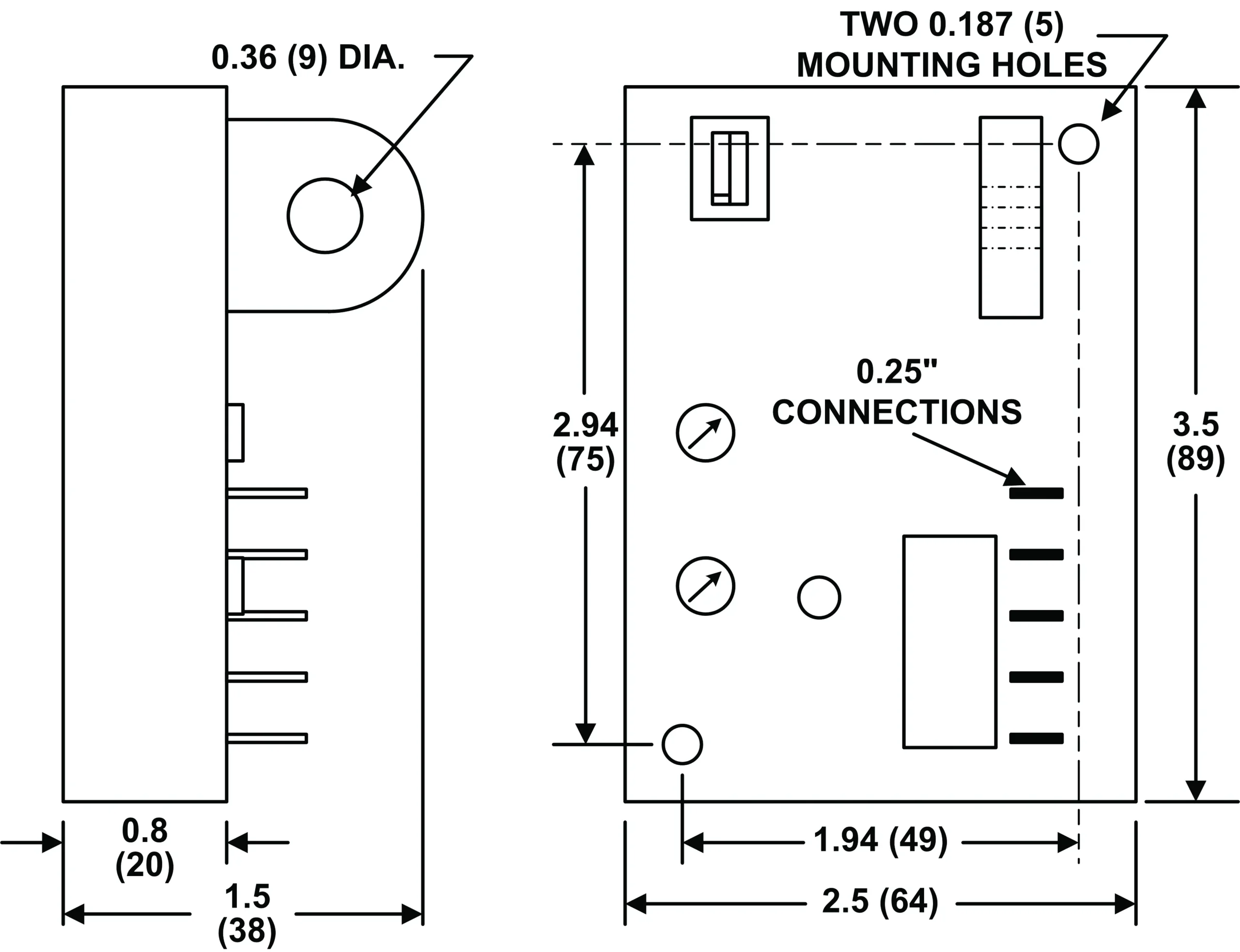
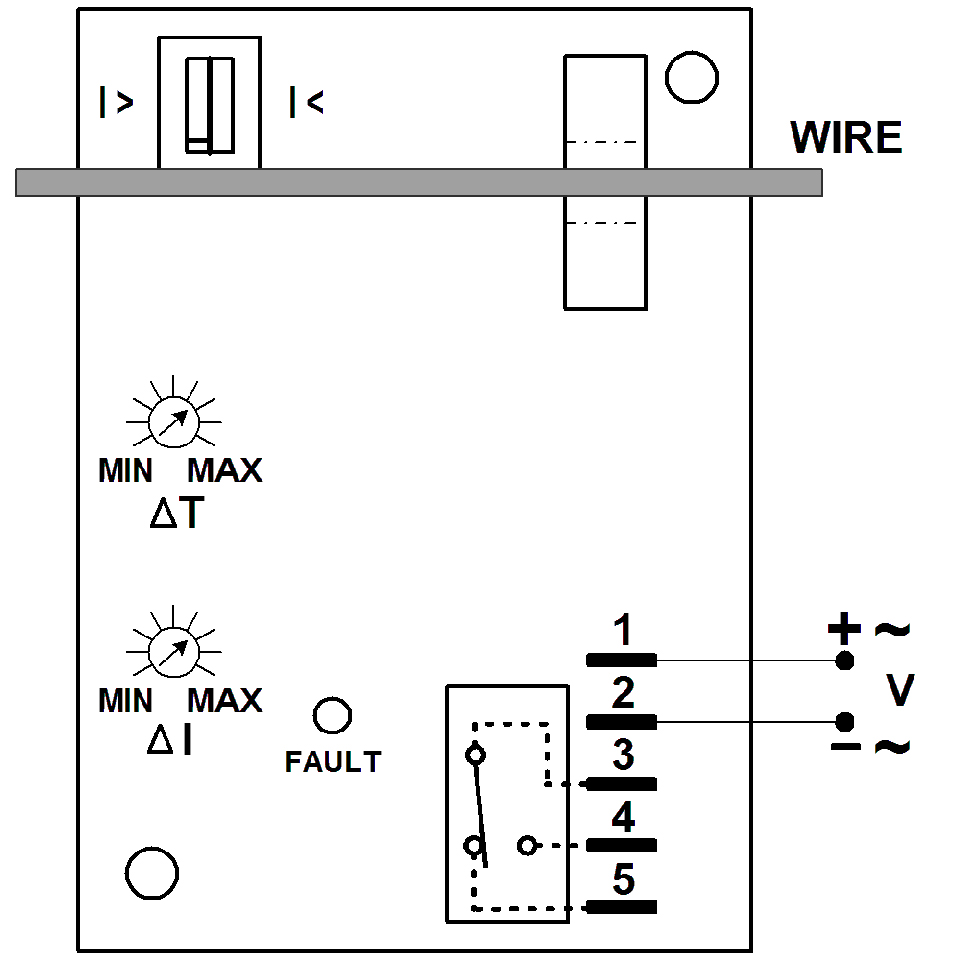
How to Install the CAH20A2AH Current Sensing Relay
This guide provides step-by-step instructions for installing and configuring the CAH20A2AH Current Sensing Relay for overcurrent or undercurrent sensing applications.
Estimated time: 45m
Tools needed:
Screwdriver, Wire strippers, Multimeter
Supplies needed:
Mounting screws, 0.25" male quick-connect terminals
- Mount the unit
Secure the CAH20A2AH relay in a suitable enclosure using two #6 screws. Ensure it is mounted securely and in a location that allows for proper airflow.
- Set the sensing mode
If using the CAH Series, set the selector switch to either the Overcurrent Sensing or Undercurrent Sensing position based on your application requirements.
- Connect the current-carrying wire
Pass the current-carrying wire that you wish to monitor through the current sensor of the relay. Ensure the wire is properly seated within the sensor.
- Adjust the Fault Trip Current setting
Set the Fault Trip Current (I) to the desired level where the relay should energize. Refer to the specifications for maximum allowable current based on your application.
- Set the time delay on pick-up
Adjust the time delay on pick-up (t) to a value that prevents nuisance tripping while providing adequate protection against overcurrent or undercurrent conditions.
- Make electrical connections
Connect all electrical connections using 0.25" male quick-connect terminals as per the provided wiring diagram. Ensure all connections are secure.
- Verify installation
After completing the installation, restore power to the relay and verify that it operates correctly. Check for proper LED indications and relay operation.
Frequently Asked Questions about Macromatic
What certifications and standards do Macromatic products comply with?
Macromatic products are certified with ULus and cULus approvals for use in the United States and Canada, covering a wide range of industrial control products. Their product line includes UL-listed devices for various voltage ranges (120V, 208-277V) and NEMA enclosure types, ensuring compliance with North American industrial standards.
What industries and applications are Macromatic products used for?
Macromatic products are used across multiple critical industrial sectors, including water/wastewater, pump and motor control, irrigation, oil and gas, HVACR, material handling, lifts and elevators, and other systems requiring process control and protection. Their industrial control products deliver high-quality monitoring, control, and protection solutions for electrical processes and equipment fault protection.
What technical support does Macromatic offer?
Macromatic offers comprehensive technical support through multiple channels, including a dedicated online Technical Resource Center at macromatic.com/technical-support and direct contact with technical advisors. Their support includes engineering assistance for unique applications, help with product selection, custom-engineered solutions, and troubleshooting for product setup. Customers can reach out via their website contact form or contact their technical team directly to get expert guidance on their industrial control products.
What are the main product lines offered by Macromatic?
Macromatic offers a comprehensive range of industrial control, monitoring, and protection products across multiple product lines, including Alternating Relays, Current Sensing Relays, General Purpose Relays, Intrinsically Safe Barrier Relays, Liquid Level Control Relays, Voltage Monitor Relays, and Time Delay Relays. These products serve critical applications in industries such as water/wastewater, pump and motor control, irrigation, oil and gas, HVACR, material handling, and lift systems.
What are the key features of Macromatic products?
Macromatic products feature innovative industrial control solutions with key characteristics including precise time-based control, compact design, and comprehensive protection capabilities. Their product lines cover voltage monitoring, time delay relays, and control products for multiple industries like water/wastewater, pump and motor control, oil and gas, and HVACR. Standout features include space-saving designs, multiple time delay functions, voltage band protection, and customizable solutions with quick prototype turnaround.
What accessories are available for Macromatic products?
Macromatic offers a comprehensive line of accessories for their industrial control products, including industry-standard sockets (8-pin, 11-pin octal, and 12-pin square), back-mounted sockets for panel mounting, retainers, hold-down springs, terminal covers, and replacement terminals. These accessories are designed to simplify relay installation, replacement, and provide additional mounting and protection options for Macromatic products.
How are Macromatic products typically installed?
Macromatic products are typically installed using industry-standard 8-pin and 11-pin octal sockets, as well as 12-pin square sockets that simplify relay installation. These sockets allow for easy mounting, with back-mounted socket options enabling flange-style enclosures to be panel mounted. Additional installation accessories like retainers, hold-down springs, terminal covers, and replacement terminals are available to support precise and secure product installation.
What communication protocols do Macromatic products support?
Macromatic communication modules support multiple industrial communication protocols, including Modbus RTU, Modbus TCP/IP, PROFIBUS, PROFINET, DeviceNet, EtherNet/IP, and IEC 61850. These protocols enable flexible network integration across industrial automation systems, providing comprehensive connectivity and communication capabilities for diverse industrial applications.
What environmental ratings do Macromatic products have?
Macromatic products feature robust environmental ratings across multiple NEMA and IP standards. Most product lines offer NEMA Type 3R, 4, and 4X ratings, with specific models providing protection against dust, water, and corrosion for both indoor and outdoor applications. Select product series like DS20, DS30, DR30, and DR50 come standard as 3R with optional 4X upgrades available.