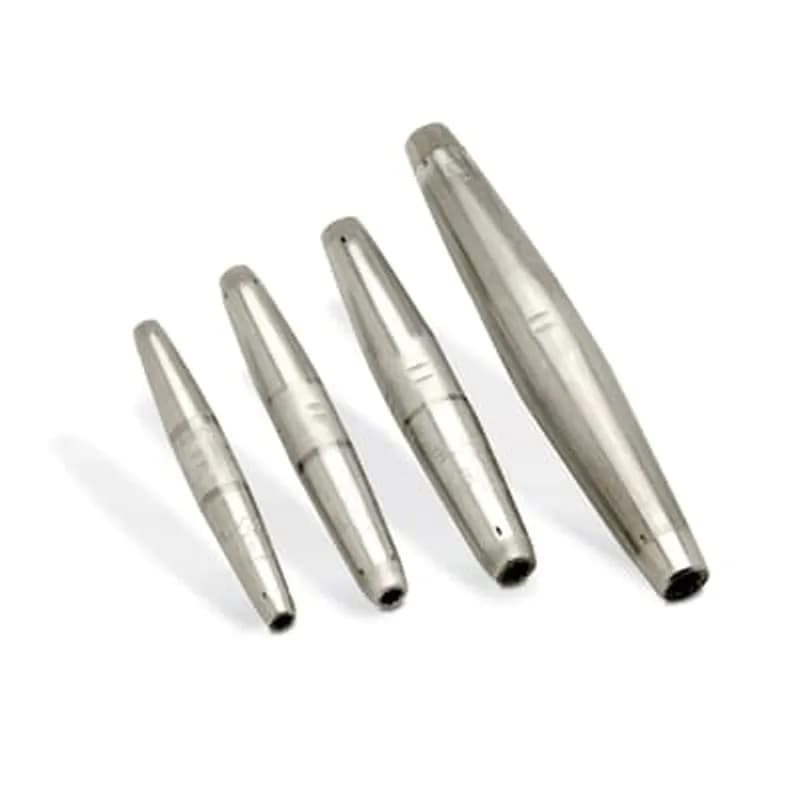
Contact for Pricing
Minimum Qty: 12
Multiplier: 12
*Contact for lower quantities*
Overview
- Designed for 5/16 inch (7.94 mm) steel strand diameter
- Compatible with Common, Siemens-Martin, and High-Strength strand types
- Rated for 5/16 inch (6M) strand
- Automatic tensioning for simplified and secure installation
- Suitable for utility and industrial applications
Specifications
Application | Designed and Recommended for use on Common Grade, Siemens-Martin, High-Strength Utility Grade, EHS, Galvanized, Bethalume, Aluminum Steel Strand (per ASTM A 474, A 475) |
Overall Length | 7.2 in , 182.9mm |
Size | 5/16 (7.94) |
Special Features | Requires no tools fo Quick and Easy Installations. Tapered Cartridge is made of Aluminum and Steel Jaws he Hardened Zinc Plating for Durability. Connectors cn Handle ensile Loads in Excess of 90 percent of the Rated Strength of the Recommended Strand and they Exceed 90 Percent of the Strand Rated Breaking Strength. Pilot Cap and Jaw Elimate Incorrect Insertions. Aluminum Cartridge and Internal Components are Lubricated for Long-Term, Continuous Performance and Corrosion Resistance |
Standard | ASTM A 474, A 475 |
Type | Steel Strand Automatic Splices |
Package Dimensions (L x W x H) | 0.01 IN x 0.01 IN x 0.01 IN |
Package Dimensions (L x W x H) | 0.0254 cm x 0.0254 cm x 0.0254 cm |
Package Weight (Imperial) | 0.5600 L |
Package Weight (Metric) | 0.2540 kg |
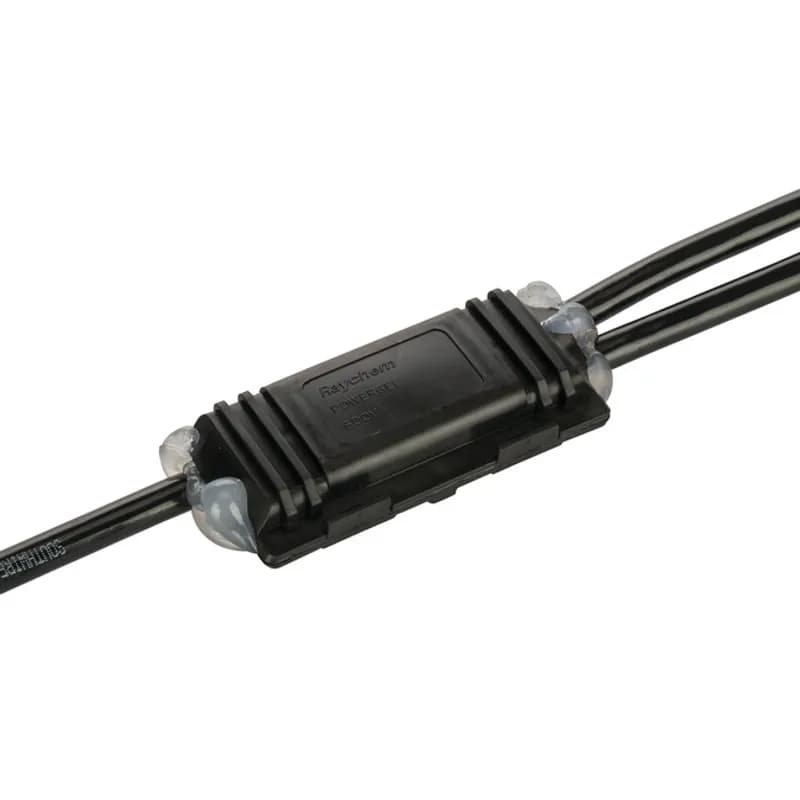
ESGTS-2/0
Easy-Splice Gel Tap Splice Kit with Connector for #14 - 2/0 AWG The Easy-Splice gel tap splice kit provides a fast and simple method for connecting, insulating, and environmentally sealing low-voltage splices. The splice kit is designed for underground and overhead environments and is useful for street lighting applications. The splice kit's dual-rated mechanical connector splices a wide range of cables, including copper and aluminum. The connector's four port design allows maximum inventory flexibility. The sealant gel protects the connection from moisture ingress, corrosion and pollution. The hinged splice closure can be installed over the connector in seconds by simply snapping the cover shut. Qualified to ANSI C119.1-1986 for underground splicing. Rated -40 degrees C to 90 degrees C.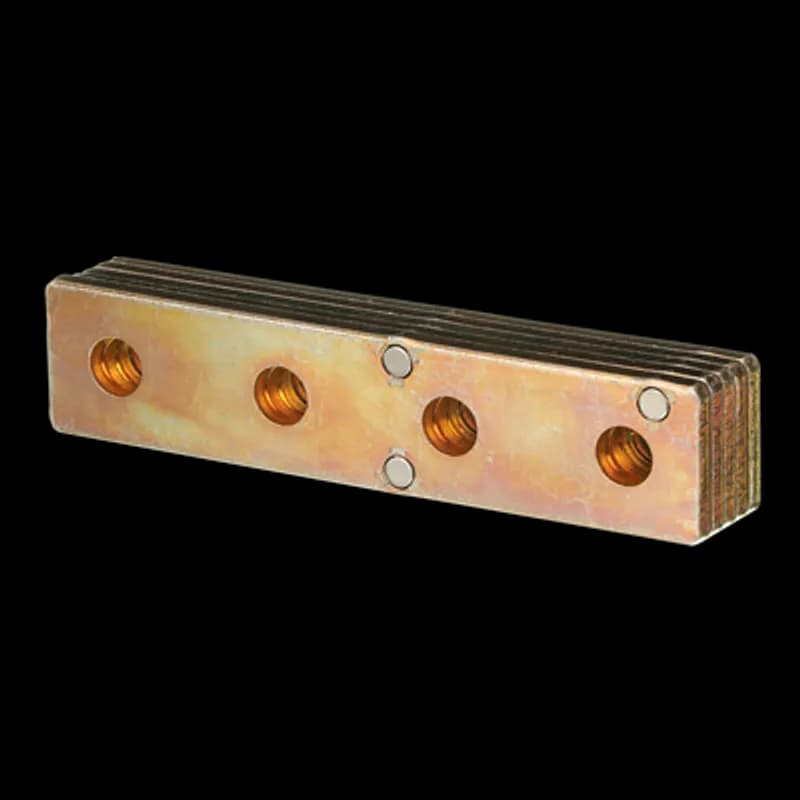
ZX207M
Plate with Magnets, Four Hole Splice, Length 7-1/4 Inch, Width 1-5/8 Inch, Hole Diameter 9/16 Inch, Steel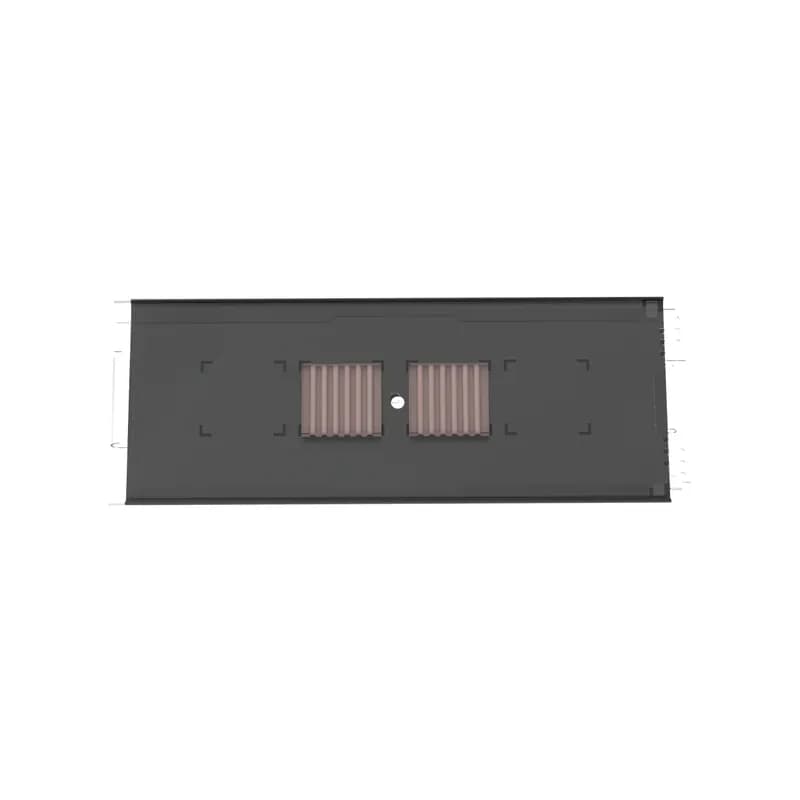
FST24
The fiber splice tray kit is for up to 24 mechanical or fusion splices or 144 ribbon fusion splices. It fits in Panduit FRME3 and FRME4 rack mount enclosures and stacks up to three high using FST24H3 stacking unit.
UFS4H325EG
A 4-hole Ufitting splice for 3-1/4 channel. It is made of steel with a zinc plated finish. Overall length is 7-1/4 inches and overall height is 3-1/4 inches.171425-1
Tap Splice, 20 – 18 AWG, .5 – .9 mm² Wire, 642 – 1624 CMA, Brass, Red, 12 mm [.472 in] Length, Bag, Solid / Stranded Wire, Copper Wire, ELECTRO-TAPATSG716
Automatic Tension Deadend Splice for Steel Strand Diameter 7/16 (11.11) for use on Utilites, Common, Siemens-Martin, High-Strength, Strand Rating 7/16 (18M)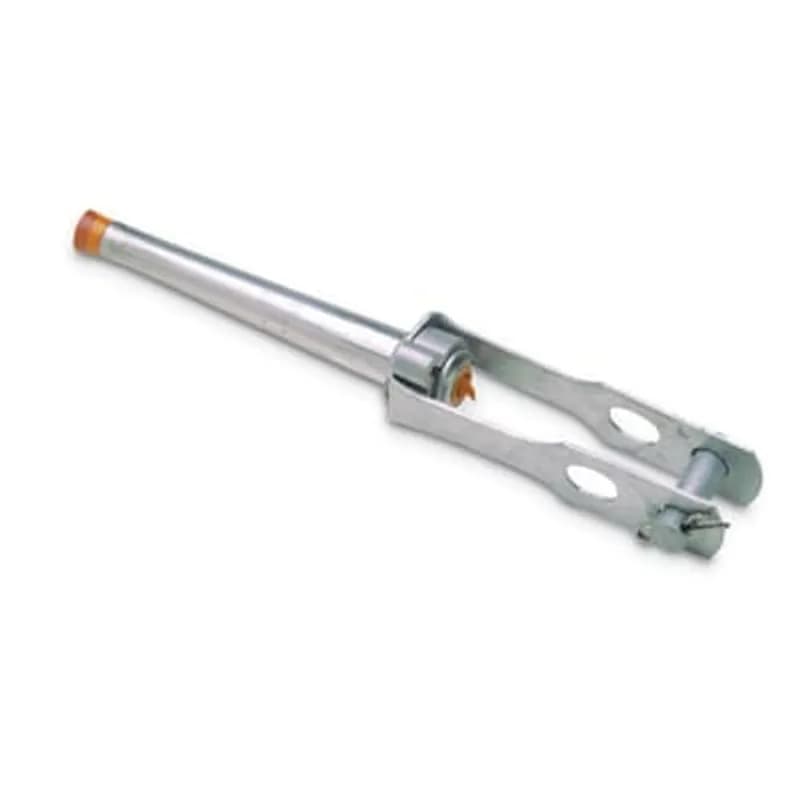
ATD1020CB
Autoset Clevis Bracket Automatic Tension Deadend for Wire Range: 1/0 6/1, 2/0 6/1 ASCR, 1/0, 2/0 AAAC, 1/0, 2/0 AAC, Color Code 1/0 - Yellow, 2/0 - GrayATD42CB
Autoset Clevis Bracket Automatic Tension Deadend for Wire Range: 4 6/1, 7/1, 2 6/1, 7/1 ASCR, 4, 2 AAAC, 4, 2 AAC, Color Code 4 - Orange, 2 - RedHow to Install ATSG Steel Strand Deadends and Splices
A comprehensive guide for preparing steel strands and installing ATSG automatic deadends and splices, ensuring proper fit and secure connections.
Estimated time: 1h
Tools needed:
Cable cutters, Tape
Supplies needed:
ATSG Steel Strand Deadends or Splices, Steel strand
- Review Safety Guidelines
Before starting, ensure all apparatus are de-energized. Do not touch or move energized products. Inspect all parts for damage and compatibility. Failure to follow these instructions could result in damage or serious injury.
- Verify Package Contents
Check the package contents to ensure all components are present and undamaged.
- Confirm Component Fit
Verify that all components fit properly with the steel strand and any mating products.
- Gather Tools and Maintain Cleanliness
Have all required tools readily available and maintain a clean work area throughout the installation.
- Straighten Strand End
Ensure the strand end is straight. Straighten the strand segment before cutting to prevent installation difficulties or jaw malfunction.
- Trim Deformed Strands
If strands are deformed or out of lay, trim the end sufficiently to provide a straight and square strand end. Deformed strands can cause jaw malfunction.
- Tape Strand Before Cutting (Optional but Recommended)
If not using sharp cable cutters, tape the strand before cutting to prevent deformation. Remove the tape after cutting.
- Mark Strand for Full Insertion (Splice)
Using the splice as a gauge, tape or mark the steel strand to indicate the full insertion depth (half splice length). This mark will help verify proper insertion later.
- Remove Tape from Strand End
Remove any remaining tape from the strand end before insertion.
- Insert Strand into Pilot Cup (Splice)
Place the prepared strand end into the pilot cup (strand guide) located at the tip of the splice cartridge.
- Thrust Strand into Cartridge and Set Jaws (Splice)
With a smooth, straight thrust, push the strand into the cartridge until it bottoms out. Then, pull on the strand by hand to set the internal jaws. Verify full insertion by checking the mark applied in step 8; if the mark is more than 1/2 inch away from the cartridge tip, the strand is not properly installed.
- Repeat for Other Side (Splice)
Repeat steps 8 through 11 for the other side of the automatic splice.
- Verify Hold and Apply Tension (Splice)
Ensure the strand holds firmly inside both sides of the cartridge and apply tension as required to complete the splice installation.
- Remove Tape from Strand End (Deadend)
Remove any remaining tape from the strand end.
- Insert Strand into Pilot Cup (Deadend)
Place the prepared strand end into the pilot cup (strand guide) at the tip of the deadend cartridge.
- Thrust Strand into Cartridge (Deadend)
With a smooth, straight thrust, push the strand into the cartridge until it appears at the opposite end. Cut any excess strand as needed, typically allowing about 2 inches to protrude beyond the cartridge.
- Set Jaws and Apply Tension (Deadend)
Pull on the strand by hand to set the internal jaws. Ensure the strand holds firmly inside the cartridge and apply tension as required to complete the deadend installation.
Frequently Asked Questions about ABB - Installation Products
How are Thomas and Betts products typically installed?
Thomas and Betts products are installed using a variety of methods tailored to specific applications, including the use of flexible cords and cable fittings, non-metallic cable glands, and armored cable fittings. Proper selection of fittings is crucial to match the cable type and installation environment, ensuring durability and preventing physical damage. Tools such as the Blackburn® Comfort Crimp® and HEX-FLEX® systems enhance installation efficiency and reliability, reducing labor time and ensuring secure connections.
What accessories are available for Thomas and Betts products?
Thomas and Betts offers a comprehensive range of accessories for their products, including various cord and cable fittings, non-metallic cable glands, service entrance cable fittings, and armored cable fittings. Their accessories are designed to enhance installation efficiency and ensure compatibility with different cable types and environmental conditions, providing reliable connections for a wide array of applications.
What environmental ratings do Thomas and Betts products have?
Thomas and Betts products feature robust environmental ratings, including NEMA Type 1, 2, 3, 4, 4X, 12, and 13 certifications, as well as IEC 60529 IP66 protection. These ratings ensure that their products are designed to withstand harsh industrial environments, with capabilities to resist dust, water, and corrosion, and operate effectively in a wide temperature range.
What communication protocols do Thomas and Betts products support?
Thomas and Betts products support a wide range of industrial communication protocols, including Ethernet, DeviceNet, PROFIBUS, Modbus, CANopen, and others. This extensive compatibility ensures seamless integration and reliable communication across various industrial automation systems, catering to diverse application needs.
What are the key features of Thomas and Betts products?
Thomas and Betts products are known for their innovative designs, high performance, and compliance with industry standards such as the National Electrical Code and Underwriters' Laboratories. They offer a comprehensive range of rugged and reliable electrical fittings, including liquidtight and dust-tight connections, which enhance installation efficiency and reduce overall project costs. Their products are engineered for durability in harsh environments, ensuring long-term reliability and lower installed costs.
What are the main product lines offered by Thomas and Betts?
Thomas and Betts offers a comprehensive range of product lines including electrical connectors, cable management systems, grounding and bonding solutions, and industrial automation components. Their products are designed for durability and reliability in demanding industrial environments, ensuring optimal performance and safety across various applications.
What technical support does Thomas and Betts offer?
Thomas and Betts offers comprehensive technical support, including access to field application engineers for onsite training and installation assistance. Their technical support staff is available to address inquiries related to product specifications and installation practices, ensuring optimal performance and safety of electrical systems. Additionally, they provide a variety of training programs to enhance the knowledge and skills of users in the field.
What industries and applications are Thomas and Betts products used for?
Thomas and Betts products are utilized across various industries including electrical construction, industrial automation, telecommunications, and utilities. Their extensive range of cord and cable fittings, electrical boxes, and metal framing systems are designed for applications that require durability and reliability in harsh environments, ensuring optimal performance in both permanent and temporary installations.
What certifications and standards do Thomas and Betts products comply with?
Thomas and Betts products comply with critical international certifications including UL (Underwriters Laboratories), CSA (Canadian Standards Association), and CE (European Community). Our products are designed to meet rigorous industrial standards such as NEMA enclosure ratings and IEC 60529 IP ratings, ensuring safety and reliability across various industrial applications.
What are the main product lines offered by Ocal?
Ocal offers a comprehensive range of corrosion-resistant conduit systems, including PVC-coated conduit and fittings, conduit bodies, hazardous location fittings, and strut accessories. Their products are designed to provide superior corrosion protection, featuring a hot-dipped galvanizing process and UL listed Type 4X PVC-coated conduit bodies, ensuring durability in the most demanding environments.