Accessories

    Drives, Servos, and Motors

    Enclosures, Fans, and Environmental Controls

    Laboratory and Measuring and Observing and Testing Equipment

    Industrial Manufacturing and Processing Machinery and Accessories

    Safety Equipment and Supplies

    Miscellaneous

    Distribution and Conditioning Systems and Equipment and Components

    Information Technology Broadcasting and Telecommunications

    Tools and General Machinery

    Manufacturing Components and Supplies

    Structures, Building, and Construction

    Power Generation and Distribution Machinery and Accessories

    Electronic Components And Supplies

    Material Handling and Conditioning and Storage Machinery and their Accessories and Supplies

    Office Equipment and Accessories and Supplies

    Electrical Systems and Lighting and Components and Accessories and Supplies

Showing 8905-8916 of 9,819 results
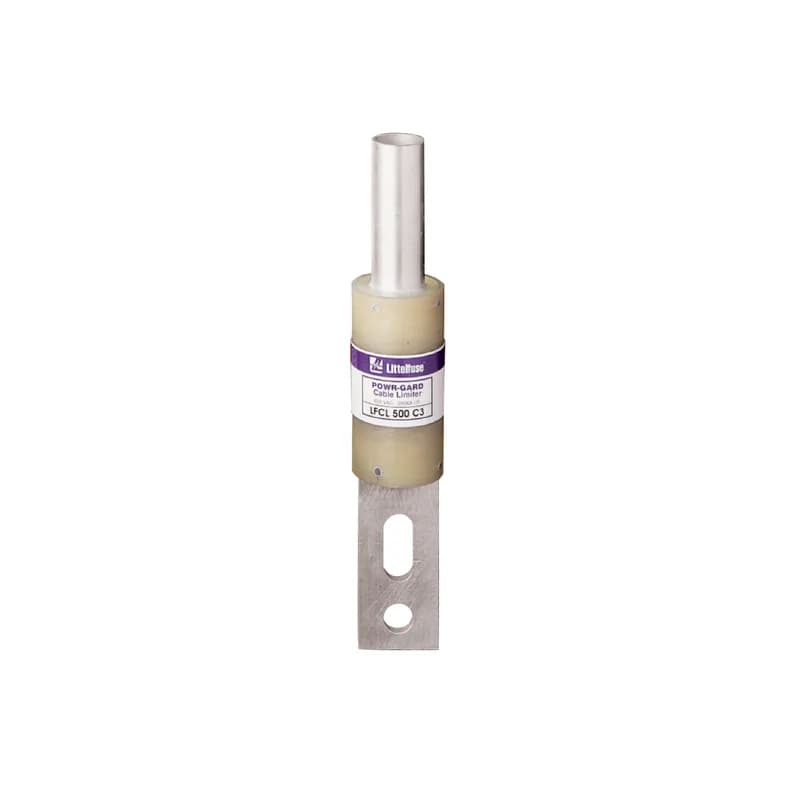
Littelfuse LFCL750C3 - Cable limiters are fusible devices that provide very fast short-circuit protection, primarily to faulted cables, but also to other conductors such as busway. Cable limiters do not have an ampere rating, and cannot be used to provide overload protection. Cable limiters are selected by cable size; for example, a 500 kcmil cable requires a 500 kcmil cable limiter. Their main use is to isolate faulted cables in circuits containing three or more parallel conductors per phase. They may be installed on the line side of the main service to provide short-circuit protection to the service conductors. This is especially important when service conductors are tapped from large low-voltage networks or from large low impedance transformers. Cable limiters have terminals which permit them to be installed in a variety of equipment. The most common configuration is the offset blade on one end and the crimp terminal on the other end. This permits the limiter to replace a cable terminal (lug).
Littelfuse · LFCL Series

LFCL750C3

LFCL0750ZC3


Cable limiters are fusible devices that provide very fast short-circuit protection, primarily to faulted cables, but also to other conductors such as busway. Cable limiters do not have an ampere rating, and cannot be used to provide overload protection. Cable limiters are selected by cable size; for example, a 500 kcmil cable requires a 500 kcmil cable limiter. Their main use is to isolate faulted cables in circuits containing three or more parallel conductors per phase. They may be installed on the line side of the main service to provide short-circuit protection to the service conductors. This is especially important when service conductors are tapped from large low-voltage networks or from large low impedance transformers. Cable limiters have terminals which permit them to be installed in a variety of equipment. The most common configuration is the offset blade on one end and the crimp terminal on the other end. This permits the limiter to replace a cable terminal (lug).

Contact for Pricing
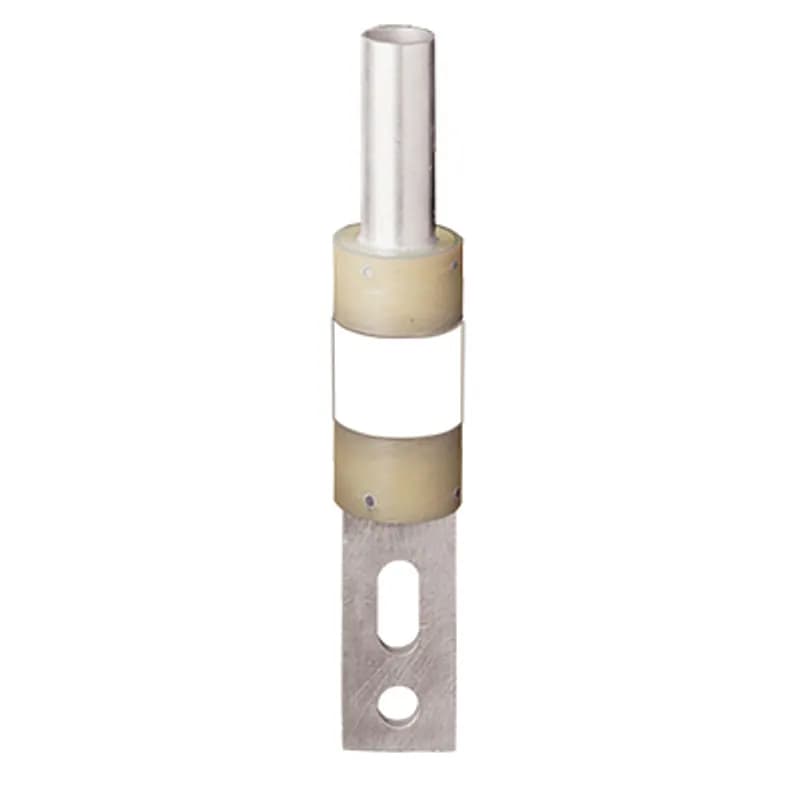
Littelfuse LFCL250A6 - 600 VOLT CABLE LIMITER 250 ALUM 6 TERM. Cable limiters are fusible devices that provide very fast short-circuit protection, primarily to faulted cables, but also to other conductors such as busway. Cable limiters do not have an ampere rating, and cannot be used to provide overload protection. Cable limiters are selected by cable size, for example, a 500 kcmil cable requires a 500 kcmil cable limiter. Their main use is to isolate faulted cables in circuits containing three or more parallel conductors per phase. They may be installed on the line side of the main service to provide short-circuit protection to the service conductors. This is especially important when service conductors are tapped from large low-voltage networks or from large low impedance transformers. Cable limiters have terminals which permit them to be installed in a variety of equipment. The most common configuration is the offset blade on one end and the crimp terminal on the other end. This permits the limiter to replace a cable terminal (lug). Applications: Service entrance conductors, between transformers or network bus and busway terminal boxes, large feeders with three or more conductors per phase. Features: Current-limiting characteristics provide protection to conductor insulation and reduce damage when faults occur. Properly applied cable limiters may permit the use of equipment with reduced withstand ratings. Wide variety of terminations and cable ratings permit use in almost every situation.
Littelfuse · LFCL Series

LFCL250A6

LFCL0250ZA6


600 VOLT CABLE LIMITER 250 ALUM 6 TERM. Cable limiters are fusible devices that provide very fast short-circuit protection, primarily to faulted cables, but also to other conductors such as busway. Cable limiters do not have an ampere rating, and cannot be used to provide overload protection. Cable limiters are selected by cable size, for example, a 500 kcmil cable requires a 500 kcmil cable limiter. Their main use is to isolate faulted cables in circuits containing three or more parallel conductors per phase. They may be installed on the line side of the main service to provide short-circuit protection to the service conductors. This is especially important when service conductors are tapped from large low-voltage networks or from large low impedance transformers. Cable limiters have terminals which permit them to be installed in a variety of equipment. The most common configuration is the offset blade on one end and the crimp terminal on the other end. This permits the limiter to replace a cable terminal (lug). Applications: Service entrance conductors, between transformers or network bus and busway terminal boxes, large feeders with three or more conductors per phase. Features: Current-limiting characteristics provide protection to conductor insulation and reduce damage when faults occur. Properly applied cable limiters may permit the use of equipment with reduced withstand ratings. Wide variety of terminations and cable ratings permit use in almost every situation.

Contact for Pricing
Littelfuse LFCL4/0C5 - Cable limiters are fusible devices that provide very fast short-circuit protection, primarily to faulted cables, but also to other conductors such as busway. Cable limiters do not have an ampere rating, and cannot be used to provide overload protection. Cable limiters are selected by cable size; for example, a 500 kcmil cable requires a 500 kcmil cable limiter. Their main use is to isolate faulted cables in circuits containing three or more parallel conductors per phase. They may be installed on the line side of the main service to provide short-circuit protection to the service conductors. This is especially important when service conductors are tapped from large low-voltage networks or from large low impedance transformers. Cable limiters have terminals which permit them to be installed in a variety of equipment. The most common configuration is the offset blade on one end and the crimp terminal on the other end. This permits the limiter to replace a cable terminal (lug).
Littelfuse · LFCL Series

LFCL4/0C5

LFCL04/0ZC5


Cable limiters are fusible devices that provide very fast short-circuit protection, primarily to faulted cables, but also to other conductors such as busway. Cable limiters do not have an ampere rating, and cannot be used to provide overload protection. Cable limiters are selected by cable size; for example, a 500 kcmil cable requires a 500 kcmil cable limiter. Their main use is to isolate faulted cables in circuits containing three or more parallel conductors per phase. They may be installed on the line side of the main service to provide short-circuit protection to the service conductors. This is especially important when service conductors are tapped from large low-voltage networks or from large low impedance transformers. Cable limiters have terminals which permit them to be installed in a variety of equipment. The most common configuration is the offset blade on one end and the crimp terminal on the other end. This permits the limiter to replace a cable terminal (lug).

Contact for Pricing

Littelfuse LFCL350C6 - 600 VOLT CABLE LIMITER 350 COPPER 6 TERM. Cable limiters are fusible devices that provide very fast short-circuit protection, primarily to faulted cables, but also to other conductors such as busway. Cable limiters do not have an ampere rating, and cannot be used to provide overload protection. Cable limiters are selected by cable size, for example, a 500 kcmil cable requires a 500 kcmil cable limiter. Their main use is to isolate faulted cables in circuits containing three or more parallel conductors per phase. They may be installed on the line side of the main service to provide short-circuit protection to the service conductors. This is especially important when service conductors are tapped from large low-voltage networks or from large low impedance transformers. Cable limiters have terminals which permit them to be installed in a variety of equipment. The most common configuration is the offset blade on one end and the crimp terminal on the other end. This permits the limiter to replace a cable terminal (lug). Applications: Service entrance conductors, between transformers or network bus and busway terminal boxes, large feeders with three or more conductors per phase. Features: Current-limiting characteristics provide protection to conductor insulation and reduce damage when faults occur. Properly applied cable limiters may permit the use of equipment with reduced withstand ratings. Wide variety of terminations and cable ratings permit use in almost every situation.
Littelfuse · LFCL Series

LFCL350C6

LFCL0350ZC6


600 VOLT CABLE LIMITER 350 COPPER 6 TERM. Cable limiters are fusible devices that provide very fast short-circuit protection, primarily to faulted cables, but also to other conductors such as busway. Cable limiters do not have an ampere rating, and cannot be used to provide overload protection. Cable limiters are selected by cable size, for example, a 500 kcmil cable requires a 500 kcmil cable limiter. Their main use is to isolate faulted cables in circuits containing three or more parallel conductors per phase. They may be installed on the line side of the main service to provide short-circuit protection to the service conductors. This is especially important when service conductors are tapped from large low-voltage networks or from large low impedance transformers. Cable limiters have terminals which permit them to be installed in a variety of equipment. The most common configuration is the offset blade on one end and the crimp terminal on the other end. This permits the limiter to replace a cable terminal (lug). Applications: Service entrance conductors, between transformers or network bus and busway terminal boxes, large feeders with three or more conductors per phase. Features: Current-limiting characteristics provide protection to conductor insulation and reduce damage when faults occur. Properly applied cable limiters may permit the use of equipment with reduced withstand ratings. Wide variety of terminations and cable ratings permit use in almost every situation.

Contact for Pricing

Littelfuse LFCL500A3 - 600 VOLT CABLE LIMITER 500 ALUM 3 TERM. Cable limiters are fusible devices that provide very fast short-circuit protection, primarily to faulted cables, but also to other conductors such as busway. Cable limiters do not have an ampere rating, and cannot be used to provide overload protection. Cable limiters are selected by cable size, for example, a 500 kcmil cable requires a 500 kcmil cable limiter. Their main use is to isolate faulted cables in circuits containing three or more parallel conductors per phase. They may be installed on the line side of the main service to provide short-circuit protection to the service conductors. This is especially important when service conductors are tapped from large low-voltage networks or from large low impedance transformers. Cable limiters have terminals which permit them to be installed in a variety of equipment. The most common configuration is the offset blade on one end and the crimp terminal on the other end. This permits the limiter to replace a cable terminal (lug). Applications: Service entrance conductors, between transformers or network bus and busway terminal boxes, large feeders with three or more conductors per phase. Features: Current-limiting characteristics provide protection to conductor insulation and reduce damage when faults occur. Properly applied cable limiters may permit the use of equipment with reduced withstand ratings. Wide variety of terminations and cable ratings permit use in almost every situation.
Littelfuse · LFCL Series

LFCL500A3

LFCL0500ZA3


600 VOLT CABLE LIMITER 500 ALUM 3 TERM. Cable limiters are fusible devices that provide very fast short-circuit protection, primarily to faulted cables, but also to other conductors such as busway. Cable limiters do not have an ampere rating, and cannot be used to provide overload protection. Cable limiters are selected by cable size, for example, a 500 kcmil cable requires a 500 kcmil cable limiter. Their main use is to isolate faulted cables in circuits containing three or more parallel conductors per phase. They may be installed on the line side of the main service to provide short-circuit protection to the service conductors. This is especially important when service conductors are tapped from large low-voltage networks or from large low impedance transformers. Cable limiters have terminals which permit them to be installed in a variety of equipment. The most common configuration is the offset blade on one end and the crimp terminal on the other end. This permits the limiter to replace a cable terminal (lug). Applications: Service entrance conductors, between transformers or network bus and busway terminal boxes, large feeders with three or more conductors per phase. Features: Current-limiting characteristics provide protection to conductor insulation and reduce damage when faults occur. Properly applied cable limiters may permit the use of equipment with reduced withstand ratings. Wide variety of terminations and cable ratings permit use in almost every situation.

Contact for Pricing

Littelfuse LFCL4/0A6 - 600 VOLT CABLE LIMITER 0A6. Cable limiters are fusible devices that provide very fast short-circuit protection, primarily to faulted cables, but also to other conductors such as busway. Cable limiters do not have an ampere rating, and cannot be used to provide overload protection. Cable limiters are selected by cable size, for example, a 500 kcmil cable requires a 500 kcmil cable limiter. Their main use is to isolate faulted cables in circuits containing three or more parallel conductors per phase. They may be installed on the line side of the main service to provide short-circuit protection to the service conductors. This is especially important when service conductors are tapped from large low-voltage networks or from large low impedance transformers. Cable limiters have terminals which permit them to be installed in a variety of equipment. The most common configuration is the offset blade on one end and the crimp terminal on the other end. This permits the limiter to replace a cable terminal (lug). Applications: Service entrance conductors, between transformers or network bus and busway terminal boxes, large feeders with three or more conductors per phase. Features: Current-limiting characteristics provide protection to conductor insulation and reduce damage when faults occur. Properly applied cable limiters may permit the use of equipment with reduced withstand ratings. Wide variety of terminations and cable ratings permit use in almost every situation.
Littelfuse · LFCL Series

LFCL4/0A6

LFCL04/0ZA6


600 VOLT CABLE LIMITER 0A6. Cable limiters are fusible devices that provide very fast short-circuit protection, primarily to faulted cables, but also to other conductors such as busway. Cable limiters do not have an ampere rating, and cannot be used to provide overload protection. Cable limiters are selected by cable size, for example, a 500 kcmil cable requires a 500 kcmil cable limiter. Their main use is to isolate faulted cables in circuits containing three or more parallel conductors per phase. They may be installed on the line side of the main service to provide short-circuit protection to the service conductors. This is especially important when service conductors are tapped from large low-voltage networks or from large low impedance transformers. Cable limiters have terminals which permit them to be installed in a variety of equipment. The most common configuration is the offset blade on one end and the crimp terminal on the other end. This permits the limiter to replace a cable terminal (lug). Applications: Service entrance conductors, between transformers or network bus and busway terminal boxes, large feeders with three or more conductors per phase. Features: Current-limiting characteristics provide protection to conductor insulation and reduce damage when faults occur. Properly applied cable limiters may permit the use of equipment with reduced withstand ratings. Wide variety of terminations and cable ratings permit use in almost every situation.

Contact for Pricing

Littelfuse LFCL4/0A1 - 600 VOLT CABLE LIMITER 0A1. Cable limiters are fusible devices that provide very fast short-circuit protection, primarily to faulted cables, but also to other conductors such as busway. Cable limiters do not have an ampere rating, and cannot be used to provide overload protection. Cable limiters are selected by cable size, for example, a 500 kcmil cable requires a 500 kcmil cable limiter. Their main use is to isolate faulted cables in circuits containing three or more parallel conductors per phase. They may be installed on the line side of the main service to provide short-circuit protection to the service conductors. This is especially important when service conductors are tapped from large low-voltage networks or from large low impedance transformers. Cable limiters have terminals which permit them to be installed in a variety of equipment. The most common configuration is the offset blade on one end and the crimp terminal on the other end. This permits the limiter to replace a cable terminal (lug). Applications: Service entrance conductors, between transformers or network bus and busway terminal boxes, large feeders with three or more conductors per phase. Features: Current-limiting characteristics provide protection to conductor insulation and reduce damage when faults occur. Properly applied cable limiters may permit the use of equipment with reduced withstand ratings. Wide variety of terminations and cable ratings permit use in almost every situation.
Littelfuse · LFCL Series

LFCL4/0A1

LFCL04/0ZA1


600 VOLT CABLE LIMITER 0A1. Cable limiters are fusible devices that provide very fast short-circuit protection, primarily to faulted cables, but also to other conductors such as busway. Cable limiters do not have an ampere rating, and cannot be used to provide overload protection. Cable limiters are selected by cable size, for example, a 500 kcmil cable requires a 500 kcmil cable limiter. Their main use is to isolate faulted cables in circuits containing three or more parallel conductors per phase. They may be installed on the line side of the main service to provide short-circuit protection to the service conductors. This is especially important when service conductors are tapped from large low-voltage networks or from large low impedance transformers. Cable limiters have terminals which permit them to be installed in a variety of equipment. The most common configuration is the offset blade on one end and the crimp terminal on the other end. This permits the limiter to replace a cable terminal (lug). Applications: Service entrance conductors, between transformers or network bus and busway terminal boxes, large feeders with three or more conductors per phase. Features: Current-limiting characteristics provide protection to conductor insulation and reduce damage when faults occur. Properly applied cable limiters may permit the use of equipment with reduced withstand ratings. Wide variety of terminations and cable ratings permit use in almost every situation.

Contact for Pricing

Littelfuse LFCL500C8 - 600 VOLT CABLE LIMITER 500 COPPER 8 TERM. Cable limiters are fusible devices that provide very fast short-circuit protection, primarily to faulted cables, but also to other conductors such as busway. Cable limiters do not have an ampere rating, and cannot be used to provide overload protection. Cable limiters are selected by cable size, for example, a 500 kcmil cable requires a 500 kcmil cable limiter. Their main use is to isolate faulted cables in circuits containing three or more parallel conductors per phase. They may be installed on the line side of the main service to provide short-circuit protection to the service conductors. This is especially important when service conductors are tapped from large low-voltage networks or from large low impedance transformers. Cable limiters have terminals which permit them to be installed in a variety of equipment. The most common configuration is the offset blade on one end and the crimp terminal on the other end. This permits the limiter to replace a cable terminal (lug). Applications: Service entrance conductors, between transformers or network bus and busway terminal boxes, large feeders with three or more conductors per phase. Features: Current-limiting characteristics provide protection to conductor insulation and reduce damage when faults occur. Properly applied cable limiters may permit the use of equipment with reduced withstand ratings. Wide variety of terminations and cable ratings permit use in almost every situation.
Littelfuse · LFCL Series

LFCL500C8

LFCL0500ZC8


600 VOLT CABLE LIMITER 500 COPPER 8 TERM. Cable limiters are fusible devices that provide very fast short-circuit protection, primarily to faulted cables, but also to other conductors such as busway. Cable limiters do not have an ampere rating, and cannot be used to provide overload protection. Cable limiters are selected by cable size, for example, a 500 kcmil cable requires a 500 kcmil cable limiter. Their main use is to isolate faulted cables in circuits containing three or more parallel conductors per phase. They may be installed on the line side of the main service to provide short-circuit protection to the service conductors. This is especially important when service conductors are tapped from large low-voltage networks or from large low impedance transformers. Cable limiters have terminals which permit them to be installed in a variety of equipment. The most common configuration is the offset blade on one end and the crimp terminal on the other end. This permits the limiter to replace a cable terminal (lug). Applications: Service entrance conductors, between transformers or network bus and busway terminal boxes, large feeders with three or more conductors per phase. Features: Current-limiting characteristics provide protection to conductor insulation and reduce damage when faults occur. Properly applied cable limiters may permit the use of equipment with reduced withstand ratings. Wide variety of terminations and cable ratings permit use in almost every situation.

Contact for Pricing

Littelfuse LFCL350A3 - 600 VOLT CABLE LIMITER 350 ALUM 3 TERM. Cable limiters are fusible devices that provide very fast short-circuit protection, primarily to faulted cables, but also to other conductors such as busway. Cable limiters do not have an ampere rating, and cannot be used to provide overload protection. Cable limiters are selected by cable size, for example, a 500 kcmil cable requires a 500 kcmil cable limiter. Their main use is to isolate faulted cables in circuits containing three or more parallel conductors per phase. They may be installed on the line side of the main service to provide short-circuit protection to the service conductors. This is especially important when service conductors are tapped from large low-voltage networks or from large low impedance transformers. Cable limiters have terminals which permit them to be installed in a variety of equipment. The most common configuration is the offset blade on one end and the crimp terminal on the other end. This permits the limiter to replace a cable terminal (lug). Applications: Service entrance conductors, between transformers or network bus and busway terminal boxes, large feeders with three or more conductors per phase. Features: Current-limiting characteristics provide protection to conductor insulation and reduce damage when faults occur. Properly applied cable limiters may permit the use of equipment with reduced withstand ratings. Wide variety of terminations and cable ratings permit use in almost every situation.
Littelfuse · LFCL Series

LFCL350A3

LFCL0350ZA3


600 VOLT CABLE LIMITER 350 ALUM 3 TERM. Cable limiters are fusible devices that provide very fast short-circuit protection, primarily to faulted cables, but also to other conductors such as busway. Cable limiters do not have an ampere rating, and cannot be used to provide overload protection. Cable limiters are selected by cable size, for example, a 500 kcmil cable requires a 500 kcmil cable limiter. Their main use is to isolate faulted cables in circuits containing three or more parallel conductors per phase. They may be installed on the line side of the main service to provide short-circuit protection to the service conductors. This is especially important when service conductors are tapped from large low-voltage networks or from large low impedance transformers. Cable limiters have terminals which permit them to be installed in a variety of equipment. The most common configuration is the offset blade on one end and the crimp terminal on the other end. This permits the limiter to replace a cable terminal (lug). Applications: Service entrance conductors, between transformers or network bus and busway terminal boxes, large feeders with three or more conductors per phase. Features: Current-limiting characteristics provide protection to conductor insulation and reduce damage when faults occur. Properly applied cable limiters may permit the use of equipment with reduced withstand ratings. Wide variety of terminations and cable ratings permit use in almost every situation.

Contact for Pricing

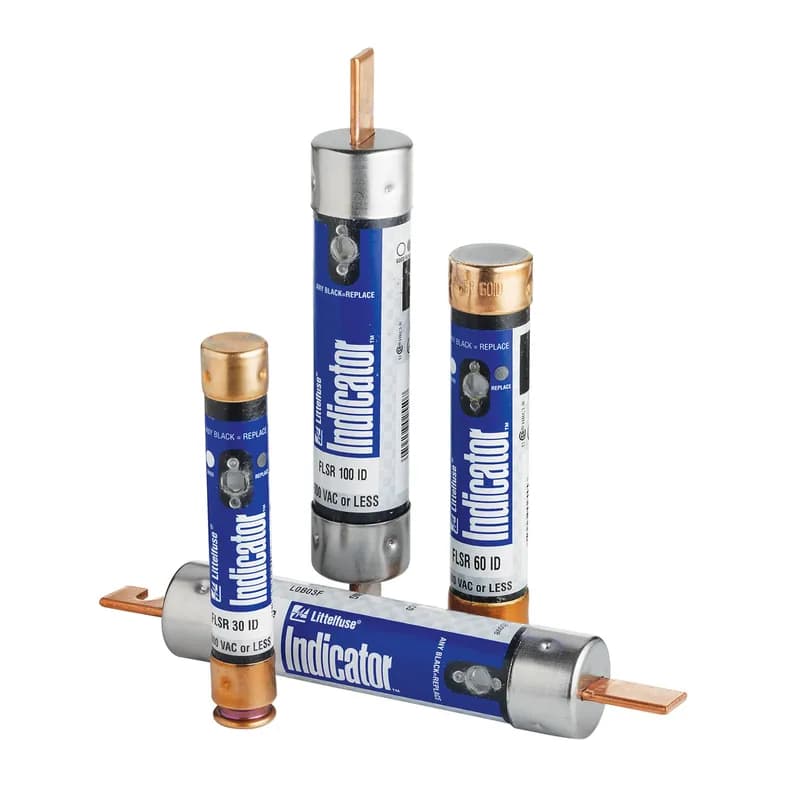
Littelfuse FLSR1.25ID - FLSR1.25ID is a Class RK5 fuse with an ampere rating of 1.25 and cartridge-style construction.
Littelfuse · FLSR Series

FLSR1.25ID

FLSR1.25TXID


FLSR1.25ID is a Class RK5 fuse with an ampere rating of 1.25 and cartridge-style construction.

Contact for Pricing

Minimum Qty: 10

Multiplier: 10

*Contact for lower quantities*
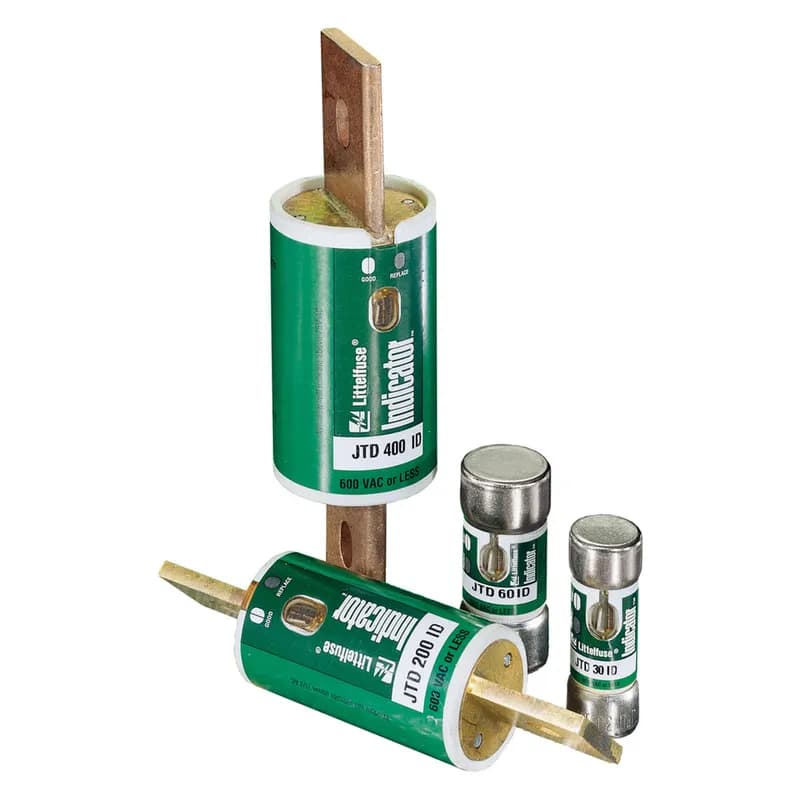
Littelfuse JTD035ID - JTD035ID is a Class J fuse with an ampere rating of 35 and cartridge-style construction.
Littelfuse · JTD Series

JTD035ID

0JTD035.TXID


JTD035ID is a Class J fuse with an ampere rating of 35 and cartridge-style construction.

Contact for Pricing

Littelfuse JTD17.5ID - JTD17.5ID is a Class J fuse with an ampere rating of 17.5 and cartridge-style construction.
Littelfuse · JTD Series

JTD17.5ID

0JTD17.5TXID


JTD17.5ID is a Class J fuse with an ampere rating of 17.5 and cartridge-style construction.

Contact for Pricing

Showing 8905-8916 of 9,819 results