Contact for Pricing
Overview
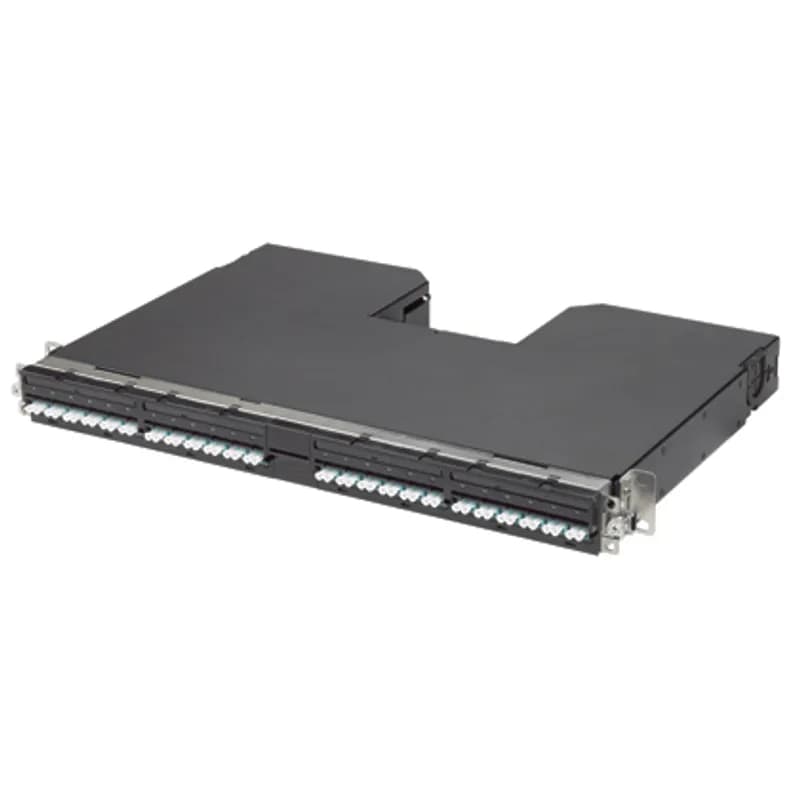
- 24-port OM3 optimized MTP fiber tray
- Includes 24 LC SFF duplex multimode aqua adapters
- Zirconia ceramic split sleeves for precise alignment
- Supports 10 Gigabit Ethernet (10 Gig) applications
- Manufactured in the USA
Specifications
Color | Aqua |
Connection Type | LC SR./SR. 10 Gig SFF Duplex |
Material | Zirconia Ceramic |
Series | PViQ |
Size | 24 port |
Package Dimensions (L x W x H) | 21.9 IN x 15 IN x 7.1 IN |
Package Weight (Imperial) | 10.7 lbs |
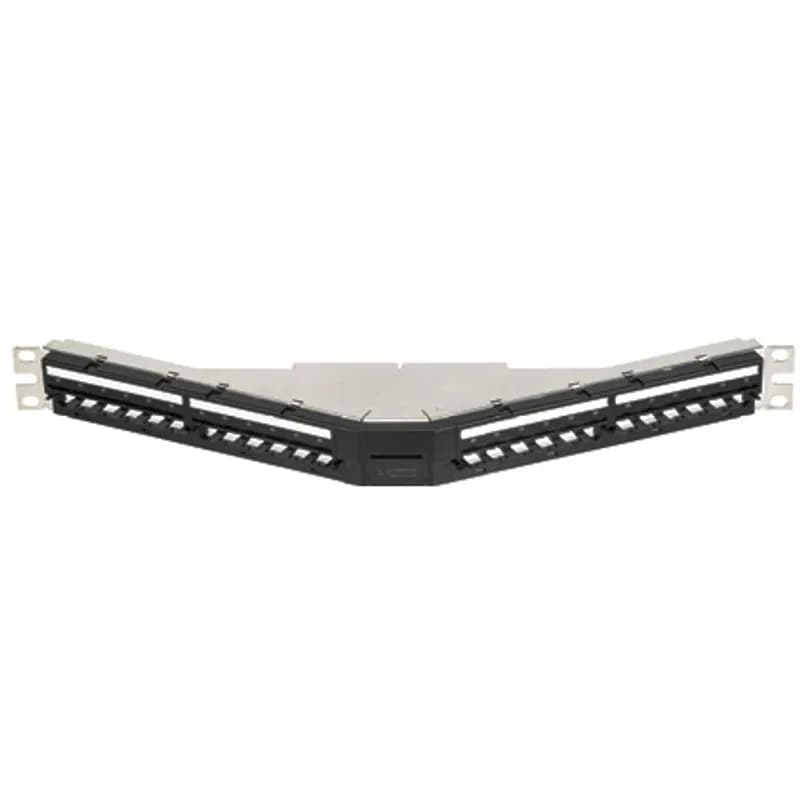
PVQ-MIQAPU24
The PanView iQ 24-port unpopulated angled STP modular intelligent module-ready patch panels accepts all Mini-Com UTP and LC Fiber Optic Modules.Frequently Asked Questions
What is the maximum number of PMs that can be daisy chained?
A total of 30 PMs may be daisy chained to access the network via a single LAN port.
Can the PViQ system operate in wet conditions?
No, the product should not be operated in wet or damp conditions to avoid electric shock.
What safety precautions should be followed during installation?
Only qualified personnel should perform service procedures, and the product should not be operated without covers.
What types of patch panels are available?
The patch panels can be ordered as copper or fiber, with options for shielded or unshielded configurations.
What types of intelligent modules are included?
The system includes a Panel Manager (PM) and an Expansion Module (EM) for management and connectivity.
What types of patch cords are compatible with the PViQ system?
Compatible patch cords include standard shielded, copper cross-connect, fiber cross-connect, and interconnect patch cords.
What is the purpose of the Expansion Port Cable (EPC)?
The EPC connects the PM to the EM and each successive EM in the chain.
What types of fiber connections are available?
Fiber panels are available with single mode or multimode connections using LC or MPO data connectors.
What power source is required for the PViQ system?
The product must be operated from a power source that applies the specified voltage to avoid damage.
What is the function of the Interface Unit (IU)?
The IU provides access to various operational modes directly from the front of the panel.
How to Install the PVQ-FMTMTP-ZZ Fiber Tray
This guide provides step-by-step instructions for installing and configuring the PVQ-FMTMTP-ZZ Fiber Tray, ensuring proper mounting, wiring, and labeling.
Estimated time: 1h
Tools needed:
Screwdriver, Wire strippers, Multimeter
Supplies needed:
Mounting screws, Cable entry grommets, Strain relief brackets, Bend radius control clips, Ultimate ID labels
- Mount the Housing to the Rack
Use the supplied #12-24 x 1/2" screws to attach the housing to the rack. Tighten screws to a torque specification of 25 in-lbs.
- Install the Strain Relief Brackets
Attach the strain relief brackets on both sides of the housing to secure the fiber cables. Ensure they are firmly mounted.
- Route the Fiber Cables
Insert the fiber cables through the prepared grommets into the housing. Use Tak-Tys to secure the cables at the entry points.
- Install the PM/EM Interface Unit
Remove the blank interface unit from the drawer and replace it with the PM/EM interface unit, ensuring it snaps into place without disrupting cabling.
- Install the Drawer into the Housing
Carefully slide the drawer back into the housing, keeping it level. Hand tighten the captive screws on both sides to secure it.
- Re-install the Back Access Plates
Replace the back access plates and tighten the captive screws to secure them in place.
- Attach the Bend Radius Control Clips
Depress the two plungers to lock the clips into place, ensuring they are secure.
- Install Ultimate ID Labels
Create and install labels according to TIA/EIA-606-A standards, using the label covers included in the kit to protect them.
Frequently Asked Questions about Panduit
What environmental ratings do Panduit products have?
Panduit products feature comprehensive environmental ratings across multiple standards, including UL 508A Type 1, 2, 3, 4, 4X, 12, and 13; CSA Type 1, 2, 3, 4, 4X, 12, and 13; and NEMA Type 1, 2, 3, 4, 4X, 12, and 13. They meet IEC 60529 IP66 rating, providing robust protection against dust, water, and corrosion in both indoor and outdoor environments, with operating temperatures ranging from -40°C to 130°C.
What certifications and standards do Panduit products comply with?
Panduit products are certified to multiple critical industry standards, including UL (Underwriters Laboratories) in the USA and Canada, CSA (Canadian Standard Association), EN IEC 61386, LVD 2006/G5/EC, and ARRA standards. Our products meet rigorous certifications for electrical safety, environmental compliance (WEEE and RoHS), and are designed to perform in extreme temperatures ranging from -55°C to 105°C, making them suitable for demanding industrial environments.
What industries and applications are Panduit products used for?
Panduit products are engineered for critical applications across multiple industries, including commercial construction, food and beverage, oil and gas, renewable energy, transportation, and safety-critical environments. Their solutions span electrical infrastructure, wire management, cable ties, power connectors, and safety systems designed to withstand extreme conditions like high vibration, temperature variations, UV exposure, and corrosive agents. Key industries include solar and wind energy, aerospace, heavy trucking, military, commercial transportation, and industrial manufacturing.
What are the main product lines offered by Panduit?
Panduit offers a comprehensive range of electrical infrastructure products including power connectors, cable ties, grounding connectors, identification products, safety solutions, terminals, cable cleats, wiring duct, and cable tie accessories. These products are engineered for industrial environments across multiple sectors like commercial construction, food and beverage, oil and gas, renewable energy, transportation, and safety applications.
What are the key features of Panduit products?
Panduit products are engineered for robust performance in heavy-duty industrial environments, featuring a comprehensive range of solutions including cable ties, power connectors, terminals, and identification products. Key features include proven quality performance, subject matter expertise, and customer-driven innovation across multiple industrial sectors such as commercial construction, food and beverage, oil and gas, renewable energy, transportation, and safety applications. The product line is designed to maximize productivity, reliability, and safety while meeting stringent industry standards.
What is Panduit's warranty policy?
Panduit provides a comprehensive Limited Product Warranty that can be fully reviewed on their official website at www.panduit.com/warranty. All Panduit products are subject to the terms, conditions, and limitations of this current warranty. Customers are advised to review the specific warranty details for their particular product, as Panduit requires buyers to determine product suitability for their intended use and assumes all associated risks.
What technical support does Panduit offer?
Panduit offers comprehensive technical support through their dedicated customer service team, accessible via phone at 1-800-777-3300. They provide expert assistance for their full range of industrial infrastructure products, including cable ties, power connectors, terminals, and identification solutions. Customers can also access additional technical resources and product information through their website at www.panduit.com.
What accessories are available for Panduit products?
Panduit offers a wide range of accessories across multiple product lines, including cable ties, cable tie accessories, cable tie tools, identification products, cable cleats, grounding connectors, and VeriSafe accessories like the VeriSafe Network Module and Insulation Piercing Connectors. For a comprehensive view of all available accessories, customers are recommended to visit www.panduit.com for the full product catalog.
How are Panduit products typically installed?
Panduit products are engineered for comprehensive installation across industrial environments, utilizing specialized tools and techniques for precise mounting. Installation methods vary by product line - from cable ties and power connectors to terminals and identification solutions - but all are designed for robust performance in heavy-duty settings. Technicians typically use Panduit's dedicated installation tools and follow manufacturer guidelines available at www.panduit.com to ensure proper fitting and maximum infrastructure reliability.